Tech, telecom, media, and consumer rights reporter at TechDirt, Motherboard, Verge, and ILSR. Helped build DSL Reports.

Fast, affordable Internet access for all.
Tech, telecom, media, and consumer rights reporter at TechDirt, Motherboard, Verge, and ILSR. Helped build DSL Reports.

West Des Moines, Iowa is making steady progress on a $60 million open access fiber-optic conduit system to expedite the delivery of affordable fiber citywide. And they’re doing it with the help of Google Fiber, which has slowly started to reverse course after the company’s 2016 decision to lay off hundreds of staff and freeze most meaningful expansion.
Dryden, New York, population 14,500, has formally launched the town’s municipal broadband network, becoming the first municipality in the state to provide residents with direct access to affordable, publicly owned fiber.
More than 121 Colorado cities and towns have now opted out of SB152, a 17-year old state law backed by telecom monopolies greatly restricting the construction and funding of community broadband alternatives.
And the trend shows no sign of slowing down.
From the miraculous benefits of WiMax to the hype surrounding 5G, U.S. wireless companies have long promised near-Utopian levels of technological revolution.
Yet time after time these promises have fallen short, reminding a telecom sector all-too-familiar with hype that fiber optics remains, for now, the backbone of bridging the digital divide.
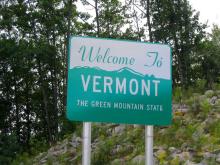
When it comes to affordable broadband, Vermont has always been a trailblazer.
Whether it is UTOPIA Fiber or the growing number of cities establishing open access fiber network agreements with Strata Networks, Utah continues to be on the cutting edge of developing creative, highly-localized alternatives to entrenched regional monopolies, the first step in genuinely bridging the n
A bipartisan coalition of Pennsylvania lawmakers have introduced legislation that attempts to reverse some of the state’s most-stringent provisions hamstringing municipal broadband builds.
But experts suggest that while the bill may be well-intentioned, a cleaner approach would be to eliminate the state’s harmful and dated restrictions on municipal broadband entirely.
After years of efforts, the telecom industry and a range of independent broadband experts are making progress in a quest to make broadband grants tax exempt, a move industry players large and small say is necessary if the federal government wants the historic round of new federal broadband funding to benefit as m
Allegan County, Michigan is moving forward with an ambitious new plan to bring affordable fiber broadband to 12,000 unserved addresses across the county. The project will be in partnership with Southfield, Michigan based 123NET, made possible in large part due to more than $17.7 million in county American Rescue Plan Act funds.
Nevada is looking at an historic influx of broadband funding thanks to the Broadband, Equity, Access and Deployment (BEAD) program and the Infrastructure Investment and Jobs Act (IIJA). But state laws designed to shield monopolies from competition have added unnecessary complications to the state’s quest to maximize an historic round of public broadband funding.
The Washington Island Electric Cooperative is preparing to deliver affordable fiber broadband access to long-neglected communities across Washington Island, Wisconsin. The first subscribers are expected to receive service sometime later this month, and the entire island is slated to be upgraded sometime around 2027.
Nichols, New York (pop. 2,300) is the latest U.S. community to embrace open access, community-run fiber as an alternative to monopoly power. The upstate New York town, saddled among rolling green hills close to the Pennsylvania border, hopes the new initiative will boost broadband availability and lower costs.
In 2020, New York City officials unveiled a massive new broadband proposal they promised would dramatically reshape affordable broadband access in the city.
Instead, the program has been steadily and quietly dismantled, replaced by a variety of costly half-measures that critics say don’t solve the actual, underlying cause of expensive, substandard broadband.
While cooperatives, utilities, and municipalities are seeing a welcome portion of Covid relief and infrastructure bill funding, the nation’s two biggest cable broadband monopolies continue to hoover up the lion’s share of most new broadband infrastructure grants.