
FTTH

Content tagged with "FTTH"

Fiber to the Home
Displaying 1 - 10 of 1341

Minnesota’s East Central Energy Cooperative Nabs First State BEAD Grant
Minnesota electricity cooperative East Central Energy (ECE) is the first broadband provider in the state to secure a Broadband, Equity, Access, and Deployment contract agreement, as state officials begin formally doling out their $652 million share of federal grant money.

According to an announcement from the cooperative, the initial $16.6 million round of BEAD funding will help finance the deployment of affordable high-speed connectivity to approximately 3,750 locations across rural Minnesota. The co-op says it selected Clearfield, Inc. for its fiber network expansion.

“We're proud to be the first broadband provider in Minnesota to secure an executed BEAD agreement,” ECE announced on Facebook. “This is an exciting step forward in our mission to bring reliable, high-speed fiber internet to more homes and businesses.”

In deployed markets, ECE offers subscribers four service tiers to choose from: a symmetrical 100 megabit per second (Mbps) tier for $65 a month; a symmetrical 250 Mbps option for $85 a month; a symmetrical 1 gigabit per second (Gbps) tier for $120 a month; and a symmetrical 2 Gbps option for $190 a month.

The cooperative’s fiber tiers come with no hidden fees, usage surcharges, or long-term contracts, and both the speed and pricing are significantly better than anything offered by regional phone and cable monopolies.
Loveland’s City-Owned Fiber Network Launches Colorado’s First 20 Gig Home Internet Plan

The home Internet service with the fastest speeds in Colorado isn’t coming from Comcast or Quantum Fiber. 

It’s coming from the city-owned fiber network in Loveland.

On International Internet Day (October 29), Pulse Fiber announced the launch of its new 20 gig residential Internet service — the first provider in the Centennial State to offer symmetrical 20 gigabits-per-second home connectivity.

Branded as Vector Fiber, the new ultra fast tier introduces a connection capacity that is a rarity for residential offerings — something Pulse officials say is “designed for a niche but growing segment” in the Front Range city of about 80,000.

“Vector Fiber is ideal for residents who push the limits of what a home connection can do,” said Brieana Reed‑Harmel, Loveland’s broadband division manager. “Whether they’re running a business out of their home, managing massive datasets, or developing the next breakthrough technology, 20 Gigs ensures they never hit a ceiling.”

The new service offers features typically reserved for commercial-grade connectivity. In addition to 20 Gig symmetrical speeds, it comes with a professional SFP handoff — a small pluggable fiber port for the home router that lets subscribers use all 20 Gigs without a data bottleneck. The service also provides a static IP address — a permanent Internet address that allows end-users to host websites, servers, automation hubs and to remotely access files, cameras, and home systems.

“The result is a high‑performance platform built for residents whose technical requirements exceed what standard home [I]nternet services can deliver,” officials said of the new service. “Comparatively, the majority of [I]nternet providers nationwide do not offer plans in excess of 10 Gigs.”

Who Needs 20 Gigs?

Holland, Michigan’s Long-Awaited Community Fiber Network Goes Live

After more than a decade of grassroots study, public debate, and pushback from legacy telecom incumbents, the City of Holland, Michigan is officially lighting up its open access citywide fiber network.

Operated by the municipal electric utility, the Holland Board of Public Works’ (HBPW) publicly owned, open-access network — dubbed Holland City Fiber — has transitioned from network construction to lighting up its first subscribers.

The milestone marks a major victory for local digital self-reliance in western Michigan, delivering symmetrical multi-gigabit speeds at prices commercial monopolies like Comcast have historically refused to match.

An Investment For ‘Future History Books’

Home to about 34,000 residents, Holland’s path to municipal fiber was more than a decade in the making.

Image
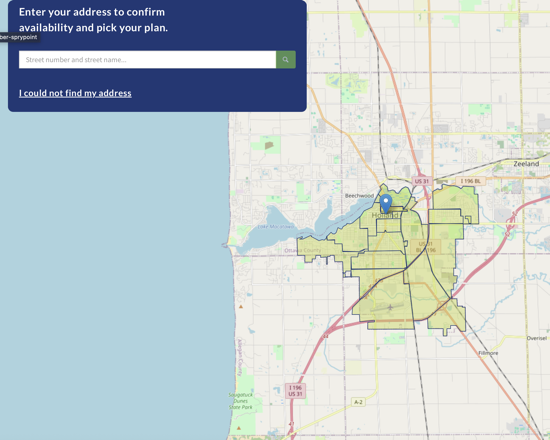
Holland Fiber coverage map encompasses entire city

HBPW had maintained a small institutional and business fiber loop dating back to 1992. But like countless mid-sized cities across the Midwest, local residents and small businesses outside the immediate downtown core were left at the mercy of a cable-and-phone duopoly that chronically underinvested in network upgrades while hiking rates via hidden junk fees.

Formal exploration of a citywide build began around 2016. In 2021, the city tapped engineering consultancy CTC Technology & Energy to conduct a feasibility study and business plan. That study laid bare what locals already knew: leaving the city’s connectivity to the private market would ensure decades of stagnant speeds, erratic customer service, and escalating costs.

Santa Ynez Chumash Connects First Tribal Fiber Subscribers

The Santa Ynez Band of Chumash Indians recently reached a major milestone with the launch of the Tribe’s long-awaited Chumash Fiber Network, providing next-gen, affordable broadband access to a California community long-neglected by regional private monopolies.

For generations, telecom giants treated Tribal reservations and rural enclaves across California with predictable neglect: underinvesting in core infrastructure, charging exorbitant rates for slower asymmetrical copper, and insisting low population density makes modern fiber deployment economically unviable.

Like many communities, the Santa Ynez Band of Chumash Indians has taken matters into their own hands with the Chumash Fiber Network, now providing speeds up to five gigabits per second (Gbps) to reservation residents.

Spanning 13 miles of underground fiber across 1,400 acres of ranch land, the network is slated to connect roughly 400 locations — serving an estimated 853 residents — alongside Tribal administrative buildings, health facilities, and the new 143-home Camp 4 residential development.

Funding for the network was provided by Tribal Technical Assistance and federal planning grants via the National Telecommunications and Information Administration (NTIA) Tribal Broadband Connectivity Program (TBCP), as well as a $4.7 million grant awarded under the California Public Utilities Commission’s (CPUC) Last Mile Federal Funding Account.

State grant support was coupled with California’s open-access Middle Mile Broadband Initiative (MMBI), which is attempting to give emerging competitors and municipalities a leg-up in a market long-dominated by extractive regional telecom monopolies.

Unlike legacy cable and phone providers that nickel-and-dime captive subscribers with hidden fees, usage limits, and arbitrary speed throttling, the Chumash Fiber Network was engineered as an essential public utility.

Community Network Builders Gather in Seattle for First-of-Its-Kind Conference

This is not your father’s broadband conference.

It’s CNCon in Seattle, an inaugural gathering for those running community networks or looking to start connecting people the big monopoly providers have left digitally disconnected.

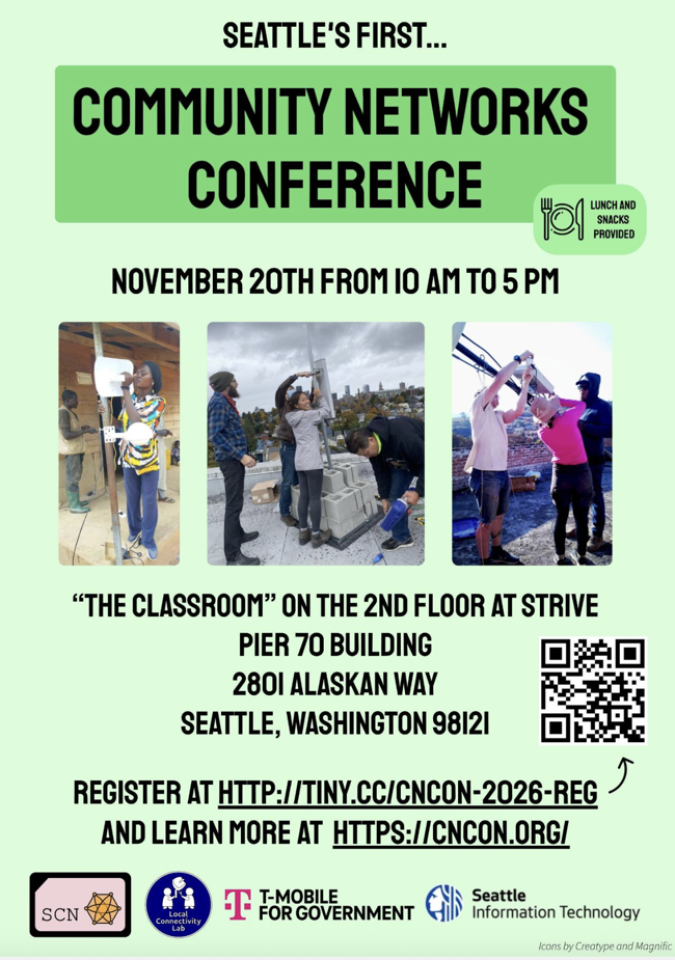
Registration for the November 20 in-person event — Community Networks Conference (CNCon) 2026 — is now open here.

Hosted by the Seattle Community Network and Local Connectivity Lab, conference organizer Esther Jang tells ILSR the gathering will be geared for community network operators to geek out, “share, learn from each other, and build together,” adding that they are also putting out the call to community network aficionados who have closed shop and can talk candidly about why, and what went wrong.

“Building community-based networks is rewarding but incredibly challenging, and we want to create a support network for these groups to work together and strategize towards common goals,” Jang said.

Image
Seattle Community Network Conference flyer

Big Tent Approach

“For this first conference, we are taking a big tent approach,” Jang says. “We want to be inclusive of folks with broadband projects as well as those who are operating emergency or disaster resilience networks, to see what we might all have in common.”

Attendees will explore tradeoffs in network operations — fun vs need vs profit — and address differences between working with fiber, fixed wireless, mesh, and Long Range Radio (LoRa) Internet access technologies.

Sherburne, NY Making Steady Progress On Open Access Fiber Build

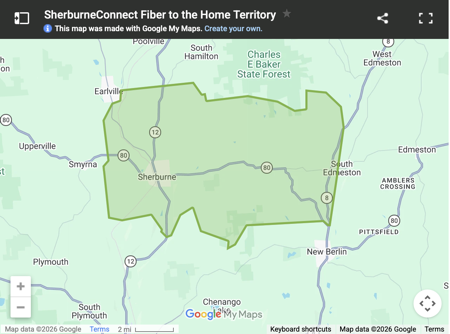
Construction on the regional expansion of Sherburne’s municipal open-access fiber network is advancing across neighboring Chenango County borders, backed by a $6.9 million state grant intended to turn a local pilot project into a regional community-owned utility model.

The project, branded Sherburne Connect, originated as an early municipal fiber deployment operated in coordination with the village’s century-old public electric utility, Sherburne Electric, after being designated in 2022 as one of four initial municipalities (alongside Nichols, Diana, and Pitcairn) to participate in New York State’s $1 billion ConnectALL initiative.

Partnering with the New York Power Authority (NYPA) and Empire State Development, the village shared an initial $10 million state pilot allocation to engineer a publicly owned open-access fiber network utilizing Sherburne Electric’s existing poles, bucket trucks, and municipal rights-of-way.

This project initially passed roughly 1,800 to 2,000 premises inside the village of Sherburne and immediate electric territory. Village of Sherburne Board of Trustees meeting minutes from last June indicate that the core network in Sherburne now has more than 1,000 active subscribers.

Image
Sherburne Connect Service Territory map

Those same meeting minutes indicate that Sherburne officials had requested a deadline extension but were denied it by Albany. “Superintendent [Travis] DuBois said Sherburne is furthest ahead with this fiber project than the other 13 systems and Albany want to show at least one project closed out by year end,” the minutes indicate.

Willmar, Minnesota’s Open Access Fiber Network Set To Go Live This Year

Willmar, Minnesota officials say they’re making steady progress on construction of the city’s planned $24.5 million open access fiber network, with the first residential and business customers slated to come online sometime later this year.

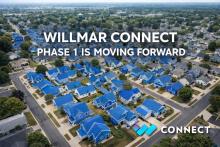
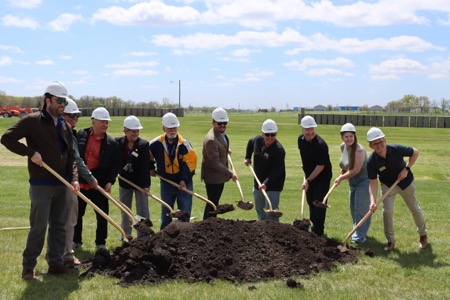
Dubbed Willmar Connect, construction of the city-owned fiber-to-the-home (FTTH) network broke ground in May 2026, marking a pivotal turn from years of feasibility studies and council debates to actual directional boring, conduit placement, and fiber splicing.

When we last checked in on Willmar back in March, the city council had just voted 4-3 to sign off on the $24.5 million open access project. After a summer of steady construction the city says it’s making meaningful progress toward a full commercial launch.

Image
A dozen city officials holding shovels above a mound of dirt at groundbreaking ceremony

“We expect to light up our first users on the network this year,” Willmar City Administrator Kyle Box tells ILSR.

Phased Construction Starting From GO (Bond)

Construction of the network is occurring in three phases.

Phase one of the project, focused on Southwest Willmar, is budgeted for between $7.6 million to $9.2 million. This phase of the project will focus on backbone construction, neighborhood conduit boring, lateral connections, and converting a former municipal wastewater facility into the network operations center (NOC).

Mecklenburg's Empower Co-op Hits 10,000 Subscriber Milestone

Empower Broadband, a spinoff of Mecklenburg Electric Cooperative (MEC), says it recently passed the 10,000 subscriber milestone and is making major inroads on bringing affordable fiber Internet access to unserved regions of Mecklenburg, Halifax, Charlotte, and Brunswick counties in Southern Virginia.

Empower and MEC representatives welcomed state and local officials and state agency leaders for a celebration ceremony last month in South Boston, where MEC and EMPOWER board of directors President David J. Jones said the 3,000 miles of freshly deployed fiber was “the largest construction initiative this cooperative has ever undertaken.”

Like countless other U.S. electric cooperatives, MEC, created back in 1938, is leveraging generations of experience at rural electrification to extend fiber into rural markets long neglected by regional private telecom monopolies.

“Knowing that our communities desperately needed a high-speed backbone, the board asked the same question that our founders had — if we don’t do it, who will?” Jones told attendees.

Image
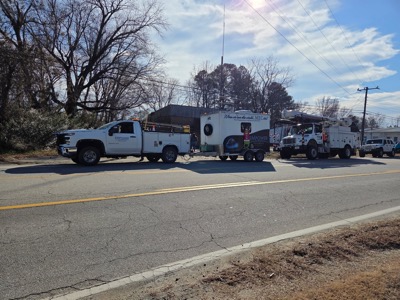
Two Empower Broadband service trucks parked along side of the street under utility wires

The $154 million network deployment was financed in part through the Virginia Telecommunication Initiative (VATI), which provided a $69.4 million grant in late 2021 to the Southside Planning District Commission and Empower.

MEC and Empower also received a $449,381 grant in May of 2021 to construct 22 miles of fiber and connect 414 units in the Tanglewood Shores area of Bracey, and another $3.35 million grant in 2024 to extend fiber access to an additional 3,983 addresses in Mecklenburg, Halifax, and Brunswick.

Falmouth Didn’t Build Its Own Network, But a Citizen Led Effort Still Brought Fiber to Town

At long last, fiber-to-the-home connectivity is coming to Cape Cod.

Gateway Fiber, a Missouri-based Internet service provider already operating in western and central Massachusetts, has announced it has begun network construction in Falmouth and says service will be available to residents and businesses later this year.

It’s a development that, after decades of frustration with high prices for cable service, will bring residential fiber connectivity to the region for the first time, initiated seven years ago by an effort to build a community-owned solution.

While the plan is for Gateway to first offer service in Falmouth, the company also has its sights set on expanding its network into other towns on the Cape — including the towns of Barnstable and Yarmouth, the most populous parts of the peninsula.

For years, Cape residents have complained about the high-priced, spotty service of the Comcast cable monopoly as their only wireline option. Enter Gateway. It represents a watershed moment for the region, as the ISP looks to tap the pent-up demand for the gold-standard of Internet access technologies (fiber) by first targeting Falmouth, home to about 33,000 residents.

Washington State Selects Seven Partners In $165 Million Fiber Expansion

The Washington State Broadband Office (WSBO) says it has signed contracts with seven broadband providers, tribes, and municipalities to begin work on a major affordable Internet expansion plan that should deliver $165 million in investment across nearly a dozen rural Washington counties and Tribal territories.

“Broadband isn’t a luxury anymore,” WSBO Director Jordan Arnold said of the expansion plan. “It’s how kids do homework, how small businesses stay open and how families reach a doctor without driving an hour."

"These contracts cement our commitment to bring that access to communities across our state who’ve been left out for far too long.”

Broadlinc, Concept Communications, Declaration Networks Group, Hood Canal Communications, Kitsap Public Utilities District (PUD), Lummi Indian Business Council, and the Spokane Indian Tribe will leverage a combination of $165 million in federal, state, and private funds to connect an estimated 28,452 households to the Internet.

Image
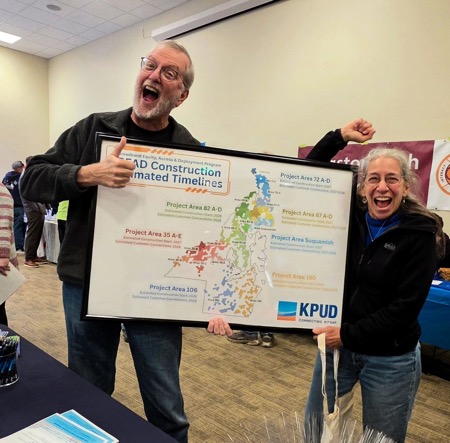
Two Kitsap PUD officials celebrate getting BEAD grant holding a sign announcing construction deadlines

Most of the impacted areas are rural communities long-neglected by regional dominant telecom monopolies. Contract details indicate that Washington State provided $27.3 million in matched funding to the grantees, who’ll need to conduct National Environmental Protection Act and National Historic Protection Act reviews before construction.