
American Rescue Plan

Content tagged with "American Rescue Plan"

Related Topics
Displaying 81 - 90 of 249

California Awards $86 million in Federal Funding Account Grants, Community Broadband Projects Big Winners

Imperial, Lassen, and Plumas Counties are among the first recipients of California’s $2 billion Last Mile Federal Funding Account Grant Program (FFA). The cities of Oakland, Fremont, and San Francisco have also been awarded significant state awards.

The FAA grants are part of California’s ambitious Broadband For All initiative, a $6 billion effort aimed at dramatically boosting broadband competition and access across the Golden State.

All told, the California Public Utilities Commission (CPUC) awarded 11 FFA grants totaling over $86.6 million. Prominent awardees from this first round include publicly-owned broadband projects: the Golden State Connect Authority (GSCA) – a joint-powers broadband authority comprising 40 rural California counties – and Plumas Sierra Telecommunications for projects across Imperial, Lassen, and Plumas Counties.

“These projects will build community-based, future-proof, and equity-focused broadband infrastructure across California,” said CPUC President Alice Reynolds. “The Federal Funding Account – and these projects – are a shining example of our state’s Broadband For All values and objectives.”

Transforming Connectivity for Every New Yorker - Episode 610 of the Community Broadband Bits Podcast

In this episode of the podcast, Chris speaks with Joshua Breitbart, Senior Vice President of the ConnectALL Office at Empire State Development in New York. They delve into New York’s municipal infrastructure program, which is investing over $200 million into municipal broadband across the state. Joshua shares insights on the ConnectALL initiative, which aims to transform New York's digital infrastructure with over a billion dollars in public funding.

The discussion highlights the importance of state and local partnerships in developing diverse models for municipal broadband. Joshua explains how the program leverages federal funding, such as the Capital Projects Fund (CPF), to support a range of approaches tailored to meet local needs. The conversation covers various projects, including Dryden Fiber, Southern Tier Network, and initiatives in Franklin County, illustrating the innovative ways these communities are expanding broadband access.

Joshua also reflects on the lessons learned from pilot projects and the flexibility needed to address underserved areas. The episode emphasizes the critical role of local expertise and planning in achieving digital equity and expanding broadband deployment. As the program rolls out, Joshua shares his excitement about the rapid deployment of services and the transformative impact on local communities.

Listeners are encouraged to stay tuned for future updates and to explore related initiatives aimed at improving broadband access and digital equity across the state. You can find more information about the ConnectALL Municipal Infrastructure Grant Program here.

This show is 26 minutes long and can be played on this page or via Apple Podcasts or the tool of your choice using this feed.

Transcript below.

We want your feedback and suggestions for the show-please e-mail us or leave a comment below.

Listen to other episodes or view all episodes in our index. See other podcasts from the Institute for Local Self-Reliance.

Thanks to Arne Huseby for the music. The song is Warm Duck Shuffle and is licensed under a Creative Commons Attribution (3.0) license

Vermont CUD Northwest Fiberworx Nabs $20 Million ARPA Infusion

The popular Vermont Communications Union District (CUD) Northwest Fiberworx (NWFX) has received a $20.2 million infusion in state American Rescue Plan Act dollars to extend affordable fiber broadband into long-underserved regions of the Green Mountain State.

The St. Albans-based CUD is a nonprofit special purpose municipality with 22 member towns. Its latest build will connect 3,800 unserved and underserved households in Franklin and Grand Isle counties in the Northwest part of the state.

Great Works Internet Vermont (GWI VT) will design the network and manage the operations, though Fiberworx will own the finished build.

Image
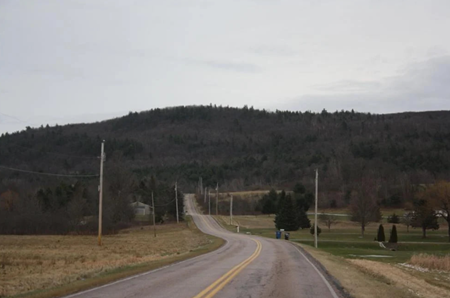
Northwest Fiberworx CUD road with utility poles

“We have a unique model, that of which we will build, own and maintain a fiber-to-the-premise open-access network,” Northwest Fiberworx Network Operations Manager, Mary Kay Raymond said in a statement.

The new $20.2 million grant awarded late last month by the Vermont Community Broadband Board (VCCB), was made possible by 2021 federal COVID relief funding courtesy of the American Rescue Plan Act.

“Northwest Fiberworx and their partner Great Works Internet Vermont have found a way to bring service where others would not,” VCBB Deputy Director Rob Fish said of the award.

“They’re building a sustainable network to serve Vermonters for decades to come.”

New York Announces $70 Million For Municipal Broadband Projects

As states gear up to administer federal BEAD funds from the bipartisan infrastructure law, a handful of states are already making significant investments in municipal broadband using federal Rescue Plan dollars.

California, Maine, Vermont, and New York have each established grant programs that center municipal broadband projects (mostly fiber builds) – with New York being the most recent state to announce more than $70 million in grant awards through its ConnectALL Municipal Infrastructure Grant Program (MIP).

Courtesy of the U.S. Treasury’s Capital Projects Fund, the awards are part of a $228 million initiative to bring high-quality Internet connectivity and consumer-friendly choice to New York communities long-stranded on the wrong side of the digital divide.

New $8.9 Million State Grant Boosts Dryden, NY Muni Fiber Network Build and Expansion Into Neighboring Caroline NY

The towns of Dryden and Caroline, New York have been awarded a new $8.9 million broadband grant courtesy of the New York State ConnectALL program. The award will help deliver affordable fiber capable of symmetrical speeds up to 10 gigabits per second (Gbps) to residents of both towns, which until now, had been trapped on the wrong side of the digital divide.

Launched two years ago, Dryden officials have told ISLR they’re making steady inroads on municipally-owned fiber deployment to the town of 14,500. Now they’re looking to expand the popular local broadband network further into the town of nearby Caroline.

According to an announcement by Dryden Fiber, this latest grant award will help fund the construction of over 125 miles of new fiber to reach 2,650 new residences in Dryden and Caroline. The first customers in Caroline are expected to be online sometime within the next twelve months.

Image
Dryden fiber groundbreaking

“I find a real partnership between the Town of Dryden, Town of Caroline, and the New York State ConnectALL Office,” Dryden Fiber Executive Director, David Makar says of the award. “Years of hard work and seed planting from elected officials, citizen volunteers, and private partner businesses are now showing up ready to provide top-tier quality broadband service for the residents of Dryden and Caroline.”  

Massachusetts’ Gap Networks Program Awards Verizon $37 million; One Muni Network Gets $750K

State broadband officials in Massachusetts have announced over $45 million in grant awards from the state’s Broadband Infrastructure Gap Networks Program with the lion’s share going to Verizon to “expand high-speed broadband [I]nternet infrastructure to underserved homes, business, and community anchor institutions across the state.”

State broadband officials say the $45.4 million in grant awards will be coupled with $40 million in matching funds from the awardees to expand broadband access to approximately 2,000 locations in 41 Massachusetts communities.

In 2022, as we previously reported here, Massachusetts was allocated a total of $145 million in federal Rescue Plan dollars to fund the Bay State program. With the state’s first round of funding from the Gap Networks Program awarding $45 million to four applicants, about $100 million is left in the pot for future funding rounds. Massachusetts has yet to receive its $147 million share of federal BEAD funds from the bipartisan infrastructure law, the spending rules for which are much more stringent than the more flexible CPF funding rules.

Tennessee Munis, Electric Cooperatives Get Major Chunk Of Latest State Broadband Grants

Cooperatives and Tennessee municipal broadband projects have nabbed a respectable chunk of Tennessee's latest round of middle and last mile broadband grants.

Tennessee’s Department of Economic and Community Development (TNECD) recently announced the state had awarded more than $162.7 million in broadband and digital opportunity grants, funded primarily via federal COVID relief legislation.

Image

TNECD indicates that $97.2 million is being earmarked for last mile and middle mile connectivity programs, with $65.5 million set aside for digital opportunity programs. The grants should extend broadband to an additional 236,000 Tennessee residents across 92 counties. Winners will provide $48 million in matching funds and must complete all projects by the end of 2026.

As is often the case, the regional telecom monopoly nabbed the lion’s share of the grants and awards, with Charter (Spectrum) being awarded more than $11.7 million for projects across Polk, Hardin, and Wayne counties. Charter was the top winner in the TNECD’s 2022 grant awards as well, nabbing $20.4 million to fund expansion across six counties.

At the same time, municipalities and cooperatives have been fairly well represented in both the 2022 and this year’s awards.

New York State Is Trying To Make It Easier For Municipal Broadband To Succeed

In March, Charter Communications tried (and failed) to include a poison bill in New York State’s budget bill that would have hamstrung community broadband. In stark contrast, a New York legislator this month introduced new legislation he says would make it easier than ever for New York state municipal broadband projects to thrive.

State Senator Jeremy Cooney of Rochester has introduced the Broadband Deployment Assistance Act of 2024 (S9134), which would streamline the permitting process for municipal broadband projects by "amending the general municipal law, in relation to requiring substantially similar permits for broadband deployment to be processed together at the same time and on an expedited basis."

“With a quicker timeline and more efficient process for local governments, we can create affordable options for New Yorkers that empower them to take control of their digital destiny,” Cooney wrote in an editorial published at Syracuse.com.

Image
New York State Seal

Cooney says he was motivated by a lack of broadband competition in New York State. New York is dominated by Charter Communications, which was almost kicked out of the state in 2019 for poor service and  misleading regulators about broadband deployment conditions affixed to its 2016 purchase of Time Warner Cable.

Vermont CUD Maple Broadband Moving Quickly To Expand Access

Vermont’s Communications Union Districts (CUDs), which were the subject of a recently released ILSR report, continue to make steady inroads in delivering high-quality broadband access to long-neglected rural Vermont residents.

That includes locally owned not-for-profit municipal operation Maple Broadband, which has completed the first phase of its broadband network and is busy on an expansion.

Maple Broadband is technically an extension of the Addison County Communications Union District (ACCUD), a coalition of 20 different member towns working collaboratively to bring gigabit-capable fiber to residents long left unserved or underserved by regional telecom giants.

In September of 2021 Maple Broadband announced a public private partnership with Vermont-based Waitsfield and Champlain Valley Telecom (WCVT), to build and operate a district-wide fiber network. The $30 million network is, in part, propped up by ARPA funds and a $9.1 million grant from the Vermont Community Broadband Board (VCBB).

Image
Maple Broadband logo

Three years later and the CUD says it has completed the first phase of its network; laying 143.5 miles of fiber and passing 1,647 homes and businesses in portions of the Vermont towns of Cornwall, Orwell, Shoreham, Whiting, Salisbury, and Middlebury.

Broadband Bills To Enhance Local Autonomy Thwarted By Wisconsin State Senate

*In partnership with Broadband Breakfast, we occasionally republish each other's content. The following story by Broadband Breakfast Reporter Jericho Casper was originally published here.

In a setback to efforts aimed at enhancing broadband access across Wisconsin, the state Senate dealt a blow to three key bills aimed at improving various aspects of broadband provision Monday.

The first bill in question, AB 1180, aimed to give local governments more autonomy by allowing them to apply for broadband grants directly, rather than requiring them to partner with a telecommunications utility or a for-profit organization, as is required under current (state) law.

Image
Wisconsin State Seal

The bill also proposed expanding the permissible uses of grants beyond infrastructure construction and would have eliminated a requirement for a city, village, or town to prepare a feasibility report before constructing or operating facilities for public telecommunications, cable TV or broadband services.

Presently, Wisconsin law necessitates a public hearing before a local government can pass an ordinance or resolution to provision such facilities. Additionally, at least 30 days before this hearing, these entities must furnish a comprehensive report to the public, detailing the facility's costs, revenues, and a cost-benefit analysis spanning three years. AB 1180 would have waived the need for this report preparation.

Manding Internet Service Providers Deliver Advertised Speeds