
American Rescue Plan

Content tagged with "American Rescue Plan"

Related Topics
Displaying 41 - 50 of 249

Cold Springs Rancheria Joins Seven Tribes and More Than 20 Public Entities as California Broadband Funding Winners

As federal broadband funding sources face continued uncertainty, California’s massive last-mile grant program continues to plow ahead, looking increasingly like a vital lifeline for communities hoping to ensure that every individual has access to robust, reliable, and affordable Internet access.

Cold Springs Rancheria of Mono Indians was among the applicants celebrating a winning grant application in the California Public Utilities Commission’s (CPUC) latest Federal Funding Account (FFA) announcement.

The grant marks the eighth successful application by a Tribal nation in this program and another in a long list of community-focused projects led by public entities like municipalities.

Image
Cold Springs Rancheria Tribe logo

Cold Spring Rancheria’s application, for up to $1.5 million dollars, will bring much-needed connectivity to a total of 94 units, including 5 anchor institutions, on the Reservation in Fresno County with 100 percent of the households served by this project qualifying as low-income.

Many residents on the Reservation lack access to a terrestrial Internet service offering speeds anywhere near the definition of broadband (100 Mbps Upload/20 Mbps Download). Those that do have access to purported “broadband” speeds must rely on out-of-date DSL connections and, as a result, struggle with slow and spotty connections.

After working for several years to find a viable solution to these connectivity challenges, Tribal officials can now look forward to the fastest and most reliable Internet access via fiber-to-the-home technology.

The new, Tribally-owned broadband network will help the Tribe achieve universal access.

Carver County, Minnesota’s CarverLink Closes In On 100% Gigabit Fiber Coverage

Officials in Carver County Minnesota continue to make great progress expanding affordable fiber access to the county of 111,000 residents, thanks largely to their publicly-owned open access fiber network CarverLink and their partnership with Metronet.

Since its inception in 2013, Carver County has leveraged public and private collaborations and funding with the goal of making symmetrical gigabit (1 Gbps) fiber available to all locations county wide. With the looming completion of its most recent $10.5 million expansion, CarverLink Fiber Manager Randy Lehs told ISLR they’re getting very close to their ultimate goal.

The county currently has ownership and use of nearly 1,200 miles of fiber throughout Carver County and southern Minnesota connecting more than 280 last mile public and community support locations. Many of these markets have no connectivity; many others are stuck on dated, sluggish, patchy connectivity from regional monopolies.

CarverLink doesn’t provide fiber directly to residents and businesses. Instead it long-ago established a partnership with Metronet (formerly Jaguar Communications), to provide gigabit fiber service to businesses and local residential households. Winner of PCMag's “Fastest Major ISP for 2023” award, Metronet provides multi-gigabit fiber to 300+ communities across 17 states.

Image
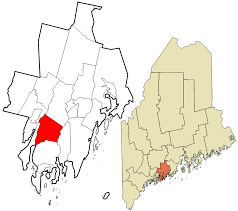
Carver County map

“CarverLink also oversees the availability of dark fiber within our network that is available to qualified service providers or other entities using dark fiber for new opportunities–open access, open interconnect fiber,” Lehs said.  “And through our open access fiber, services are also available from Broadband-MN and Arvig.”

New ISP Halo Fiber Leveraging ARPA Grants To Help Bridge Alabama’s Digital Divide

A new provider named Halo Fiber is hoping to leverage hundreds of millions in recent Alabama middle mile broadband network grants to extend affordable fiber broadband to state residents long stuck on the wrong side of the digital divide.

The new provider says it’s not quite ready to reveal full launch details (including target markets, speeds, or pricing), but told ILSR it should enter its first four fiber markets later this year thanks in part to a flood of American Rescue Plan Act (ARPA) funding in the state.

“We will be releasing pricing and target markets early this summer in May or June,” Halo Co-founder and CEO Brian Snider told ILSR. “Speeds are still being finalized as well but they will be symmetrical from 250 up and down to multi gig options.”

Image
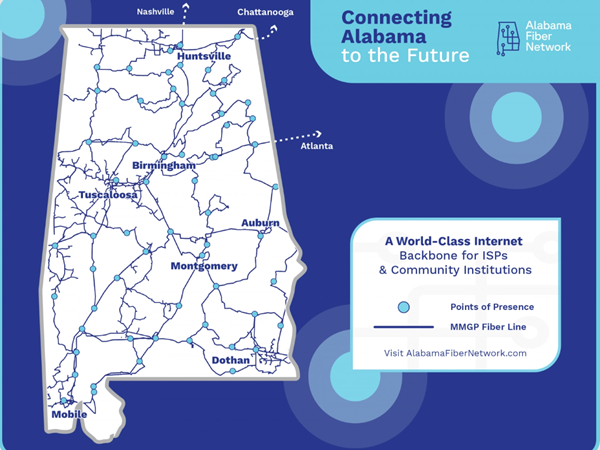
Alabama Fiber Network map

Halo says its primary focus will be to partner with public and private entities to build fast and affordable broadband networks, empower access to better education, telehealth, and economic opportunities, and ensure quality customer service in neglected markets.

“Ten years ago, myself and other members of the Halo team worked on an initiative that identified infrastructure gaps across the entire state,” Snider said in additional comments to BamaBuzz.

“We found that was a big gap in middle mile connectivity – especially in Alabama’s Black Belt where there was almost no high speed infrastructure,” he added.

Nearly a fifth of Alabama residents – or just over a million people – lack access to reliable high speed Internet.

No Shareholders, Just Service: Sherwood, Oregon’s Community Broadband Success - Episode 634 of the Community Broadband Bits Podcast

In this episode of the podcast, Chris speaks with Mayor Tim Rosener and IT Director Brad Crawford of Sherwood, Oregon, about the city’s journey in building a community-owned broadband network. 

They discuss Sherwood's unique approach to expanding fiber access, how they’ve leveraged Urban Renewal funding to support the network’s growth, and their commitment to keeping service affordable for residents. 

The conversation highlights the importance of local control, the economic benefits of broadband investment, and Sherwood’s expansion into surrounding rural areas. 

Tune in to hear how Sherwood is proving that community broadband can be both cost-effective and high quality, all while prioritizing local service and support.

This show is 22 minutes long and can be played on this page or via Apple Podcasts or the tool of your choice using this feed.

Transcript below.

We want your feedback and suggestions for the show-please e-mail us or leave a comment below.

Listen to other episodes or view all episodes in our index. See other podcasts from the Institute for Local Self-Reliance.

Thanks to Arne Huseby for the music. The song is Warm Duck Shuffle and is licensed under a Creative Commons Attribution (3.0) license

Championing Community Broadband in Montana with Representative Kelly Kortum - Episode 633 of the Community Broadband Bits Podcast

In this episode of the podcast, Chris sits down with Representative Kelly Kortum of Montana to discuss his efforts to repeal a law that restricts municipal broadband networks in the state. Drawing on his personal experience growing up in a small Montana town with limited Internet access, Representative Kortum shares how his passion for technology has shaped his advocacy for better broadband for rural communities.  

The conversation explores Montana’s existing barriers to broadband expansion, including outdated legislation favoring incumbent cable companies and the impact of federal funding programs like ARPA and BEAD. Representative Kortum highlights the critical role cooperatives and nonprofits, like Yellowstone Fiber in Bozeman, play in bridging the digital divide. Together, they emphasize the importance of local control in infrastructure development and the broader implications of equitable broadband access for innovation and economic growth.  

Tune in to learn how one legislator is working tirelessly to empower small towns across Montana with faster, affordable Internet and to challenge corporate control of connectivity.

This show is 17 minutes long and can be played on this page or via Apple Podcasts or the tool of your choice using this feed.

Transcript below.

We want your feedback and suggestions for the show-please e-mail us or leave a comment below.

Listen to other episodes or view all episodes in our index. See other podcasts from the Institute for Local Self-Reliance.

Thanks to Arne Huseby for the music. The song is Warm Duck Shuffle and is licensed under a Creative Commons Attribution (3.0) license

Sherwood, Oregon Ferments ‘Future-Proof’ Fiber To Preserve and Expand Municipal Network

In the City of Sherwood, a mostly residential bedroom community 16 miles south of Portland, officials have been quietly cultivating a digital vineyard across Oregon’s “Gateway to Wine Country.”

As part of its on-going work to build out a citywide fiber network, Sherwood Broadband recently secured a $9 million grant from the Oregon Broadband Office Broadband Deployment Program (BDP) to continue expanding Sherwood’s municipally-owned network into neighboring rural communities just outside city limits.

The grant award is part of $132 million in federal Rescue Plan funds the state is doling out to an array of community-owned broadband initiatives for 16 projects across 17 counties.

Award winners include Beacon Broadband, a subsidiary of the Coos-Curry Electric Cooperative ($19.4 million); Jefferson County ($19.2 million); Douglas Fast Net, a wholly-owned subsidiary of the Douglas Electric Cooperative ($8.5 million); the Idaho-based member-owned cooperative Farmers Mutual Telephone Company, which offers broadband service in Malheur County, OR ($18.9 million); and a handful of independent providers like Blue Mountain Networks ($6.5 million) and Ziply Fiber ($10.2 million), recently acquired by Bell Canada.

Bolt Broadband One Of Many Winners In Latest Oklahoma ARPA Grants

The Oklahoma Broadband Office (OBO) says local providers have broken ground on several new grant-fueled fiber projects designed to provide high-speed Internet access to long unserved or underserved communities across wide swaths of the Sooner state.

According to two different announcements by the state’s broadband office, the OBO recently greenlit $65.9 million in new fiber expansion initiatives in the Southern part of the state, as well as another $24.6 million in deployments for the northern-central part of the state.

Image
Oklahoma Bolt Fiber boring tractor

The fiber upgrade projects were made possible via $158 million in Capital Projects Fund grants made possible by the 2021 American Rescue Plan Act (ARPA). The grants are expected to help fund more than 50 projects in 28 counties.

In the Southern part of the state, $43.2 million in federal grants – plus $22.8 million in matching funds – will connect over 2,000 unserved homes and businesses in partnership with Medicine Park Telephone, Oklahoma Fiber Network, Oklahoma Western Telephone, Phoenix Long Distance, Southern Plains Cable, Southwest Oklahoma Telephone, and Texhoma Fiber.

New York Awards $13.1 Million In New Low Income Housing Broadband Grants

New York State officials have unveiled the first round of broadband deployment grants made possible by the state’s $100 million Affordable Housing Connectivity Program (AHCP), which aims to drive affordable fiber and Wi-Fi to low-income state residents trapped on the wrong side of the digital divide.

As part of the program, the state recently announced it will be spending $13.1 million to connect 14,167 lower income residents across Buffalo, Rochester, upper Manhattan and the Bronx with both affordable gigabit-capable fiber – and low cost Wi-Fi.

Flume, the partner ISP chosen by the state, will offer residents the choice of three broadband tiers: 100/20 megabit per second (Mbps) fiber for $10 per month, symmetrical 200 Mbps fiber for $15 per month, and symmetrical 1 gigabit per second (Gbps) fiber for $30 per month. All three subsidized fiber options will be locked at that price point until 2034, according to the state.

Image
Fox Hall affordable and senior living housing complex in Manhattan

“In today's digital age, access to reliable, affordable high-speed Internet isn't just about convenience – it's about ensuring every New Yorker can participate fully in our modern economy and society,” New York Governor Kathy Hochul said of the new grants. “Through these strategic investments, we're not only installing fiber and infrastructure, we're opening doors to education, healthcare and economic opportunity.”

Faster, Better, Cheaper

North Dakota Nearing 100 Percent Fiber Connectivity

With the incoming Trump administration and the ascendance of GOP leaders taking aim at key aspects of broadband expansion initiatives embedded in the Bipartisan Infrastructure Law, industry insiders expect the $42.5 billion Broadband Equity, Access, and Deployment (BEAD) program to likely get a major facelift in the coming months.

GOP Senate leaders have signaled they will push for BEAD to be scaled back or reconfigured.

One way they may do that is to remove the law’s preference for funding fiber network deployments and create a path for subsidizing Musk’s satellite Internet company, arguing that Starlink would be a more cost-effective solution to bring broadband to rural America.

Late last week, in fact, NTIA released its “Final Guidance for BEAD Funding of Alternative Broadband Technology.” And while the updated guidelines still considers fiber deployments as “priority broadband projects,” the agency administering the BEAD program now explicitly says that states can award “LEO Capacity Subgrants.”

How MINET is Expanding Broadband in Oregon - Episode 630 of the Community Broadband Bits Podcast

In this episode of the podcast, Chris speaks with PJ Armstrong, General Manager of MINET, about the innovative ways this municipal network is expanding connectivity in Monmouth, Independence, and Dallas, Oregon. 

They discuss MINET’s remarkable 75% market penetration, their unique partnership with investors for rural expansion, and their efforts to provide free Wi-Fi in local parks and public trolleys. Learn how MINET’s in-house team is taking on new challenges, such as underground infrastructure work, and how they’re navigating opportunities with federal programs like ARPA and BEAD.

Armstrong also shares insights into the community’s appreciation for reliable, locally operated Internet service and the complexities of extending broadband to unserved and underserved areas.

This show is 22 minutes long and can be played on this page or via Apple Podcasts or the tool of your choice using this feed.

Transcript below.

We want your feedback and suggestions for the show-please e-mail us or leave a comment below.

Listen to other episodes or view all episodes in our index. See other podcasts from the Institute for Local Self-Reliance.

Thanks to Arne Huseby for the music. The song is Warm Duck Shuffle and is licensed under a Creative Commons Attribution (3.0) license