
American Rescue Plan

Content tagged with "American Rescue Plan"

Related Topics
Displaying 181 - 190 of 249

Navajo Nation Nabs $420,000 To Expand Broadband in Utah

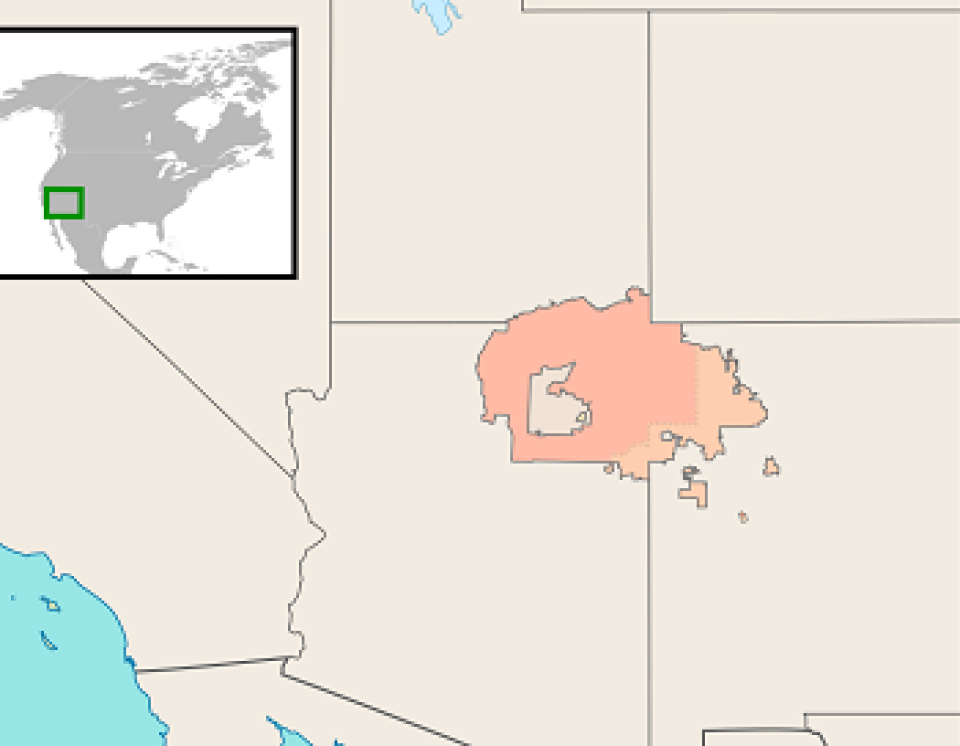
The Navajo Tribal Utility Authority (NTUA) is slated to receive more than half a million dollars in Covid-relief funding from the state of Utah. The funding will help the NTUA expand fiber and wireless access to part of the 27,425 square mile Navajo Nation, improving access at Navajo anchor institutions and some of the nation’s 173,000 residents. 

The NTUA was created in 1959 by Navajo leaders frustrated by the fact that regional utilities had failed to provide uniform electricity services to the Navajo people. Still, over 60 years later and not only is the failure to electrify marginalized communities still a problem, the organization is leveraging its experience in that fight to expand broadband access as well. 

Project Timeline: 30 months

To help fix the problem, the Utah Broadband Center, run by the Governor’s Office of Economic Opportunity, recently doled out $420,732 in broadband grants to the NTUA. Combined with $140,244 in matching funds from the NTUA, the project will bring a combination of fiber and wireless to 473 households currently unserved in Montezuma Creek, Utah. 

Image

The grants were part of $10 million in Covid relief funding recently awarded by the Utah Broadband Center and made possible by the American Rescue Plan Act.

“From the time they sign the contract with the state, they have 30 months to complete the project,” Rebecca Dilg, Director of the Utah Broadband Center, told ILSR. “We are still working out the details of the contracts with all grant recipients.”

Shoring Up the Unserved in Talbot County, Maryland

In the heart of Maryland's Eastern Shore – a place Forbes Magazine considers one of the “Top 5 Coolest Towns to Buy A Vacation Home” – a fiber-to-the-home project is making the region an even cooler place to live.

Building on its historical allure and 600 miles of Chesapeake Bay waterfront views, state, county and local utility officials are making a multimillion-dollar investment to transform Talbot County’s half dozen towns (and a handful of other unincorporated communities) 40 miles east of Annapolis into a far more attractive place to live, work, and play. To do that, they are relying on Easton Utilities, the county’s seat long-standing municipal utility, to expand high-speed Internet access into the most rural reaches of the region.

Image

In March, the Talbot County Council unanimously approved allocating $1.75 million of its American Rescue Plan Act funds to help bring fiber Internet connectivity to the hardest-to-reach parts of the county. That funding comes on the heels of Easton Utilities being awarded federal and state grant funds totaling $26 million, with the bulk of that going toward a fiber network expansion project known as Connect Talbot, while a portion is being used to upgrade its existing hybrid fiber-coax system.

With construction crews now working to extend Easton Utilities fiber backbone further out into the county, the utilities’ subsidiary – Easton Velocity – is already offering service to over 100 new subscribers.

A Plan for Middle and Last-Mile Comes Together in York County

For the past two years, York County, Pennsylvania (est. pop. 459,000) has been working hard on a multi-part plan to connect both rural and urban areas.  

York began laying out plans for a county-owned middle-mile network in 2020. The idea was to make last-mile hookups viable for private providers in more areas of the county, and to close its major connectivity gaps.

Along with these plans, York launched a middle-mile pilot project along a 16-mile stretch of the York Heritage Rail Trail, which runs from the York metropolitan area in the center of the county down to Pennsylvania’s southern border. The project leveraged $1.5 million in CARES Act funding and a length of conduit that had been lying underneath the rail trail for two decades. The fiber that was deployed currently provides middle-mile capacity throughout the south central part of the county, as well as some wireless coverage from a tower at the stretch’s midpoint in Hanover Junction.

Building Beyond the Pilot

In early 2021, it was left to the YoCo Fiber Broadband Task Force, “led by the York County Economic Alliance and composed of representatives from business, government, health care, education, and other sectors,” to recommend to the county a way to “develop and implement a countywide broadband strategy.”

In July of that year, the Board of Commissioners voted unanimously to spend as much as $25 million of its American Rescue Plan money, under the guidance of the task force. The first $20 million was dedicated to building out the first half of an underground middle-mile network throughout southern York County, which was designed to “connect anchor institutions and build redundancy.”

Gainesville Tosses Muni Broadband Project into Big Telecom Swamp

Gainesville City Commissioners dealt a severe – if not fatal – blow to the expansion of municipal broadband in the Florida city where Gatorade was invented. Last week, five of the city’s seven commissioners voted to reject a proposal to spend $10 million of its American Rescue Plan funds to build a fiber-to-the-home (FTTH) pilot project.

As we reported here and here, city officials had been leaning in the direction of using $10 million of its $32 million in federal rescue plan funds to extend the city utility’s existing fiber network to bring high-speed Internet access to about 5,000 households caught on the wrong side of the digital divide.

Image

Gainesville Regional Utility (GRU) has already deployed over 600 miles of fiber throughout the city, and for the past two decades, its subsidiary GATOR NET has been offering symmetrical gig-speed service to a limited number of area businesses, apartment buildings, government agencies, and community anchor institutions. 

In 2017, the citizen-led group Connected Gainesville began a public campaign with the hopes of persuading city officials to bring FTTH service citywide in a market dominated by Cox Communications, the incumbent monopoly cable provider serving this city’s approximately 141,000 residents, 56,000 of whom attend the University of Florida.

Death-knell for Municipal Broadband in Gainesville?

Our Big List of American Rescue Plan Community Broadband Projects Hits 250

It’s been nine months since we launched our Big List of American Rescue Plan Act (ARPA) Community Broadband Projects, tracking what communities are doing with the various pots of federal money intended to go towards solving local broadband challenges. Since then, we’ve recorded 250 community projects and 27 states which have announced significant broadband grant programs or disbursement for new infrastructure projects. Here we highlight some of the community projects we’re really excited about, including those that have decided to build their own networks and those building on existing projects, as well as those using ARPA dollars for open access networks, affordable connectivity, or Internet access for students. We also discuss some examples of solutions we believe are less permanent, forward-thinking, or likely to result in long-term success, including the distribution of hotspots and the allocation of funds to monopoly providers. 

What We’re Excited About: Community-Owned Networks and Open Access  

Fortunately, we’re seeing a number of communities approve plans to spend their Rescue Plan dollars on building their own municipal networks. In Lexington, Tennessee (population 8,000), the city is collaborating with Lexington Electric to bring broadband to the community. An ARPA grant is expected to cover about $20 million of the total $50 million price tag, and the city will issue bonds for the rest. If this grant is received, Henderson County (28,000) – where Lexington is located – has agreed to a 10 percent match (from $300,000 to $500,000). 

Treasury Announces First States to Get Capital Projects Funds

This morning, the Department of Treasury announced the first round of Capital Projects Fund (CPF) awards to states putting together portfolios to deploy new infrastructure to unserved households. Across Louisiana, New Hampshire, Virginia, and West Virginia, 200,000 locations will see new deployments capable of 100/100 Mbps at a total cost of almost $583 million. 

It’s a welcome announcement that should assemble a wide range of solutions and result in much better connections for more than half a million people across the country long left behind by policy and infrastructure solutions so far. It also marks those states which have been more proactive in getting their ducks in a row as early as possible, and opening a dialogue with Treasury about how to use the CPF funds expeditiously to solve remote work, healthcare, and education in the face of the ongoing publish health crisis.

The Basics

The CPF is made up of $10 billion, and part of the $1.9 trillion American Rescue Plan Act passed last year. It complements the $350 billion State and Local Fiscal Recovery Funds (SLFRF) (which can be used for water, sewer, or broadband infrastructure) as well as the Emergency Connectivity Fund (ECF). New infrastructure must be capable of delivering symmetrical speeds of 100 Mbps. There are no local matches required (though most states are and will likely institute some form of requirement).

Sterling MA Now Has Its Own Little LAMB Fiber Network

As communities across the Commonwealth of Massachusetts are at various planning stages in laying the groundwork to build their own municipal broadband networks, a rural Bay State town about 50 miles west of Boston has moved past the planning phase and is now offering municipal fiber-to-the-home (FTTH) service.

In Sterling (est. pop. 8,000) – the town that lays claim to Mary Sawyer Tyler, said to have inspired the “Mary Had a Little Lamb” poem – the town’s municipal utility is building out its aptly named Local Area Municipal Broadband (LAMB) network.

The project was initiated more than five years ago as a new division within the century-old Sterling Municipal Light Department (SMLD). As one of about 40 of the state’s 351 towns and cities with its own municipal electric utility, SMLD was awarded a $150,000 state grant to help finance the construction of a 23-mile regional I-Net ring in 2020. A year later, LAMB lit up its first residential customer in April of 2021.

Image

Following an incremental approach, earlier this year, the LAMB added its 50th subscriber as construction crews are on track to build out a town-wide fiber network by the end of 2024.

Connecting with Nearby Towns

Like other communities across the nation with an established municipal utility, from a design and engineering standpoint, it was a relatively easy leap into broadband for SMLD, which currently supplies electricity to more than 3,700 residential, commercial and municipal customers.

Summit County, Ohio Defends Community Broadband from State Opposition and Forges Ahead with Plans to Bolster Economic Development

Summit County has put together a multi-part, $75 million broadband plan to improve connectivity in the area: a middle-mile institutional fiber ring to connect the county’s public safety facilities and expand its broadband capacity, a new datacenter, and a fiber investment to specifically target residents and businesses in the county’s underserved areas and economic activity hubs. When completed, the whole project will go down as one of the county’s largest capital projects to date

Summit will dedicate $35 million of the $105 million it received from the American Rescue Plan (ARPA) for the fiber ring, another $20 million in ARPA dollars to serve job hubs and areas of need, and $20 million of its own county funding for the datacenter. But the locally driven solution almost didn’t materialize, with recent movement in the state legislature threatening community-owned solutions that remain out of step with both residents and local officials. 

Defending Community Broadband Against State Challenges

The county’s potential for better connectivity was threatened last year, when the state of Ohio introduced some last-minute legislation that threatened to outlaw public broadband. In June of 2021, an amendment banning municipally-owned broadband was anonymously tacked onto the State Senate budget bill. The amendment barred the creation of new municipal networks and the ongoing operation of existing municipal networks in areas where a private provider offered service. It prevented city governments from accepting federal money for broadband projects, and allowed city-owned networks to provide service only in areas where no private provider was present (less than two percent of Ohio).

NY State Budget Bill Sets Table for Municipal Broadband

Although we were initially concerned that certain language in New York’s proposed state budget would lock out municipal broadband projects from being able to capitalize on the federal funding bonanza contained in the American Rescue Plan Act and forthcoming money in the Infrastructure Investment and Jobs Act, the bill that was ultimately signed into law by Gov. Kathy Hochul was amended and has some golden nuggets for municipal broadband.

The recently enacted $220 billion budget bill includes $1 billion for the state’s ConnectALL initiative, which Gov. Kathy Hochul’s office calls “the largest ever investment in New York's 21st century infrastructure (that) will leverage public and private investments to connect New Yorkers in rural and urban areas statewide to broadband and establish the first municipal broadband program of its kind in the nation.”

Cultivating a Municipal Broadband Ecosystem

In part MMM of the budget bill, it establishes a “municipal assistance program … to provide grant funding to municipalities, state and local authorities ... to plan and construct infrastructure necessary to provide broadband services.”

Municipal grant recipients, the bill says, will be required to build broadband infrastructure to “facilitate projects that, at a minimum, provide reliable Internet service with consistent speeds of at least 100 Megabits per second (Mbps) for download and at least 20 (Mbps) for upload.” That shouldn’t be a problem as most municipal broadband projects use fiber optics that can deliver far more than that. 

How much of the ConnectALL money will be allocated for the municipal grant fund has not yet been determined. But, community broadband advocates should not lose sight of the significance of the broadband ecosystem that is being cultivated in conjunction with other parts of the budget bill.

Cox Looks to Head Off Municipal Network Competition in Rhode Island

Cox Communications recently grabbed headlines for an announcement that the company would be investing more than $120 million in Rhode Island to expand and upgrade its Internet infrastructure. But officials in the state say much of the planned deployments may not actually even be new. The announcement appears timed to ensure that public funds from the American Rescue Plan are shifted away from potential competitors (including local governments), and toward a regional monopoly long criticized for underinvestment in the state. 

“Historic Investment”

On March 15, the region’s dominant cable broadband provider announced a $120 million plan to provide 10 gigabit per second (Gbps) service to an unspecified number of  Rhode Island residents over the next three years. The coordinated press event and announcement took place at the Old Colony House in Newport mansion of Governor Dan McKee, who heralded the “historic investment.” 

According to Cox, $20 million of the announced total would fund fiber new deployments to roughly 35,000 homes in the Aquidneck Island communities of Newport, Portsmouth, Middletown, and Jamestown. The rest will focus on providing less-robust hybrid coaxial/fiber service to the rest of the state’s residents. 

“We’re preparing for the next generation of Internet use in home and in business,” Ross Nelson, Senior Vice President and Regional Manager for Cox Communications said. “We are committed to being the Internet provider customers can count on to have the speed they need now and in the future.”

But several state leaders, well familiar with cable and phone monopolies' long history of under-investment in the state, say the announcement was largely decorative, and doesn’t come close to actually meeting the needs of long-underserved local Rhode Island communities.