
American Rescue Plan

Content tagged with "American Rescue Plan"

Related Topics
Displaying 151 - 160 of 249

IN OUR VIEW: City Cast Provides Good Lessons for Covering Broadband

City Cast Las Vegas recently aired back-to-back podcast episodes about Internet access in the region, "Why Does Our Internet Suck?" followed by "Who Can Fix Our Internet?" As an organization that both produces stories like that as well as stars on them, as our own Sean Gonsalves did in the first episode, we wanted to share why we think these are well done and should serve as good lessons for others covering these issues.

The interviewer, Dayvid Figler, is on point with questions and the show offers a concise description of the challenge and potential solutions. It turns out that Dayvid also worked as a trial lawyer though, so perhaps not many reporters will be able to simply summon that level of command to shape the conversation. Nonetheless, these two shows are wonderfully informative.

The first episode sets up the second, which is where I want to spend more time. Dayvid's questions help Sean explain what broadband is and why some neighborhoods are left behind - one of the more common questions we see on this subject. They discussed who owns existing networks and what fiber is and why we should care.

Dayvid lays the groundwork for the second show by asking why competition hasn't solved the problem of why people are frustrated with their Internet service and Sean explains that while there is no one-size-fits-all solution, the Institute for Local Self-Reliance believes communities need to take action to improve their service.

The second episode features Brian Mitchell, Director of the Nevada State Office of Science and Innovation. No relation to me, Christopher Mitchell, or my boss, Stacy Mitchell (none of us are related - there are just a lot of Mitchells, ok?).

Waterloo, Iowa Voters GO Forward with Municipal Fiber Network

After years of consideration and planning, Waterloo, Iowa is finally moving quickly forward with its plan to build a citywide municipal fiber network. Once complete, the network aims to provide the city’s 67,695 residents with an affordable, fiber-based alternative to local monopolized broadband options that have long left regional locals frustrated and disappointed.  

Waterloo expects that it will cost somewhere around $115 million to build the necessary fiber backbone and connect all Waterloo residents and businesses to the fledgling network. City officials expect the first customers to go live sometime later this year at up to gigabit speeds, though it will take roughly three years for the entire network to be built.

Image
Waterloo Iowa map

Much like the rest of the country, Waterloo leaders and residents received a crash course in the importance of affordable broadband during the Covid crisis, when the country’s spotty, sluggish, and expensive broadband networks were on full display due to a massive rise in telecommuting and home education.

Voters Declare GO Time on Muni Broadband

Fueled by frustration, Waterloo voters in September overwhelmingly approved the city issuing general obligation bonds to fund the start of construction for a city-wide municipal fiber network.

LA County Selects Pilot Communities for Major Broadband Expansion

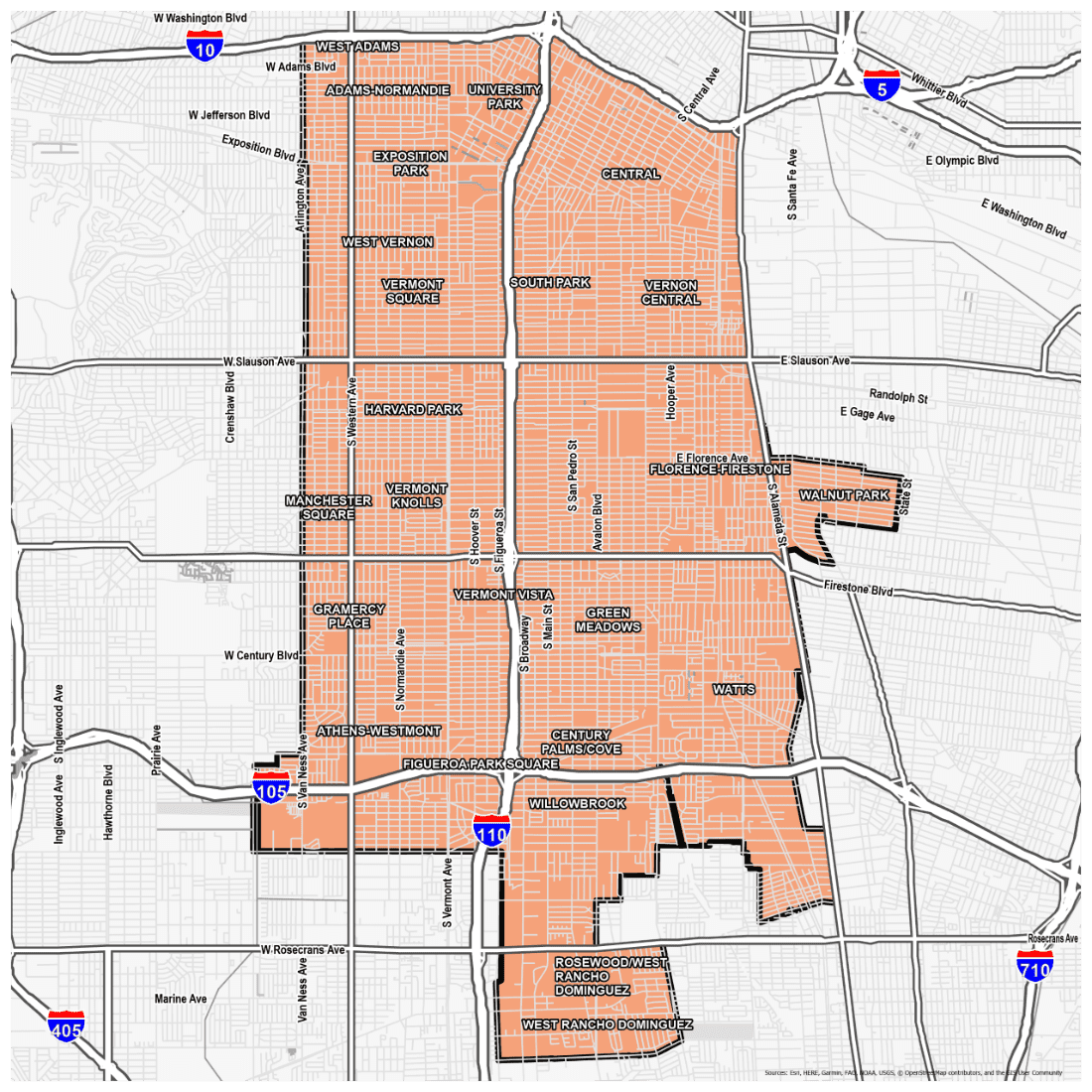
LA County is accelerating its plan to deliver affordable broadband access to the city’s unserved and underserved, with an eye toward building one of the biggest municipal broadband networks in the nation. But the county is first taking baby steps, recently announcing target communities prioritized in a pilot program aimed at bridging the digital divide.

In late 2021, the LA County Board of Supervisors unanimously approved a major new broadband expansion plan. The plan’s first order of business: deliver free broadband to the 365,000 low-income households in Los Angeles County that currently do not subscribe to service, starting with a 12,500-home pilot project.

Last September, the LA County Board of Supervisors approved using a total of $56 million in American Rescue Plan funding to help connect these families to fast, free, and reliable Internet service.

To help coordinate the effort, LA county designated the Internal Services Department (ISD) as the lead agency responsible for managing this and any future projects. The ISD is now working in conjunction with the Los Angeles County Board of Supervisors to determine which areas of the county should see funding and logistical priority. 

The ISD and LA County Supervisor Holly Mitchell recently released a map of priority locations where the County will build low-cost internet for households in the Second District. 

“I joined the Los Angeles County Board of Supervisors in the height of the pandemic,” Mitchell said in an announcement. “And it became very clear that access to reliable Internet was critical to our success of emerging out of the pandemic. In the Second District, as much as 30 percent of households lack home internet [access]. This is unacceptable, and Los Angeles County is working aggressively to upend this. We are leading the nation on a plan to crush the digital divide.” 

Georgia CPF Funds Go Mostly to Big Incumbents; Cooperatives Share Leftovers

Kicking off the new year, Georgia Gov. Brian Kemp’s office announced $234 million of the state’s Capital Projects Fund (CPF) will be used to deploy new high-speed Internet infrastructure in the Peach State, courtesy of the American Rescue Plan Act.

The lion’s share of those federal funds, being administered by the state’s broadband office, will be gobbled up by the four national telecom giants operating in the state. The rest of the grant money will be shared by a half dozen electric cooperatives for smaller projects.

In total, the grants were awarded to 12 different applicants to fund 29 different projects across 28 counties.

“When combined with significant capital matches from the awardees, almost $455 million will be invested to serve over 76,000 locations in communities with some of the greatest need for high-speed Internet access,” the Governor’s office said in the Jan. 4 press announcement.

Image
Georgia CPF Fund logo

The Big Telecom winners were Comcast, netting almost $67 million for eight projects that looks to extend broadband access to nearly 28,000 locations; $39.3 million for five Spectrum projects that plan to pass nearly 19,000 locations; Windstream raking in $34.8 million for four projects to make high-speed Internet service available to 4,500 locations, and MediaCom hauling in $27.9 million for three projects to reach 8,200 addresses. 

The electric cooperative grant awards were:

Maine Investing in Multiple Community Broadband Projects Across the State

Legislative changes and funding in Maine in the last year have made it easier for local communities to consider municipal broadband options. While incumbent providers have been pushing back, local communities are pulling themselves forward.

Setting the Stage

A champion of community-driven broadband, Andrew Butcher, president of the newly created Maine Connectivity Authority (MCA), is leading the state's $250 million effort to expand broadband access in Maine, as Butcher discussed the state's new strategy in our Community Broadband Bits podcast last January. That amount includes $20 million in state funds from the Maine Jobs and Recovery Plan and $130 million in federal funds from the American Rescue Plan. The state will also be getting in excess of $100 million from the Infrastructure Investment and Jobs Act.

There has been push back from national providers who have campaigned at the local level to encourage local governments and policy makers to stop community broadband in its tracks, as we have covered here and here. And yet, despite those efforts, a number of communities across the state have started to make strides toward building publicly-owned, locally-controlled networks.

Here is a snapshot of the activity:

Western Maine: Mahoosuc Region

ISPs Large and Small Push for Tax Exempt Broadband Grants

After years of efforts, the telecom industry and a range of independent broadband experts are making progress in a quest to make broadband grants tax exempt, a move industry players large and small say is necessary if the federal government wants the historic round of new federal broadband funding to benefit as many un- and under-served Americans as possible. 

During previous broadband grant programs, such as the (Broadband Technology Opportunities Program) BTOP and (Broadband Initiatives Program) BIP grants in 2010, the Internal Revenue Service had the authority to unilaterally exempt some grants from taxation. 

The Tax Cuts and Jobs Act (TCJA) required that broadband grants be treated as taxable income. As a result, telecom industry watchers have been warning since March that upwards of 21 percent of new grant awards would need to be paid back to the United States government in the form of taxation, complicating project financing and scale. 

“Entities expecting to receive grant funds would need to budget for the tax bill, potentially requiring a reduction in the scope of their project,” Casey Lide of the law firm Keller & Heckman wrote in a post detailing the implications. “Entities might also consider structuring a project so that grant funds are received by tax-exempt entities.”

With more than $50 billion in Infrastructure Investment and Jobs Act (IIJA) and American Rescue Plan Act (ARPA) funding waiting in the wings, industry players large and small are working to reverse the changes imposed in 2017 before the tax man comes knocking.

Nearly $1 Billion in Rescue Plan Funds Heads to Six States

The U.S. Treasury Department announced another six states have been approved to receive nearly $1 billion in Capital Projects Funds from the American Rescue Plan to bring new broadband infrastructure to more than 180,000 homes and businesses.

The latest tranche of CPF funds is heading to Florida, Georgia, Iowa, Minnesota, Missouri, and Utah, bringing the total number of states to have been approved for their share of the $10 billion fund to 22 states.

Previous awards were announced in June, July, August, early October and late October. According to a Treasury Department press release, the remaining funds for additional states and Tribal territories will be released on a rolling basis.

U.S. Treasury Deputy Secretary Wally Adeyemo said the announcement further underscored the Biden-Harris administration’s commitment to invest in the expansion of reliable, affordable broadband infrastructure as the Covid pandemic “exposed the stark inequity in access to affordable and reliable high-speed Internet in communities across the country.”

This funding will lay the foundation for the Biden-Harris Administration’s historic investments to increase access to high-speed Internet and reduce Internet bills for American households and businesses.

Florida

The Sunshine State is set to receive $248 million to fund new broadband infrastructure that will connect an estimated 48,400 households and businesses, or about 10 percent of locations in Florida that do not have access to high-speed Internet. That amount accounts for 68 percent of the CPF funds Florida will receive as plans for how the state will spend the remainder of funds is still under Treasury review.

Allegan County, Michigan Zeroes in On New Open Access Fiber Network

Allegan County, Michigan is moving forward with an ambitious new plan to bring affordable fiber broadband to 12,000 unserved addresses across the county. The project will be in partnership with Southfield, Michigan based 123NET, made possible in large part due to more than $17.7 million in county American Rescue Plan Act funds.

“123NET has proposed a fiber to the home proposal to approximately 12,000 addresses of residents who don’t have access to 100 Mbps (Megabit per second) download fixed service,” Allegan County Broadband Project Manager Jill Dunham told ISLR. 

According to the county’s website, the Allegan County broadband Internet access project first began when the county commission approved a resolution to form a Broadband Action Workgroup, which started meeting back on August 8, 2021.

The county has since constructed a four-part broadband expansion plan that promises to deliver 12,000 unserved addresses affordable fiber connectivity providing at least 100 Mbps downstream and 25 Mbps upstream, now effectively the standard in federally subsidized new broadband deployments.

According to the county, the path toward breaking ground involves ensuring Rescue Plan fund eligibility, hiring a project lead, bringing in additional project partners and other outside advisors, gathering data to ensure project goals will be met, and then putting it all together to implement plans for increased accessibility.

Charter, Comcast Continue to Dominate State Grant Awards

While cooperatives, utilities, and municipalities are seeing a welcome portion of Covid relief and infrastructure bill funding, the nation’s two biggest cable broadband monopolies continue to hoover up the lion’s share of most new broadband infrastructure grants. 

All told, the American Rescue Plan Act and Infrastructure Investment and Jobs Act will deliver more than $50 billion in new funding for broadband infrastructure. And while cooperatives and utilities have been big winners in states like Tennessee, a recent breakdown by Fierce Telecom of money awarded so far shows that cable monopolies have been the biggest winners by far. 

Syracuse NY Seeks Proposals for Municipal Broadband Network

Harnessing its American Rescue Plan funds, the city of Syracuse is seeking a partner to launch a pilot project as a precursor to creating a citywide municipal broadband network and to support the city’s broader digital inclusion efforts.

In his 2022 State of the City address, Syracuse Mayor Ben Walsh laid out the vision, recognizing that now is a time of opportunity.

"At no time in the past half century have conditions aligned so favorably for the City of Syracuse," Walsh said. "Population is growing. Graduation rates are rising. Private investment and job creation are again on the upswing. Our city fund balance has grown. The American Rescue Plan provides an unprecedented injection of federal aid — $123 million – to address challenges created and made worse by the pandemic. The Bipartisan Infrastructure Framework will pour tens of millions into the infrastructure challenges that always seemed just out of reach – roads, water, and broadband."

Syracuse wants to seize the opportunity by investing in both improved telecommunication infrastructure and digital literacy programs.

It has led the mayor’s office to issue a Request-for-Proposals (RFP) for the design, implementation and maintenance of a municipal network that would target households in Syracuse not currently served by the city’s incumbent providers (AT&T, Spectrum, and T-Mobile Home Internet). 

The deadline for submitting proposals is 2:30 pm ET October 11.

Seeking Open Ended Innovative Proposals