
rural

Content tagged with "rural"

Related Topics
Displaying 541 - 550 of 1070

Video To Share: Rural America, Broadband Help is Not on the Way

If you live in rural America, chances are you know what it’s like to have inadequate Internet access. If you've heard about the Connect America Fund, however, you probably think help is on the way and your problems will soon be over; you'll get the kind of speeds available in large cities, right? Wrong.

Our short video on rural connectivity and CAF explains how big companies are taking federal subsidies to build networks that provide the same old slow DSL service to rural areas. So, what can people in rural communities do? The video describes how local communities are becoming more self-reliant through publicly owned infrastructure and offers some starting points if you're interested in learning more.

More Of The Same? No Way!

The Connect America Fund (CAF) is offering billions of dollars to build out networks in rural areas, but the companies receiving the subsidies are the same ones that already offer terrible connectivity in most rural communities. Are they using those subsidies to invest in high-speed connectivity for rural areas? No. The DSL connections that those companies are deploying for your home or business with CAF funding is already considered obsolete.

Rather than accepting these substandard solutions, an increasing number of communities have decided to act so they can have the same or better quality of connectivity as urban areas. Rural cooperatives and municipal networks are taking charge of their own telecommunications infrastructure needs. Unless you live in one of these communities, you may have never heard about the fast, affordable, reliable connectivity available from a community network or a cooperative. They’re just doing it and not bragging about it.

YOU Make It Happen

How does a community or a cooperative start offering better connectivity? We’ve created this short video that explains the basics and we invite you to share it with others. It all starts with YOU.

Be sure to check out our other videos, too!

Access Appalachia

Update: Please note, this information is now out of date. It was developed in 2017. 

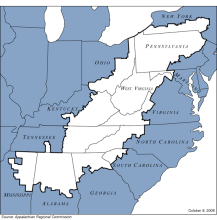
This is the central hub for ILSR’s research on Internet access around the Appalachian United States. We have compiled federal statistics on broadband availability and federal subsidies for large Internet Service Providers. We've created detailed maps of 150 counties in Kentucky, Southeast Ohio, and northern West Virginia.

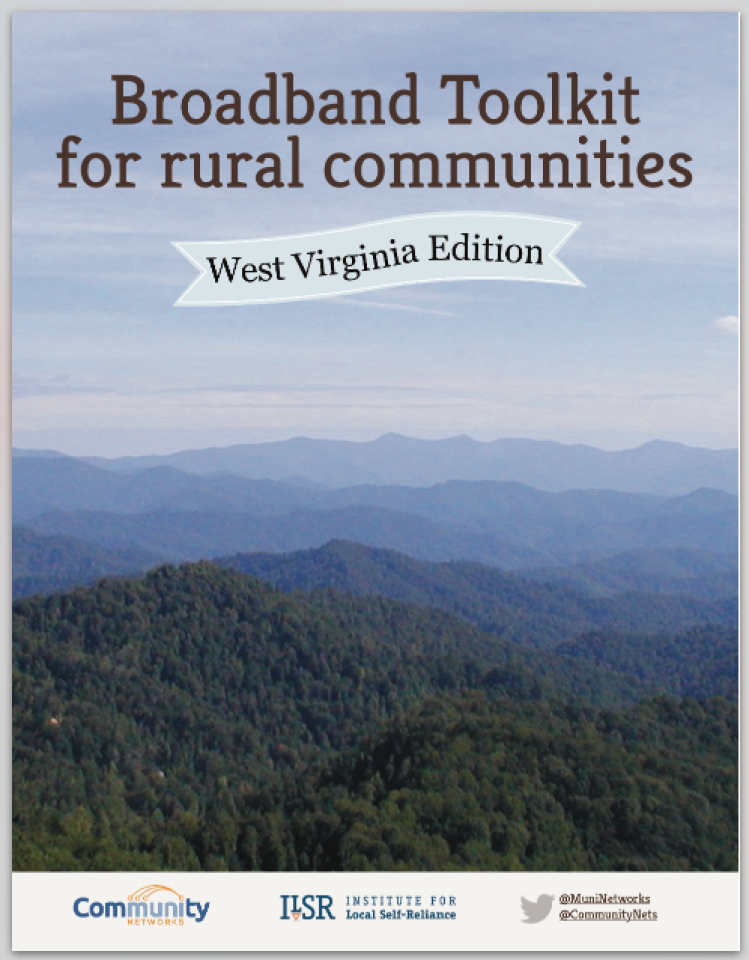
We've also created Rural Toolkits for Kentucky, Southeast Ohio, and northern West Virginia. These toolkits offer a big picture look at connectivity on a regional and statewide level.  They also provide action steps for folks to learn more and get involved.

Remember these three key details when reading through this information:

Internet access: if you can get online, check email, and browse the web.

Broadband: the Federal Communications Commission (FCC) currently defines this as speed of 25 Mbps download and 3 Mbps upload. 

Fiber-to-the-Home (FTTH): a high-speed fiber-optic connection directly to the home. This type of technology can support speeds of more than 1,000 Megabit-per-second (Mbps).

Appalachia can get better Internet service, but the big companies aren’t going to do it. Cooperatives and small towns are stepping up and delivering world-class Internet service.

Kentucky

Image

This information covers the entirety of the state – all 120 counties.

Rural Toolkit: This toolkit provides the basics of how to get started. From what is broadband to the details of federal funding, this toolkit has got you covered. At the back, it includes a statewide fact sheet, which is also available separately.

Tri-County Electric in Tennessee To Build High-Speed Network

On the border of Tennessee and Kentucky, an electric cooperative looks to a more connected future. The Tri-County Electric Cooperative that operates across state lines is preparing to build a state-of-the-art network for high-speed Internet service throughout Trousdale County, Tennessee. This will be the first year of construction for the cooperative after several years of planning.

Tri-County Electric plans to soon begin services to Trousdale County, the smallest county in Tennessee. Many of the county's 8,000 residents' choice is limited to Comcast and AT&T, and Tri-County Electric's Vice-President and General Manager Paul Thompson noted that people in the county often only subscribe to about 6 Mbps download and 1 Mbps upload. With a steady membership base of 50,000 spread across two states and a close relationship with the county, the electric co-op is in a good position to move forward with the Fiber-to-the-Home (FTTH) project. The cooperative intends to offer an affordable base package that provides faster, more reliable connectivity than what the incumbents are willing to offer the rural communities.

Funding From The Feds

Since 2014, Tri-County Electric Cooperative has actively pursued financing for a FTTH network in the county. The co-op applied for a grant through the Rural Broadband Experiments program managed by the Federal Communications Commission. They did not receive any funding, but the process resulted in a tangible plan.

The process of applying for the grant built up community support for the project and enabled the co-op to identify key assets. As part of the grant application, they noted which census blocks they expected to connect and what community anchor institutions, such as schools, libraries, and government buildings, could be included. The Trousdale County government even passed a resolution giving explicit permission for Tri-County Electric to build and operate a FTTH network. 

Pinetops Will Stay Connected In North Carolina

It’s been a long road for Pinetops, North Carolina, as they’ve sought better connectivity in their rural community. After dramatic ups and downs, the community seems to have finally found a tepid resolution. Greenlight can, for now, continue to serve Pinetops.

With Conditions

On June 28th, the General Assembly passed HB 396, which allows Wilson’s municipal network, Greenlight, to continue to provide gigabit connectivity to the town and to Vick Family Farms but establishes conditions. If or when another provider brings Fiber-to-the-Home (FTTH) service to Pinetops, Wilson has 30 days to end service as customers transition to the new provider. Until a different provider comes to Pinetops, Greenlight will continue to offer its gigabit connectivity to the approximately 600 households and premises in the community of about 1,300 people.

In addition to premises in the town of Pinetops, Greenlight is serving Vick Family Farm, a local potato manufacturer. When the business obtained access to high-quality Internet access, they were able to expand their business internationally; they invested in a high tech distribution facility. The facility requires the kind of capacity they can only get from Greenlight.

Community leaders in Pinetops are relieved they don’t have to give up fiber connectivity, but they’re happy with the service they get with Greenlight and would rather stick with the muni.

“Although not the solution we expected, we are pleased this bill allows us to continue to leverage Greenlight’s next generation infrastructure as we focus on growing our community,” said [Town Commissioner Suzanne] Coker-Craig. “Hopefully, no other provider will exercise the option to build redundant infrastructure that our community neither wants nor needs. Pinetops has made it clear that we want the quality and speed of service that only Greenlight can provide.”

Read the text of the bill here.

RFP For Assessment And Feasibility Study In Alexander County, North Carolina

Alexander County, North Carolina, recently released a Request for Proposals (RFP) to find a firm to conduct a broadband assessment and feasibility study. Applications are due July 24th.

Rural Connectivity

In addition to examining what type of service and where service is currently available, the county wants a firm that will help create a strategy to improve what they already know is poor connectivity throughout the county. Funding sources should be identified along with helpful public policy suggestions.

According to the RFP, approximately 50 percent of 1,954 respondents in a recent indicated that their Internet service did not have sufficient speed. Sixty-five percent don’t have access to broadband as defined by the FCC (25 Megabits per second download and 3 Mbps upload), and about 12 percent use their mobile devices to access the Internet. Sixteen percent noted that affordability is a problem. Approximately 84 percent of respondents indicated that they’d like to have more options for Internet access.

Alexander County

Alexander County is mostly rural and home to about 38,000 people. Manufacturing is an important part of the economy but farmland makes up much of its 264 square miles. Taylorsville is the county seat and the only town, with a few other unincorporated communities in the county. Bethlehem, a census designated place is located in the southwest corner of the county and is also somewhat densely populated, relative to the rest of the county.

The community is on the west side of the state, about an hour north of Charlotte. The Appalachian Regional Commission (ARC) classifies the community's economic status as "transitional" and the North Carolina Department of Commerce considers it an average economically distressed county. A little more than half of school kids qualify for free and reduced lunches. Unemployment is at 3.2 percent as of April 2017. County leaders hope that improving connectivity within the region will also help diversify the economy and improve the employment situation for residents.

Existing Fiber

Fiber Optic Otis: FTTH Service To Start This Fall

People in Otis, Massachusetts, are now seeing utility crews make space for fiber optic cable on poles as they prepare for the community’s publicly owned Internet network. The schedule calls for cable installation in August; the network should start serving residents and businesses this fall.

Working With A Neighbor

Like several other hill towns in western Massachusetts, Otis is working with Westfield Gas + Electric’s WhipCity Fiber, which will handle construction of the network. WhipCity will construct the network in phases, connecting premises as neighborhoods are completed. The project will connect 1,687 premises and will cost approximately $5 million. 

Construction is finally able to commence because in May, the Massachusetts Broadband Institute (MBI) released funding for last mile broadband networks to several towns that advocated for their own solutions. Otis received $1.7 million. Communities like Otis that chose to invest in publicly owned infrastructure are required to contribute to the cost of their network.

MBI chose to release the funds after a drawn out situation in which unserved and underserved communities in the western part of the state first planned to unite as a broadband cooperative, WiredWest. MBI was the administrator of approximately $50 million in federal stimulus and state grant funding but withheld the funds. They felt there were problems with the WiredWest business model, but local towns and municipal network experts did not share those concerns. Instead, MBI planned to dole out the funding to large incumbent providers, which angered many of the local communities that have expressed dissatisfaction with treatment by those very companies over the years. Comcast will still obtain large amounts of the grant money to build out in several of the smaller communities. Those small towns will not be required to contribute, but 100 precent of their premises are not always served and they will not own the infrastructure.

Appalachian Ohio-West Virginia Connectivity Summit, July 18th

Rural areas in southeastern Ohio and north West Virginia are plagued by poor connectivity. In the Appalachian region, people are organizing to find ways to solve the problem themselves rather than face the risks facing communities with no access to high-quality Internet access. On July 18th, the National Rural Assembly will hold "The Appalachian Ohio-West Virginia Connectivity Summit" in Marietta, Ohio.

Connecting Experts With Community Members

The summit will bring experts together to share their knowledge with participants who are interested in learning more about ways to improve local connectivity. In addition to a keynote address by Christopher, breakout sessions will include topics such as broadband policy, technology, and organizing.

There will also be an afternoon panel discussion titled “Community Ownership Models” and FCC Commissioner Mignon Clyburn will be sharing remarks. The event is one stop on her #ConnectingCommunites listening tour around the U.S.

You can learn more about the summit and the speakers at the Rural Assembly website. They’ve also collected a list of resources and want you to share your broadband stories.

Register, Agenda

There will also be a Town Hall later in the evening on the 18th. Check out the complete itinerary online and Register for either event if you plan to attend. The Summit will take place at Washington State Community College and the Town Hall will be held at Marietta High School.

For more and to stay up to date, follow the Summit FB page.

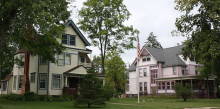
Image courtesy of The Appalachian Ohio-West Virginia Connectivity Summit FB page.

Minnesota Border-to-Border Grant Program Webinars For Applicants

Hey, Minnesota communities, are you looking for funding sources for your broadband project? If yes, and you plan on applying for a Minnesota Border-to-Border Development Grant Program, you should be getting your ducks in a row. The application period is fast approaching - July 3 through September 11.

For the 2017 grant period, the state legislature allocated $20 million to the program to expand broadband service in unserved or underserved areas of Minnesota. As a way to help you sort through the application process, the Minnesota Office of Broadband Development will be hosting several webinars early in the application period.

Dates and times for the webinars are:

Monday, June 26, 
11 a.m. to 1 p.m. (Central Time)

Friday, July 7, 
11 a.m. to 1 p.m.

Monday, July 10, 
11 a.m. to 1 p.m.

Wednesday, July 12, 
11 a.m. to 1 p.m.

Sign up for the webinars and get the details on eligibility, the process, and resources at the Office of Broadband Development website.

Co-op, County Collaborate To Expand FTTH Pilot In Virginia

Prince George County, Virginia, and its electric cooperative recently entered into an agreement that will allow Prince George Electric Cooperative (PGEC) to offer Fiber-to-the-Home (FTTH) to certain areas in the county. The arrangement came after a successful pilot project that proved residents and businesses in the rural community were interested in better connectivity. The agreement will inject funding into the cooperative's plans to bring high-quality connectivity to all its members.

From Rural Pilot To Proven

In February, officials from PGEC reported to the County Board of Supervisors that the pilot project was under way. The Virginia State Corporation Commission approved the cooperative's formation of its PGEC Enterprises subsidiary, which will offer connectivity to members. The co-op has connected premises along one stretch of Quaker Road in Prince George County, and received applications for installation from more than 40 property owners.

By the time PGEC had finished deploying in the pilot area in early May, a total of 49 premises were connected to the network. According to the co-op’s VP, Casey Logan, that figure represents approximately two-thirds of potential subscribers. 

Jumpstarting Co-op Broadband

The performance agreement between Prince George County, PGEC, and the Industrial Development Authority (IDA) will provide $1 million to the cooperative in IDA bond funding to expand the pilot project to a wider network. The funds are part of spring bonding that covers a number of county projects. The County Board voted unanimously to dedicate the funds to the broadband expansion project.

In addition to connecting all its substations, PGEC will connect any residence, business, community anchor institution, or public facility within 1,000 feet of a state road along the fiber route. Approximately 500 premises are located within the planned fiber route. The project should take about four years to complete.

Live In North Carolina? Describe Your Internet Access And Help Build Better Mapping

North Carolinians, do you feel like your state is 90 - 93 percent covered with Internet access that provides 25 Megabits per second (Mbps) download and 3 Mbps upload speeds? If you live in one of the state's many rural areas, probably not. The state is now providing an opportunity for North Carolinians to verify and comment on FCC mapping data with a new state broadband mapping tool.

Cleaning Up The Data 

The state’s Department of Information Technology released the tool in May and encourages residents and businesses to test out the accuracy of their premise data. The map uses FCC acquired from ISPs that report coverage and speeds on Form 477. The data, based on census blocks, typically overstates coverage, creating maps that are unreliable and inaccurate. North Carolina officials aim to correct that.

“We want to get better data so we can go back to the FCC and tell them your data says your census block is served, but less than 25 per cent of the people are actually getting service,” says Jeff Sural, director of the North Carolina broadband infrastructure office.

With better data, state officials hope to increase FCC funding opportunities and determine what areas are in the most dire straits regarding lack of Internet access. The tool asks users to review the data that was submitted by ISPs for their address, conduct a speed test, and confirm whether or not they have access to the connectivity that the ISPs claim they do, and if not, provide more accurate information.

Once a threshold of users have completed the test to allow the results to be displayed on the map, the North Carolina Broadband Infrastructure Office will begin sharing the results on the map.

It's A Start

The effort will help obtain a more accurate picture of what’s really going on in the Internet access trenches if residents and businesses participate, but the state needs to go further to ease its connectivity problems. In a recent State Scoop article, Christopher once again pointed out the failings caused by state restrictions that discourage investment: