
rural

Content tagged with "rural"

Related Topics
Displaying 551 - 560 of 1070

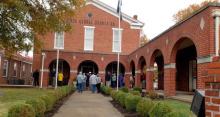
Lac qui Parle Video: "Come For The Jobs, Stay For The Lifestyle"

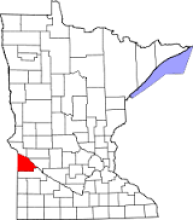
Lac qui Parle County in western Minnesota has some of the best connectivity in the state. As part of the county’s efforts to get the word out about opportunities in the region, their new Facebook video highlights access to great Internet access and hopes to draw more citizens to the region.

"Come for the Jobs. Stay for the Lifestyle"

Pam Ellison, Economic Development Director for the County, describes the network that is available across the county to businesses and residents. High-quality Internet access is a way to retain businesses, attract new endeavors, and entice people to fill new positions.

Back in 2009, the county began working with Farmers Mutual Telephone Cooperative to find a way to improve Internet access. Through their collaboration, the two entities received a 2010 American Recovery and Reinvestment Act (ARRA) to deploy Fiber-to-the-Home (FTTH) connectivity and replace antiquated dial-up. At the time, about 52 percent of premises were still using their telephones to connect to the Internet.

Lac qui Parle had approached incumbent providers, but none were interested in upgrading in the sparsely populated region. Farmers Mutual Telephone Cooperative had deployed in other communities in western Minnesota and had the experience required in such a rural area. The project’s $9.6 million ARRA combined grant and loan allowed the project to be completed by the summer of 2014. Read more details about the network and the story in Lac qui Parle County in our 2014 report, All Hands on Deck: Minnesota Local Government Models for Expanding Fiber Internet Access.

Check out Lac qui Parle County’s video:

The Power of Electric Cooperatives: Recommended Article

Journalist Jill Nolin recently dove into the details of electric cooperatives and Internet service in an article for the Thomasville Times-Enterprise in Georgia. Rural electric co-ops offer an avenue for robust rural connectivity that is in keeping with the long-standing rural tradition of self-reliance.

Talking With The Cooperatives

The article features interviews with several local electric cooperatives (EMCs) for their perspective on providing Internet service. Nolin spoke with Blue Ridge Mountain EMC, an electric cooperative that has been offering Internet service for almost ten years.

“Sometimes you have to venture out and do what’s right because your members need you to do it, because they’re demanding you to do it and because it’s the right thing to do. That’s what we did. We ventured out. We didn’t take ‘no’ for an answer,” -- Erik Brinke, Economic Development Director for Blue Ridge Mountain EMC

Nolin explored several possible barriers facing electric cooperatives that want to provide Internet service: from murky legal territory to capital funding. Christopher Mitchell said:

“It’s a kind of inertia to keep doing what they have been doing, and I think that’s changing more rapidly than I thought, candidly. But I think that’s the number one reason why we don’t see a hundred or 200 of the EMCs in this right now, although I think we’ll be there in another year or two from the rate of escalation we’re seeing,”

Nolin describes how the electric cooperatives are currently asking for the law to be clearly spelled out in the state of Georgia. 

Electric Cooperatives Across the Country

RS Fiber Starts Connecting Last Four Communities

June will be an exciting month for people living in Brownton, Buffalo Lake, Fairfax, and Stewart in Minnesota. RS Fiber Cooperative will begin construction so those premises can connect to the Fiber-to-the-Home (FTTH) network now serving six other communities in the central Minnesota region. This stage of the buildout should bring another 500 subscribers on to the network by the end of the year; the network already serves 1,100 premises.

Bringing The Last Towns Into The Fold

According to general manager Toby Brummer:

“As construction of the network continues, we expect our customer numbers to continue to grow. Once we have the final four towns connected to the network, construction can begin on Phase Two of the project which will involve bringing gigabit fiber service to the township members of the RS Fiber Cooperative.”

Customers who take FTTH service now can sign up for voice, video, and Internet access up to 1 Gigabit per second (1,000 Mbps). Addresses that are outside the fiber connection service area have been able to obtain service from the cooperative via its fixed wireless RS Air service.

A Story Of Peaks And Valleys On The Prairie

The RS Fiber Cooperative story began in Sibley and Renville Counties as a regional municipal effort but when Sibley County pulled out, the project had to restructure their plan and design a new strategy. Rather than leave the rural farms behind, the participants decided to form a broadband cooperative to serve as many premises as possible.

Local farms - some of which had no Internet access at all - needed high-quality Internet access in order to operate in the modern agricultural economy. National providers had decided that the area was too sparsely populated to justify investment, so the locals decided they needed to act.

Fiber In The Oaks Of Texas

Hudson Oaks, Texas, will be deploying infrastructure this summer in order to bring high-quality connectivity to businesses and residents. At a recent city council meeting, community leaders authorized the project to allow the town of about 1,700 people to be the first to offer gigabit connectivity in Parker County.

Working With A Local Provider

The city will own the infrastructure and recently entered into a partnership with local Internet Service Provider (ISP) NextLink to offer service via the fiber-optic network. NextLink is headquartered in Weatherford, about five miles from Hudson Oaks. Fort Worth is about 25 miles due east of Hudson Oaks.

According to the Weatherford Democrat, properties within city limits will be served by the new fiber service that will be funded with public investment. On the city’s Facebook page, residents asked questions and city administrator Patrick Lawler addressed them:

“The city of Hudson Oaks cannot by state law spend funds outside the city limits unless expressly given the authority such as we have with water. Fiber does not qualify for this exclusion. NextLink, however, may expand the service at their discretion. In order to prepare for that possibility we have placed additional fiber strands for future expansion.”

Earlier this month, the city authorized the issuance and sale of $1.54 million combination tax and revenue certificate of obligation to help fund the project.

Prices for Internet access should run around $50 - 60 per month for 50 Mbps and $150 per month for gigabit connectivity. Construction on the network should start this July.

Colorado Chooses to Subsidize DSL Rather than Fiber - Community Broadband Bits Podcast 256

In an exciting milestone, this is podcast 100000000. Or 256 in decimal - you know, for the squares. While at the always-amazing Mountain Connect event in Colorado, I snagged an interview with Doug Seacat of Deeply Digital and Clearnetworx. They sought a grant from the Colorado Broadband Fund to deploy fiber and wireless to underserved Ridgway in western Colorado. 

What happened next is shocking but hardly an anomaly. Using what is often called the "Right of First Refusal," where incumbents get to prevent competition in state broadband programs, CenturyLink not only blocked Clearnetworx from getting the grant but got itself a hefty subsidy for a very modest improvement in services.

Ridgway residents went from almost certainly having a choice in providers and gigabit access to seeing their taxpayer dollars used to not only make competition less likely but also effectively blocking the gig from coming to everyone in town. In this interview, we discuss the details. 

This show is 20 minutes long and can be played on this page or via Apple Podcasts or the tool of your choice using this feed

Transcript below. 

We want your feedback and suggestions for the show-please e-mail us or leave a comment below.

Listen to other episodes here or view all episodes in our index. See other podcasts from the Institute for Local Self-Reliance here.

Thanks to Arne Huseby for the music. The song is Warm Duck Shuffle and is licensed under a Creative Commons Attribution (3.0) license.

Rural Telephone Cooperative Forges Its Own Path In Michigan

Can’t get telephone or Internet service? Have you tried starting your own company? In 1998, John Reigle did just that with the support of the community and Michigan State University. Today, Allband Communications Cooperative provides not only telephone service, but also cutting-edge, high-quality Internet access and environmental research opportunities in rural Northeastern Michigan.

A Story Of Promise, Betrayal, And The Telephone Company

We connected with Allband representatives who shared details about Allband's interesting and dramatic history as told by Masha Zager back in 2005. They kindly provided updates and let us know what's in store for this by-the-bootstraps effort that started in the woods of Michigan.

When John Reigle moved out into the woods past the small town of Curran, Michigan, he didn't intend to start a brand-new venture. He simply wanted to build a home and work on his consulting business; he just needed telephone service.

The large incumbent telephone company GTE (which later became Verizon, which still later sold off this service area to Frontier) had assured Reigle that the lot where he planned to build his house would be easy to connect to their telephone network. They quoted him a price of about $34 and scheduled an install date. Trusting that the telephone company’s representatives knew the service area, Reigle moved forward with his plans to build.

After he finished constructing his house in 1998, Reigle contacted the telephone company to finalize his service connection. Despite the earlier assurance that his location would not prove a problem, Reigle found that he was miles away from the GTE network. This time, the company quoted $27,000 to run a copper telephone line from the highway to his new house. 

His consulting firm could not operate without a telephone so he decided to bite the bullet and agree to the steep price. GTE rescinded its quote, however, and no matter how much Reigle offered, the company would not run telephone service to his new house.

Michigan Radio Features Midwest Energy & Communications

Bob Hance, President and CEO of Midwest Energy & Communications, formerly known as Midwest Energy Cooperative, spoke to Michigan Radio on the current plans for a high-speed, fiber optic network and the importance of rural connectivity. 

Midwest Energy & Communications offers speeds of up to 1 Gigabit per second (1,000 Mbps) and has started to expand to new areas in southwest Michigan. Despite concerns that folks might not sign up for Internet service, demand has far exceeded expectations. 

Industrial Park Gets Service

An industrial park in Niles, Michigan, specifically requested to be connected to the high-speed network. Many of the tenants had considered relocating because of the previously shoddy connectivity. Thanks to Midwest Energy & Communications, those businesses chose to stay put. The co-op now serves about 80 percent of the industrial park with high-speed fiber. 

Listen to the full interview here.

For more about the history and structure of the cooperative, check out our own interview with Hance on Community Broadband Bits Podcast Episode 225.

Christopher Comments on North Carolina Broadband Access Map in State Scoop

State Scoop - May 26, 2017

Crowdsourced broadband mapping helps North Carolina clean its data

A new tool released by the state's technology agency is being used to refine coverage data reported by the FCC and open the way for new funding opportunities.

North Carolina's state technology agency launched a new tool for measuring broadband speeds across the state Wednesday as part of long-term infrastructure planning that could bring new connectivity to rural areas.

...

A fact sheet published by the Institute for Local Self-Reliance shows that North Carolina has a deeply stratified rural-urban divide when it comes to broadband. Christopher Mitchell, ILSR's director of community broadband networks, blames the state's regulations for the disparity.

"The state perversely discourages investment from local governments and cooperatives," Mitchell writes in a 2016 report summary.

A 1999 statute limits the ability of electric cooperatives access to capital for telecommunications, while a 2011 law limits the power of local governments build internet networks.

In an email to StateScoop, Mitchell said North Carolina is "far too focused on AT&T and Charter. It is a real shame."

Disputes over how to fund the state's rural broadband efforts have been an ongoing debate in recent years. A plan sketched by former Gov. Pat McCrory had theoretically positioned all residents in the state with connectivity by 2021. Mitchell argues that the state is ignoring some of its best options by depending on a private market that has thus far consistently failed to serve certain areas of the state.

MBC Partnering To Bring Internet Home For VA School Kids

The Mid-Atlantic Broadband Communities Corporations (MBC), a broadband cooperative with member communities in Virginia, recently announced that a new project will bring Internet access to students at home to help close the “homework gap” in Charlotte and Halifax counties.

Homework At Home

Approximately half of the K-12 students in the two southern counties don’t have Internet access at home, interfering with their ability to hone the skills they need for future success. To address the issue, MBC and its partner Microsoft obtained funding from the Virginia Tobacco Region Revitalization Commission and will implement the project which reach 1,000 households and approximately 3,000 students. Students will be able to tap into their schools’ networks to access online assignments and resources from home. The service will be free.

The project is an expansion of a pilot program based on white space technology, which we’ve written about before. White space technology has been used in similar projects by libraries in New York, North Carolina, Colorado, and Mississippi to extend Internet access to communities where people have limited access. White space technology isn’t interrupted by dense forests or hills, so works in the Halifax and Charlotte county terrain.

Better Connectivity, Better Economy

MBC formed in 2004 as an open access network, funded by the Virginia Tobacco Commission and the U.S. Department of Commerce Economic Development Administration. The network also received American Recovery and Reinvestment Award (ARRA) funding in order to connect schools and community anchor institutions in southern Virginia and to extend the reach of the network even further. The network now consists of more than 1,800 miles in 31 counties.

Highlands Looking For A Partner: RFI Responses Due June 9th

Highlands, North Carolina, deployed a Fiber-to-the-Home (FTTH) infrastructure and fixed wireless complement to serve the community. The small rural community has been operating the municipal network in the Appalachians since late 2015, but is now considering passing the mantle to a private partner. They recently released a Request for Information (RFI) and responses are due June 9th.

High In The Appalachians

Tourism is one of the town’s staple economies, as it’s known for its natural surroundings atop the Nantahala National Forest in the mountains. While less than 1,000 people live in the town all year, summer tourists swell the population to around 20,000. There are several country clubs nearby that cater to the affluent second-home owners in Highlands and there are at least 500 homes that are valued at $1 million or more.

The FTTH network does not serve the entire community. Local leaders want the network available to the entire community, in part to keep second home owners in Highlands for extended periods of time. With better connectivity, many could work from home. The community also operates a municipal electric utility that owns 2,600 utility poles and 110 miles of line, most of it aerial. Interestingly, the Highlands Electric Utility serves over 3,000 accounts, some in the suburban Atlanta areas.

Highlands issued the RFI to search out  provider that would be interested in expanding the FTTH network and acquiring more customers for the network as a whole. They still want to own the infrastructure, but hope to attract a provider willing to lease the existing network and add to it.

Read the rest of the RFI.

Responses are due Friday, June 30th.