
In the marathon to bring universal high-speed Internet service to the most rural state in the nation, Vermont is heading into the last-mile stretch of the race with the finish line in sight.
In February, the Vermont Community Broadband Board (VCBB) announced that the National Telecommunications and Information Administration (NTIA) overseeing the federal Broadband Equity, Access, and Deployment (BEAD) program, had approved Vermont’s Final Proposal, unlocking $93 million of the state's nearly $229 million federal allocation.
After years of painstaking planning, public input, and navigating bureaucratic hurdles, it marked a pivotal moment – with the state's selected grant recipients cleared to begin deploying mostly fiber to the communities that have long been waiting for high-speed connectivity after decades of neglect from the Big Cable and Telecom providers.
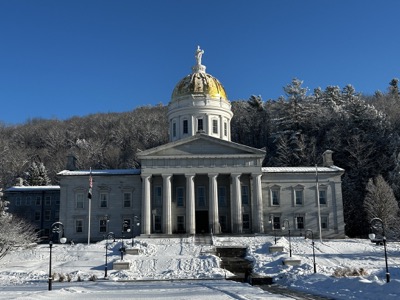
“This is a major milestone for many of our rural towns and a once-in-a-generation opportunity to strengthen and revitalize communities,” Gov. Phil Scott said in a statement, crediting NTIA, Vermont's congressional delegation, and the VCBB for shepherding the state's plan.
U.S. Sen. Bernie Sanders, never one to mince words, spoke to both the significance and the frustration of the moment. “Affordable, high-speed [I]nternet is a vitally important resource in every corner of the country. It is foundational to modern life,” he said.
“However, thousands of Vermonters still lack access to internet at broadband speed. While it has taken far too long, it is good news that this crucial federal investment from the 2021 Bipartisan Infrastructure Law will finally reach communities in our state,” Sanders added, with a nod to the fact that a long process was made longer when the Trump administration revamped the spending rules and forced states to alter their plans.
U.S. Sen. Peter Welch called it “a huge moment for Vermont,” and U.S. Representative Becca Balint described the milestone in terms of how it will impact everyday realities:
“Whether it's a student doing homework, a small business reaching new customers, or a family accessing telehealth, broadband has become critical to our daily lives.”
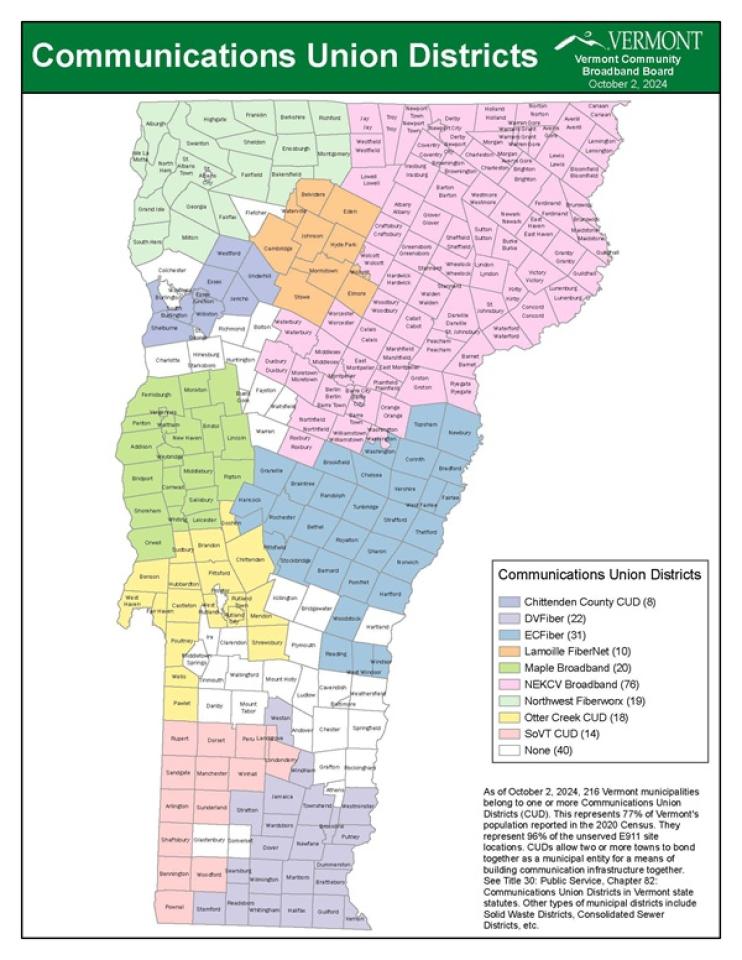
VCBB Executive Director Christine Hallquist – who has spent years in the trenches coordinating Vermont's broadband buildout through its network of nine Communications Union Districts (CUDs) – put it in plain terms: plans are now in place to bring broadband to more than 99 percent of Vermonters.
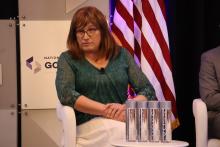
However, she was careful not to declare premature victory. “The work isn't finished,” Hallquist said.
“We're taking a close look to make sure everyone is included and to find solutions where gaps remain," Hallquist added. "We know that rural broadband leads to higher business growth, self-employment growth, and higher per capita income growth, and we want all Vermonters to be able to take advantage of those opportunities.”
Communications Union Districts Lead to ‘Connection Day’
For Vermont residents and businesses still waiting, the stakes can be felt personally, as captured in a recently released short video from the VCBB called “Connection Day,” which documents the moment the Burke family in Marlboro, Vermont finally gets connected to high-speed Internet by DVFiber.
“I was running a business online and I have to say it was terribly embarrassing when I was supposed to be talking to somebody, that the calls are going to get dropped,” Patrick Burke shares in the video, with his wife Andrea adding how “absurd” it was “having to wait 20 minutes to download an Excel file” with their previous provider before DVFiber came along and lit them up for service.
Living in an isolated rural community, Patrick goes on to say, “there's a sense of camaraderie about roughing it. But I know that we are really excited to feel like we are part of the 21st century.”
It’s a simple, short, and powerful testament of what the Green Mountain State’s years-long effort has always been about, and what the federal grant program is ultimately meant to deliver: not just faster download and upload speeds, but the ability to participate fully in modern life.
That vision has powered Vermont's broadband buildout, driven in large part by the state’s unique network of Communications Union Districts (CUDs) – locally-governed, not-for-profit municipal entities that are prohibited from taxing their member towns and are required to fund their networks through grants, loans, donations, and subscriber revenue.
The CUD model – which we examined in-depth in our recent report “Neighborly Networks: Vermont's Approach to Community Broadband” – has fostered a broadband market in which providers are accountable to the communities they serve.
The state's BEAD recipients include the community-rooted CUDs and operators – DVFiber, Maple Broadband, NEK Broadband, and Vermont Telephone among them – alongside larger providers, reflecting a deliberate strategy of diversifying who builds and owns Vermont's telecommunication infrastructure.
Affordability as a Core Value
While federal grant programs from the American Rescue Plan Act and BEAD have been vital, advocates and community providers have long insisted that building the infrastructure is only half the battle. Getting people connected – and keeping them connected – requires tackling affordability head-on, as Vermont broadband leaders are doing with the state’s CUDs, demonstrating that community ownership and affordability can go hand in hand.
Maple Broadband, a CUD serving Addison County, recently launched “Nonprofit Connect,” a program offering all 501(c)(3) organizations in its service area gigabit fiber – its fastest available speed – at its lowest price of $70 per month, which is a $50 monthly savings over the standard rate. The program includes no contracts, no data caps, no promotional pricing that quietly balloons later, and free equipment. And, through September, installation fees are waived entirely.
It should prove to be a boon for area nonprofits, as Addison County alone has more than 700 registered nonprofits (food pantries, housing organizations, youth programs, environmental groups) – many of them operating on tight budgets where a $50 monthly savings is the difference between affording reliable Internet and going without.
“Nonprofits work hard to stretch every dollar for this community,” said Maple Broadband Executive Director Ellie de Villiers in announcing the initiative.
“As a community-owned [I]nternet provider, there is strong mission alignment between the work we are doing to provide and promote universal affordable broadband and the work of nonprofits that are also serving Addison County.”
Maple Broadband also offers a residential affordability program known as the Local Equitable Access Fund (LEAF), which like the now-expired Affordable Connectivity Program (ACP), provides a $30 monthly discount and free installation to income-eligible households.
Meanwhile, its Affordable Drop Program covers additional installation costs for hard-to-reach properties.
Elsewhere in the state, in the Northeast Kingdom and Central Vermont, NEK Broadband and CVFiber have taken a similar approach, recently introducing a new $59-per-month 50 Megabits-per-second (Mbps) symmetrical fiber plan. And for income-qualified households, an additional $30 discount can bring the monthly cost down to just $29.
The affordable pricing, CUD officials explained, was made possible precisely because grant funding eliminated the need to borrow for construction costs – a win-win scenario in which public investment enables lower prices, which in turn leads to broader adoption.
“This price reduction is possible because of Vermont's commitment of ARPA grant dollars and BEAD grant funds, which together will fully fund construction to all unserved addresses in our district,” said NEKCV Executive Director Christa Shute. “By not borrowing for that construction, we can lower our price accordingly.”
Heather Alger, Associate Director of Economic Access Programs at NEKCV added: “This new plan represents an important step forward in expanding digital inclusion and creating long-term opportunities for residents across the Northeast Kingdom.”
Building the Workforce to Build the Networks
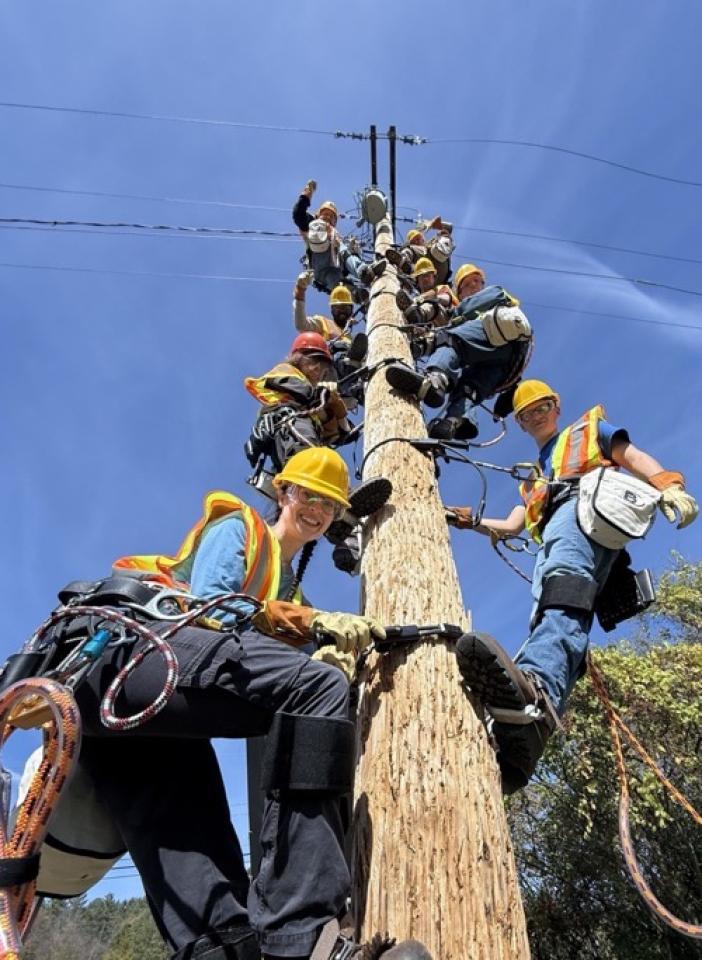
Taking it further, state leaders also recognized that none of this infrastructure gets built without trained workers to build it – a pipeline Vermont has been investing in as well. Tomorrow (May 22), a new class of participants in the VCBB's Broadband Technician Apprenticeship and Pre-Apprenticeship Training program will graduate from the North Country Career Center in Newport, adding another cohort of fiber-ready technicians to Vermont's workforce just as a construction push is getting underway.
The free workforce training program prepares participants for careers in broadband construction, fiber network deployment, and infrastructure projects across the state.
VCBB Executive Director Hallquist and North Country Career Center's Chris Damato will mark the occasion alongside the graduating class – a reminder that the broadband buildout is not just about infrastructure, but about economic opportunity that creates local careers in communities that have often been on the losing end of the rural economic divide.
The Last Mile
Vermont's progress is the product of years of unglamorous work – community organizing, the creation of municipal governance structures, applying for grants, engineering and business planning, and holding public hearings.
It has not been fast or easy. But the state’s community-first approach and relentless focus on both access and affordability has produced something durable: a statewide network-of-networks that is locally rooted, equitably designed, and now on the verge of delivering its promise.
For the Burke family featured in the “Connection Day” video, the marathon is over. And for the thousands of Vermonters still waiting, the finish line is closer than it has ever been.
Watch the “Connection Day” video about the Burke family getting fiber Internet for the first time below:
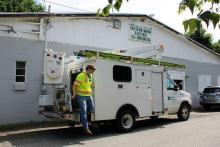
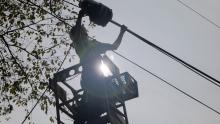
Header image fiber technician reaching for aerial fiber splice case courtesy of the Vermont Community Broadband Board
Inline image of Vermont State House courtesy of Vermont Community Broadband Board Facebook page
Inline image of Vermont Community Broadband Board Executive Director Christine Hallquist courtesy of Vermont Community Broadband Board Facebook page
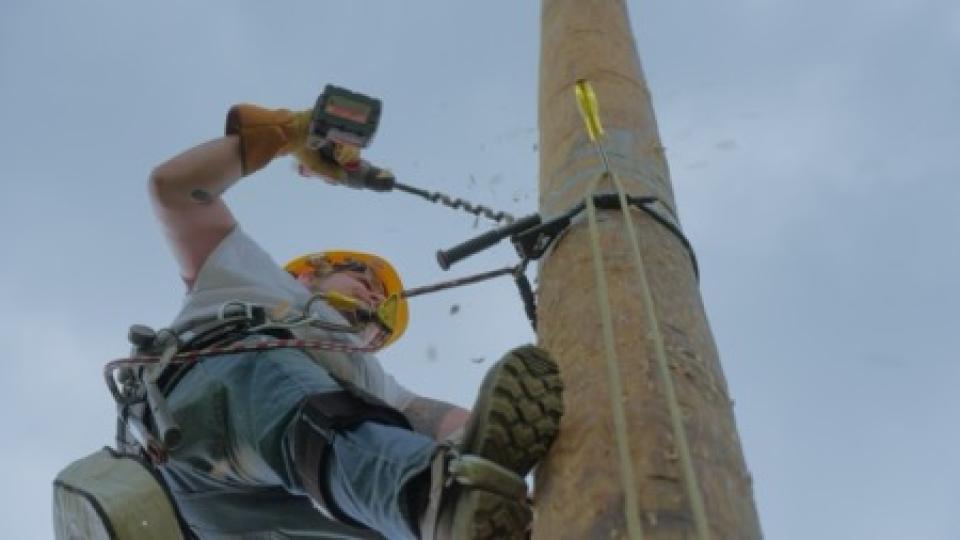
Inline image of fiber technician drilling hole into utility pole courtesy of Vermont Community Broadband Board Facebook page
Inline image of fiber apprenticeship graduates courtesy of Vermont Community Broadband Board