

Leading members of the fiber industry descended on Orlando, Fla. this week for the Fiber Broadband Association's annual Fiber Connect conference to take stock of a national inflection point fueled by the federal BEAD program and the all-consuming rise of AI.
Themed “Light Years Ahead,” the underlying take-away was that the buildout boom is far from over and the easy part is mostly behind us, according to multiple reports from those in attendance.
FBA President and CEO Gary Bolton opened the conference with a state-of-the-industry address.
In doing so, he framed both public and private fiber investments as not being merely about broadband infrastructure, but as the backbone of an exploding AI-driven economy.
Underscoring the central role and growing importance of fiber optic networks, Bolton told attendees:
“We are entering a thinking economy. Value is created by turning information into intelligence and acting on it instantly.”
He set out to quantify the expansive nature of fiber connectivity, noting that across the U.S. more than 100 million homes now have access to fiber Internet – with 11.8 million households connected in 2025 alone.
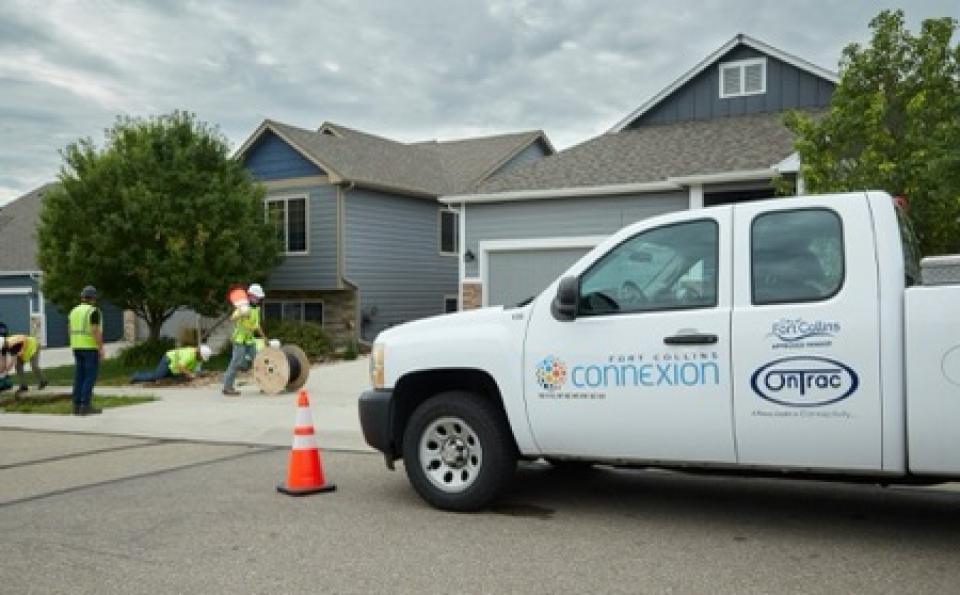
As reported by Telecompetitor, Bolton said, there are now over 1,500 active fiber providers operating nationally, with 42 new market entrants and 715 providers that doubled their footprints in just the past six months.
Meanwhile, he said, independent ISPs, electric cooperatives, and municipal networks together accounted for about 40 percent of all fiber deployment in 2025 – “a sign that the buildout is increasingly being driven by community-rooted operators, not just national giants.”
“Bolton also pointed to the AI investment wave reshaping fiber’s demand picture, noting that Microsoft, Amazon, Google, and Meta collectively invest roughly $370 billion annually in AI infrastructure. Supporting that buildout, he said, will require three times more hyperscaler data center capacity, twice as many fiber route miles, and three times the total fiber deployed today.”
But the conference's panel sessions made it clear that translating increased fiber demand into deploying networks is getting harder and more expensive, with one panelist describing it like going "from a sprint into a marathon."
During a Broadband Breakfast Live event at the conference, Josh Summit, director of outside plant engineering and construction at Glo Fiber/Shentel, said that there has been a roughly 300 percent increase in pole make-ready costs over the past five years and that rural fiber deployments that once cost between $20,000 and $25,000 per mile are as expensive as $100,000 per mile, which he attributed to stricter pole loading requirements and “preexisting noncompliance being charged to new attachers.”
The conference also highlighted the mounting opposition and tensions related to the construction of AI hyperscale data centers, which panelists said are increasingly following cheap rural electricity away from traditional hubs like Loudoun County, Virginia while running into local opposition in communities across the country, as some states consider data center moratoriums.
Still, despite the challenges, there was an air of optimism from conference organizers, as the FBA said it is seeing record membership growth – up 16 percent year-over-year, with more than 8,000 broadband professionals now represented.
Additionally, the Association unveiled two new initiatives: a partnership with Older Adults Technology Services from AARP to pair fiber expansion with digital skills training for older Americans, and the launch of FBA Academy, a workforce training platform aimed at addressing the industry's shortage of skilled technicians.
“Fiber has become the critical infrastructure enabling the next generation of economic growth and innovation,” Jennifer Vassil, Vice President of Membership for the Fiber Broadband Association, told Inside Towers.
“The continued growth of our Association reflects both the strength of the fiber industry and the increasing importance of fiber in powering AI, cloud applications, smart infrastructure, healthcare, education, and beyond.”
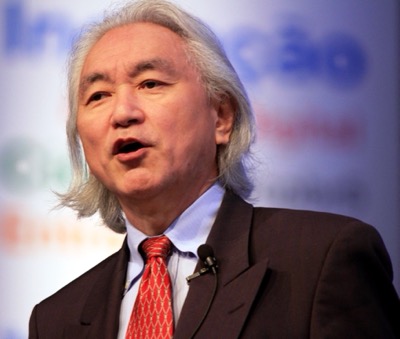
To conclude the last day of the conference tomorrow, renowned futurist and theoretical physicist Dr. Michio Kaku will give a keynote address titled: “The Future of Fiber Optics: AI and The Quantum” in which he will “unpack how quantum computing and AI are converging to accelerate discovery, reshape industries, and transform everyday life.”
Inline image of Michio Kaku speaking courtesy of Wikimedia Commons, CC BY-SA 2.0, Attribution-ShareAlike 2.0 Generic