
FTTH

Content tagged with "FTTH"

Fiber to the Home
Displaying 421 - 430 of 1315

Le Sueur County, MN Hitting on All Cylinders

Over the last three years, Le Sueur County, Minnesota has assembled a task force of citizens, local officials, and business leaders which have succeeded in dramatically improving broadband for thousands of residents who previously had poor or no connectivity. In doing so, they’ve also forged relationships, inventoried local resources, and created a model which is likely to see the landscape go from one where nearly all residents in the county were under- or unserved by basic broadband at the beginning of 2018 to one where the vast majority of the community will have access at 100/20 Mbps in the next couple years. And if efforts continue to succeed, it’s possible we might see full fiber coverage in Le Sueur by the end of the decade, making it one of the most connected counties in the state.

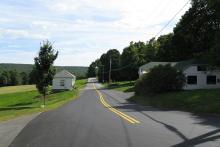
Le Sueur is located ninety miles southwest of Saint Paul, and had just under 29,000 residents and 11,000 households in 2019. There are 11 whole or partial cities in the county, of which Le Center and Montgomery are the largest at around 2,500 people each. The remaining communities sit between 200 and a 1,000 residents. More than a thousand farms dot the landscape, and agriculture, along with some tourism and resort development centered on the lake communities, comprise the bulk of the county’s economic picture.

Image

Broadband infrastructure outside of the population centers in Le Sueur is generally poor, which was a problem for residents, for businesses, and for farmers looking to remain competitive and modernize operations: “the lack of this service means students have trouble completing schoolwork and seeking future opportunity, small businesses have trouble connecting with customers and vendors, farmers have less efficient operations, home sales and development lags, and options for telemedicine are closed.”

Grant Program Helps Arkansas Communities Large and Small Get Started on Broadband

A host of cities and counties in Arkansas are about to get a major broadband boost thanks to local officials taking steps to act on a grant program deployed by the state last year. Borne out of the state’s 2020 1st Extraordinary Session at the end of March 2020 in response to the Covid 19 pandemic, the new Rural Broadband I.D. Expenses Trust Fund Grant Program will disburse $2 million in funds divided into 30 one-time grants of $75,000 each to towns, cities, and counties to tackle the digital divide in the Toothpick State. The program is financed via Arkansas’ Restricted Reserve Fund with money given to the state by the CARES Act, and is administered by the University of Arkansas for Medical Sciences (UAMS) Institute for Digital Health & Innovation. And while an array of projects have been awarded funds, money remains available and applications are being accepted on a rolling basis for those who have yet to take advantage.

A Win for Local Self-Reliance and Increasing Competition

The program is expressly designed to bridge the gap for communities that want to begin to improve local Internet access but are stymied by a necessary first step: paying for those economic, design, and feasibility analyses which require pulling together the wide range of options available in the context of local conditions. That’s where this program comes in, according to Rachel Ott, the UAMS Institute’s for Digital Health and Innovation Grant Director. Communities can use the work produced to apply for federal grants down the road, including the recently concluded Rural Digital Opportunity Fund (RDOF), the U.S. Department of Agriculture’s ReConnect Program, funds from the Agriculture Improvement Act of 2018, and any other forthcoming federal funding programs. 

Milton, Mass. Municipal Fiber Initiative Launches Petition for Community Broadband

The Milton, Massachusetts Municipal Fiber Initiative recently launched a friendly petition to collect signatures to present to the city select board in support of a city-wide Fiber-to-the-Home (FTTH) network to increase competition, speed, reliability, and customer service while lower Internet access costs for residents. From the group's website:

We are a community-led effort to create a fiber-optic, municipal broadband network in the town of Milton, MA.  We believe a community-owned, state of the art, 100% fiber network is necessary to provide everyone in town - residents, town government, local businesses and non-profits - with better access, more choice, lower prices, blazing fast speeds, and superior reliability...now and for decades to come!

The group indicates that the town has already created a municipal broadband committee as well as a design and cost estimate done by CTC Energy and Technology [pdf]. 

From the petition:

To all our Milton friends and neighbors -

The MMFI is collecting signatures for a friendly petition to the Milton Select Board. Our intention is to demonstrate public support for municipal broadband, and to urge the board to take the next steps towards the establishment of a municipal broadband network.

The Select Board has made some great progress already with the appointment of a Municipal Broadband Committee.   The committee's efforts culminated in a cost and design estimate for the creation of a 100% fiber, municipally-owned broadband network, providing the town with a viable road map to a town-wide, fiber-to-every-premise network.   

We're asking you to join us in our efforts to keep the process going.  We hope we can make the case to you, our Milton friends and neighbors, that municipal broadband is an investment in Milton's future, a public asset that will serve community needs for generations. 

A Call for More Open Access Infrastructure

There’s a new short essay out called “Future-Ready Information Infrastructure Must Be Open Access” from Underline, a firm which specializes in design, financing, construction, and operation of open access networks. It which outlines both the need for more growth of this model but also why, at this moment, we are particularly well positioned to do so today. Read a few excerpts below, but read the whole post over at Underline.

To develop the networks we need now, we must challenge the status quo & rebuild our information infrastructure from first principles: the only solution is open access, content and service agnostic, fiber-based networks.

Multi-purpose, open access fiber networks are equivalent to our “open access” roads. As the necessity of connectivity continues to extend far beyond sending email and online shopping—to virtual learning, remote work, distributed healthcare, new wireless solutions (e.g., 5G) and resilient modernized infrastructure—open access fiber networks are the critical and most efficient foundation.
We can and must efficiently build new information infrastructure as the foundation for resilient, flourishing communities to enjoy new economic opportunities, modernize other critical community infrastructure, and form a pathway to responsible energy creation and secure smart grid technology.

For more on open access networks, read our primer on the benefits they offer, or listen to Episode 424 of the Community Broadband Bits podcast below to hear Christopher talk with Jeff Christensen from EntryPoint Networks.

Big Bucks for Broadband in the Balance: Explaining the Affordable, Accessible Internet for All Act - Part 4

If you have been following our series on the Accessible, Affordable Internet for All (AAIA) Act, you already know the proposed legislation calls for a $100 billion investment in expanding broadband access and affordability in unserved and underserved parts of the country. In this fourth installment of the series, we explore the part of the bill that contains the bulk of the funding. Of the $100 billion proposed in the bill, $85 billion of it can be found in the Title III - Broadband Access section.

Amending the Communications Act of 1934, Section 3101 of the bill appropriates $80 billion for “competitive bidding systems” to subsidize broadband infrastructure. That is to say, it requires the Federal Communications Commission (FCC), and states, to use “competitive bidding systems” for Internet Service Providers (ISPs) to bid on broadband deployment projects in “areas with service below 25/25 Megabits per second (Mbps), and areas with low-tier service, defined as areas with service between 25/25 and 100/100 Mbps.” The term “competitive bidding” seems to suggest a reverse auction process, though it hardly makes sense for each state to set up such a system given the logistical challenges. A legislative staffer responded to our email earlier this year saying he believed that language would allow for state programs that solicited applications from ISPs and scored them for evaluation, much like Minnesota’s Border-to-Border Broadband program operates. However, he noted that the FCC would interpret that language ultimately. More on this below. 

Prioritizing Higher Upload Speeds

Fired Up About Fiber on The Front Range

Over 140 municipalities in Colorado have opted out of a state law (SB-152) that prevents local governments from investing in broadband infrastructure. With overwhelming support from voters on Election Day last month, Denver, Berthoud, and Englewood became the most recent Colorado communities to bail on SB-152 in the 15 years since Qwest (now CenturyLink) and Comcast successfully lobbied for passage of the anti-local authority bill designed to protect their profits.

While Denver, Berthoud, and Englewood residents ponder next steps, a number of other Colorado communities have already built, or are in the process of building, municipally-owned broadband networks, the most successful example being the NextLight Fiber-To-The-Home (FTTH) network in Longmont.

NextLight, which began building its award-winning FTTH network in 2014, now offers Longmont’s 90,000 residents access to gigabit (1,000 Mbps) service and has surpassed a 50% take rate.

Three other communities in the Front Range region of Colorado are now on the front lines of building municipal broadband networks.

Loveland

Loveland, a city of 76,700 situated in a 25.5 square mile valley at the entrance to Big Thompson Canyon, opted out of SB-152 with 82% voter approval in 2015, a year after Longmont began building its fiber network 17 miles south of the “gateway to the Rockies.”

Over the past five years, the Loveland Water and Power Department has been planning, and now building, its own Pulse fiber network.

To finance the project, city officials opted to issue $95.5 million in bonds. The bonds are backed by Loveland’s electric utility, which serves 37,500 residential and commercial accounts.

The Truth is in the Numbers: How RS Fiber Brings Broadband to the Farms and Families of Rural Minnesota - Episode 440 of the Community Broadband Bits Podcast

We've written a lot about RS Fiber, a broadband cooperative operating in two rural counties in south-central Minnesota. This week on the podcast Christopher talks with two representatives from the cooperative which serves almost three thousand members in Renville and Sibley counties. Our first guest is Jake Reiki, a corn and soybean farmer and Board Chair for RS Fiber. We’re also joined by Jenny Palmer, City Administrator for Winthrop and Treasurer for the cooperative.

Christopher, Jake, and Jenny talk about the trials that shaped a network which fostered some division but which the community now takes for granted, its hybrid fiber and wireless approach to connectivity, what having fast, affordable broadband has done for families and business in the area, and where the network sits financially moving ahead as it continues to expand and see robust, steady growth. 

For more on the history of the network, read our 2016 case study Fertile Fields for New Rural Internet Cooperative, or listen to Episode 198 and Episode 99 of the podcast.

This show is 41 minutes long and can be played on this page or via Apple Podcasts or the tool of your choice using this feed

Transcript below. 

We want your feedback and suggestions for the show-please e-mail us or leave a comment below.

Listen to other episodes here or view all episodes in our index. See other podcasts from the Institute for Local Self-Reliance here.

Thanks to Arne Huseby for the music. The song is Warm Duck Shuffle and is licensed under a Creative Commons Attribution (3.0) license.

On Cape Cod, Falmouth Considers Adding Fiber to its Digital Diet

Cape Cod, a peninsula in southeastern Massachusetts that juts out into the Atlantic Ocean like a flexed arm, has long been known as a top summer vacation destination and upscale retirement haven going back to when JFK launched his Presidential campaign from his family’s Hyannisport homestead.

During the height of the summer tourist season the population swells to over a million people as visitors from all over the world come to enjoy its picturesque beaches as well as its trails, shops, and seafood. And while the region’s economy is reliant on tourism, the Cape is home to 250,000 year-round residents spread out across 1,306 square miles in 15 towns, many of whom would like to see the regional economy become more diversified, even if the decades-old vision of transforming it into the “silicon sandbar” remains a pipe dream.

What members of a fledgling citizens group in the town of Falmouth have in mind may not be as grandiose as a “silicon sandbar,” but this week they got evidence that their vision of building a municipal-owned Fiber-to-the-Home (FTTH) network is no pipe dream. 

Falmouth Feasibility Study

In the summer of 2019, David Isenberg – a longtime Falmouth resident, a former Bell Labs scientist, and Senior Advisor to the FCC’s National Broadband Plan – along with a handful of other residents formed the citizens group pushing for a FTTH network in Falmouth. They went before the town’s Economic Development and Industrial Corporation (EDIC) to lay out their vision. The group noted that Falmouth, the second-largest town on Cape Cod with a population of about 30,000 year-round residents, could do what 16 other Off-Cape Massachusetts towns have done – build a locally-controlled Internet access network. Then and there, Falmouth EDIC approved $50,000 for the study, concluding that “all sectors of Falmouth’s economy require reliable, high-speed Internet service.”

The results of the study conducted by CCG Consultants were released this week. The study found that more than 60% of residents and many businesses would subscribe, and that it would be financially feasible to build and operate the envisioned network.

RDOF Auction Ends but Confusion and Corruption May Just Be Beginning

The FCC's Rural Digital Opportunity Fund results are a puzzle. RDOF was the recent auction for large swaths of rural areas of the U.S. that have no broadband access, in large part because they were the territories of big companies like AT&T, CenturyLink (now rebranding as Lumen in hopes of improving its dismal image among its subscribers), Frontier, Windstream, and others. Up to $16 billion was at stake though the auction will actually disperse some $9+ billion dollars because many areas were bid well below what was expected. 

Please understand that this post is the best I can do right now - this is confusing and we are sorting our way through it. Please let me know if you can help us understand it. See our past coverage for more information.

The auction resulted in far more gigabit - 85% of locations I believe - than anyone expected, at far lower subsidy than expected. However, there is a lot of frustration and confusion because it is not clear that some of the top bidders can deliver. NTCA - The Rural Broadband Association - shared my original enthusiasm for RDOF and our concerns - best articulated over the years by Jon Chambers from Conexon - that the FCC was going to blow this auction by not ensuring those who bid had the capacity to deliver on the promised level of service. Shirley Bloomfield, CEO of NTCA, wrote this and recently tweeted on this:

Organizing for Change in Kaysville, Utah - Episode 439 of the Community Broadband Bits Podcast

This week on the podcast Christopher talks with Michelle Barber and Andre Lortz. Both serve on the Kaysville City Council and are members of the group Citizens for Kaysville Fiber, but today they join us to talk as regular citizens of the city of 30,000 in Utah.

Kaysville has been working to improve Internet access for years — some residents have good connectivity, but other parts of town are very poorly served. In 2019 it began considering a municipal network, and Michelle and Andre share the history of efforts to make forward progress as well as the moves made over the last twelve months. The city originally considered a model with a utility fee, but in the face of opposition ultimately decided for a bond approach which just saw a vote where the measure was defeated by less than 200 votes. Michelle, Andre, and Christopher talk about how it happened (including how major providers funded public relations campaigns to scare people away), and what the project’s continued support means for its future.

This show is 41 minutes long and can be played on this page or via Apple Podcasts or the tool of your choice using this feed

Transcript below. 

We want your feedback and suggestions for the show-please e-mail us or leave a comment below.

Listen to other episodes here or view all episodes in our index. See other podcasts from the Institute for Local Self-Reliance here.

Thanks to Arne Huseby for the music. The song is Warm Duck Shuffle and is licensed under a Creative Commons Attribution (3.0) license.