
competition

Content tagged with "competition"

Related Topics
Displaying 491 - 500 of 709

Wireless Commons Part 1: Interference Is a Myth, but the FCC Hasn't Caught on Yet

This is the first in two-part series on spectrum basics and how we could better manage the spectrum to encourage innovation and prevent either large corporations or government from interfering with our right to communicate. Part 2 is available here.

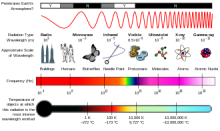
We often think of all our wireless communications as traveling separate on paths: television, radio, Wi-Fi, cell phone calls, etc. In fact, these signals are all part of the same continuous electromagnetic spectrum. Different parts of the spectrum have different properties, to be sure - you can see visible light, but not radio waves. But these differences are more a question of degree than a fundamental difference in makeup. 

As radio, TV, and other technologies were developed and popularized throughout the 20th century, interference became a major concern. Any two signals using the same band of the spectrum in the same broadcast range would prevent both from being received, which you have likely experienced on your car radio when driving between stations on close frequencies – news and music vying with each other, both alternating with static. 

To mitigate the problem, the federal government did what any Econ 101 textbook says you should when you have a “tragedy of the commons” situation in which more people using a resource degrades it for everyone: they assigned property rights. This is why radio stations tend not to interfere with each other now.

The Federal Communications Commission granted exclusive licenses to the spectrum in slices known as bands to radio, TV, and eventually telecom companies, ensuring that they were the only ones with the legal right to broadcast on a given frequency range within a certain geographic area. Large bands were reserved for military use as well.

Originally, these licenses came free of charge, on the condition that broadcasters meet certain public interest requirements. Beginning in 1993, the government began to run an auction process, allowing companies to bid on spectrum licenses. That practice continues today whenever any space on the spectrum is freed up. (For a more complete explanation of the evolution of licensing see this excellent Benton foundation blog post.)

Senators and Representatives Back FCC Move to Restore Local Authority

Citing the importance of Internet access to economic development, a number of Congressional Democrats are calling on FCC Chairman Wheeler to make good on his intention to remove barriers to community owned networks. Senator Edward Markey is the lead from the Senate and Representative Doyle in the House. And this Minnesotan takes pride in seeing both Senators Franken and Klobuchar signed on. The letter [pdf] makes a strong case for local decision-making:
[L]ocal communities should have the opportunity to decide for themselves how to invest in their own infrastructure, including the options of working with willing incumbent carriers, creating incentives for private sector development, entering into creative public-private partnerships, or even building their own networks, if necessary or appropriate. ... Communities are often best suited to decide for themselves if they want to invest in their own infrastructure and to choose the approach that will work best for them. In fact, it was the intent behind the Telecommunications Act of 1996 to eliminate barriers to entry into the broadband market and promote competition in order to stimulate more innovation and consumer choice. We urge you and your colleagues to utilize the full arsenal of tools Congress has enacted to promote competitive broadband service to ensure America’s communities obtain a 21st century infrastructure to succeed in today’s fiercely competitive global economy.
Signing the letter included Senators Edward Markey, Al Franken, Amy Klobuchar, Richard Blumenthal, and Cory Booker as well as Representatives Mike Doyle, Henry Waxman, and Anna Eshoo. We thank each of them for standing up for local authority. Yesterday, we gave a brief update of what has happened thus far on this issue. This is a very important moment, as so many communities have recognized that at the very minimum, they need a plan for getting next-generation networks. Cable and DSL simply aren't good enough to compete in the modern economy but the big carriers have enough clout in state capitals to push laws limiting competition and enough power in DC to feel confident in their anti-consumer mergers.

Update: Restoring Local Authority to Build Community Networks

It has been a busy few weeks for those of focused on restoring local authority to communities over the matter of building Internet networks. But for those of you who are just wondering what is happening, we haven't done the best job of keeping you in the loop. A few weeks ago, we noted the blog post by Chairman Wheeler in which he again affirmed his intent to restore local decision-making authority to communities. Some are wondering if Chairman Wheeler will take action or is just making empty threats. After years of the previous FCC Chair specializing in all talk, no action, it is a good question to ask. From the information I have been able to gather, I believe Chairman Wheeler is very serious about removing these barriers. And so do the big cable and telephone company lobbyists. They have been spreading their falsehoods in op-eds and convincing a few Congressional Republicans to attack a straw man they created. Eleven Senators signed a letter to Chairman Wheeler on June 5, in which they claimed he was poised to "force taxpayer funded competition against private broadband providers." This is nonsense on multiple levels. As we have carefully explained in our fact sheet on financing municipal networks [pdf], the vast majority of municipal networks have used zero taxpayer dollars. This argument is simply a dodge to hide the fact that the big cable and telephone companies want to prevent any possibility of competition. On June 12, some sixty Republicans signed a similarly misleading letter to the Chairman. What is particularly galling about both letters is that they justify their opposition to any FCC action because the states are closer to the people than "unelected federal bureaucrats in Washington, D.C." Can you hazard a guess who is closer to the people and more trusted than elected officials in the state capital?

Chattanooga Profiled in Al Jazeera America

“There are companies that do what we do, but we can do it in hours, and they can take weeks,” said Posey. “Anywhere else, it would take a lot more time and a lot more money ... Chattanooga is essential to our business model.”

Al Jazeera America's Peter Moskowitz recently spoke with Clay Posey, one of the entrepreneurs flocking to Chattanooga for the network. Posey works in one of the startup incubators there, Co.Lab, developing his idea for pre-operative models that allow surgeons to prepare before operating on patients.

While Chattanooga may not be the norm and may not be an easy venture for every municipality, it lifts the bar. From the article:

“Whenever a corporation like Comcast wants to do something like raise prices, we can point at Chattanooga and say, ‘Why can’t we have something like that?’” said Christopher Mitchell, head of the community broadband networks initiative at the nonprofit Institute for Local Self-Reliance. “It establishes a baseline or at least an aspirational standard.”

The article describes lobbying efforts by large corporate providers designed to stop the municipal networks model. Another Chattanooga entrepreneur told Moskowitz:

“Having public or quasi-public Internet service providers is a good solution to consolidation because they most likely won’t be sold,” said Daniel Ryan, a local Web developer who helped run the digital operation of Barack Obama’s 2012 presidential campaign. “Do I think if every city did this, Comcast would go out of business? No. But it means there will always be competition.”

Moskowitz included a brief historical summary of the network, its contribution to the electric utility, and the challenges created by state barriers. He included our Community Broadband Networks map.

Fiber as Real Estate - Allied Fiber on Episode 104 of the Community Broadband Bits Podcast

I recall first hearing about Alled Fiber a few years back and not thinking much about it. It seemed like another operator focused on connecting wireless towers and building long haul fiber... but then I heard Hunter Newby's presentation at Mountain Connect in Colorado. When he noted the need to have infrastructure that financiers could not monopolize, I knew I wanted to have him on our show. 

Hunter is the Founder and CEO of Allied Fiber, which has just announced its route from Jacksonville to Miami is ready for service. We talk about how the carrier neutral Allied Fiber approach is different from other approaches, in part by combining colocation and ensuring other networks can interconnect almost anywhere along the route. We also set the stage for a future conversation about what local governments can learn from this carrier neutral approach. 

This show is 20 minutes long and can be played on this page or via Apple Podcasts or the tool of your choice using this feed.

Transcript below.

We want your feedback and suggestions for the show-please e-mail us or leave a comment below.

Listen to other episodes here or view all episodes in our index. See other podcasts from the Institute for Local Self-Reliance here.

Thanks to Waylon Thornton for the music, licensed using Creative Commons. The song is "Bronco Romp."

Community Networks: Checks and Balances

As both AT&T and Comcast seek to increase their market power by buying rivals instead of competing, Barry Lynn reminds us of our history of fighting such consolidated power. From Cornered: The New Monopoly Capitalism and the Economics of Destruction.
In the modern era in the United States, efficiency was a favorite defense by industrial autocrats like John D. Rockefeller and financial autocrats like J.P. Morgan of their used of corporate power to arbitrarily determine particularly political economic outcomes. The progressive elite, meanwhile, later turned efficiency into a veritable religion. That's why the American people learned long ago to reject efficiency as either a goal or a means to public or private governance, and why we consistently rejected it for the first two hundred years of our nation. We understood that efficiency was a code word for top-down autocratic rule by the lords and the private corporate estates or the "public" state. Hence we rejected efficiency in the Declaration of Independence and again in the Constitution. We rejected efficiency when we wrote the Sherman Antitrust Act, then reiterated our rejection time and again in our other antimonopoly laws. The Supreme Court unanimously rejected efficiency as an excuse for industrial dictatorship when it ordered the breakup of Standard Oil despite the fact that the company had lowered the cost of a gallon of kerosene by more than half. The Supreme Court unanimously rejected the efficiency argument again in 1935 when it ruled President Roosevelt's National Industrial Recovery Act unconstitutional. In every case, the American people embraced not efficiency but freedom and moved to protect that freedom through the erection of intricate systems of checks and balances designed to scatter power.

FCC's Wheeler Forging Ahead As Support Grows to Restore Local Decision-Making

In a June 10 Official FCC Blog post, Chairman Tom Wheeler's words show continued resolve to restore local decision-making to communities that want to evaluate their own investments and partnerships. This is the latest in a series of public statements indicating the agency is ready to assert authority and remove barriers to community networks.

Wheeler writes:

If the people, acting through their elected local governments, want to pursue competitive community broadband, they shouldn’t be stopped by state laws promoted by cable and telephone companies that don’t want that competition.

I believe that it is in the best interests of consumers and competition that the FCC exercises its power to preempt state laws that ban or restrict competition from community broadband. Given the opportunity, we will do so.

In April, Wheeler raised a few lobbyist eyebrows in a speech on the role of municipal networks at the Cable Show Industry conference in Los Angeles. In this latest post, he notes that Chattanooga's network transformed it from "a city famous for its choo-choos," into the "Gig City." The network spurs economic development, improves access, and inspires innovation, notes our FCC Chairman.

The National Journal also takes note of the FCC blog post. Its article points out that Wheeler criticizes Tennessee's state law restricting Chattanooga's ability to expand. Even though nearby communities want service from EPB, the City is forbidden from serving them. Not acceptable, says Wheeler.

While the National Journal suggests Tennessee may be the first state to face FCC authority to eliminate state barriers, policy experts have no expectations yet. From the article:

Harold Feld, the senior vice president of consumer advocacy group Public Knowledge, said Wheeler will probably not launch a broad initiative to attack state laws around the country. Instead, the FCC chief will probably wait for groups or individuals to file complaints about specific state laws, Feld predicted.

You Are Cordially Invited: June 17th Discussion on Cable Companies, Monopolies, and Community Networks

On Tuesday June 17th, Chris will be participating in a conversation hosted by the Media Consortium as part of its Media Policy Reporting and Education Program (MPREP). You are invited to sit in on what is sure to be a spirited discussion on community networks and the lack of competition in the cable industry.

What: Community Fiber Networks: A Realistic Solution to Cable Monopoly?

When: Tuesday, June 17, 3pm ET/ 12 PT

Who: Joining Chris will be:

Ryan Radia, Associate Director for Technology Studies at the Competitive Enterprise Institute. He is critical of government-run or regulated projects in general, and specifically critical of community networks. 

Wayne Pyle, City Manager and CEO of West Valley City, Utah's second largest municipality, and also  chair of the board of UTOPIA, the Utah Telecommunications Open Infrastructure Agency, a community network serving 11 cities.

This is the first of several monthly briefings hosted by MPREP to discuss media policy issues. Everyone is welcome to participate. Register online for this discussion.

Governing Looks at What the Comcast - Time Warner Cable Merger Could Do to Munis

The debate surrounding the proposed Comcast Time Warner Cable merger continues. The Department of Justice and the FCC ruminate over the deal while the media speculates about the future.

Governing recently published an article on potential side effects for the municipal network movement. Tod Newcombe reached out to Chris for expert opinion.

From Governing:

Partially thanks to Comcast and other cable giant's lobbying, 19 states have already passed laws that ban or restrict local communities from setting up publicly owned alternatives to the dominant provider in the area. Municipalities that pursue publicly owned broadband often cite several reasons for their efforts, ranging from lack of competition and choices in the area to a desire for faster speeds at lower costs. But Mitchell fears the lobbying power of a combined Comcast-Time Warner would choke off what little leverage remains for local governments when it comes to gaining state approval to build publicly owned broadband networks.

Unfortunately, the cable company cyclops borne out of this deal would create a ginormous lobbying monster. Comcast and Time Warner Cable wield significant political influence separately; a marriage of the two would likely damage the municipal network movement. The Center for Responsive Politics reports Comcast spent over $18 million in 2013; Time Warner Cable spent over $8 million.

Chris told Governing:

"Judging by the amount of opposition to the merger, I think people are seeing that we're at a tipping point and that there are ways they can make investments at the local level and control their own destiny," said Mitchell. "A lot of people and local businesses understand that the Internet is really important and that we can't trust it to a few corporations. But I don't see that level of understanding from most elected officials yet."

Network Neutrality Update

The FCC is hearing the massive public outcry over its plan that would allow the big cable and telephone companies to create fast and slow lanes on the wires most of us depend on to access the Internet. Chairman Wheeler has made some bold claims that he would not allow commercially unreasonable deals but many doubt the FCC has the authority to enforce his tough talk. Now we see that FCC Commissioner Rosenworcel wants to slow down the rulemaking for "at least a month" given the outcry. Resistance to the plan does seem to be building with the emergence of over 100 Internet-dependent companies decrying the possibility of fast and slow lanes. Full letter here [pdf]. Mozilla has developed an alternative approach to reclassification that some are saying just might work, but as a naturally conservative person, I will want to see it vetted by trusted experts like Harold Feld. The main problem with reclassification seems to be that Republicans would demagogue it as Obama attempting to take over the Internet - a problem for Democrats already facing an uphill battle in November. However, Barbara van Schewick - one of the most knowledgeable people on this matter - makes a strong case for the FCC rebooting the whole process, gathering more input, and ultimately reclassifying Internet access as Title II while forebearing many of the Title II powers that would allow the FCC to wield too much control over access to the Internet. Much like the FCC has long overseen telephone access without censoring the content of our speech, it would be possible for the FCC to reclassify Internet access without getting involved in content. However, the larger problem remains - the market power of the massive firms like Comcast and AT&T.