
rural

Content tagged with "rural"

Related Topics
Displaying 881 - 890 of 1070

Roanoke Valley Broadband Authority Takes Shape

The Star reports that the Roanoke City Council unanimously voted to work with surrounding communities to form a broadband coalition. We reported Roanoke County,  Botetourt County, Salem and the town of Roanoke were in the process forming the Roanoke Valley Broadband Authority. Local community leaders took the first step in Roanoke, where the community has already set $1 million aside for the venture.

The Authority is starting out with support from the local media. A Roanoke Times editorial addressed the situation in the Valley and stressed the importance to act quickly:

There is no time to waste in building a broadband Internet structure that will keep the Roanoke Valley competitive. Without it, the region will wither and watch futilely while others whiz by. They already are.

The board will need to make many decisions with little time to tarry since the region’s capabilities are lagging. Businesses already are encountering hiccups when overloading the existing network. And other regions beckon with faster speeds. The Roanoke Valley is too large and well off economically to have qualified for federal funds and tobacco-relief funds that have brought broadband to rural and struggling areas in Southside and far Southwest Virginia. But it isn’t large enough to attract providers that would build bigger, better networks in order to compete for customers.

...

The region has no choice but to build its own network. An authority charged specifically with that task should best be able to hire the experts and vet the options so that Roanoke Valley accelerates to warp speed.

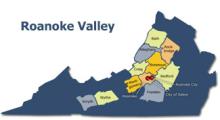
Roanoke Valley map from Foundation For Roanoke Valley

Community Network Services (CNS) Brings STEM Education and More to Rural Southwest Georgia

With agriculture being the number one industry in the state, we are looking to inspire students to learn globally and live and produce locally. Agriculture and STEM education are a natural fit. With GPS-guided equipment and variable-rate irrigation and fertilizer applicators to better manage natural resources, education is key." These are the words of Beau Sherman, Regional Distant Learning and Video Coordinator for Education serving schools connected by Community Network Services (CNS) in Georgia.

CNS was formed in 1997 when several towns in rural southwest Georgia got together to form a public telecom utility. They started by connecting local schools and libraries with a fiber broadband network. While CNS has since grown into a full-service telecommunications provider - offering phone, video and internet access to business and residential customers - its impact on local education is a shining example of how community broadband networks can improve local education. CNS now serves 65 schools across 3,278 rural square miles including the cities of Cairo, Camilla, Moultrie, Pelham and Thomasville.

To help realize the network’s full educational potential, the school districts served by CNS teamed up to hire Beau Sherman. Mr. Sherman had long been a strong advocate for pushing STEM (Science, Technology, Engineering, Math) education in rural southwest Georgia. So he was the perfect fit for the role of helping the schools harness their new state-of-the-art broadband network.

Douglas County PUD Lowers Cost of Connecting to Community Network

A Wenatchee World article recently announced that Douglas County Public Utilities District is reducing the rate it charges to connect to the community fiber network. According to the July 18th article, connecting to the Douglas County Community Network (DCCN) previously cost a one time fee of $250. The PUD Commissioners decided to shave $100 off the price because revenue from the network is "more than covering" installation costs. Now $150 will connect a customer in the service area.

This reduction is one of several:

From 2010 to mid 2011, Douglas PUD required customers to pay the full cost of a hookup. At this rate, which could total more than $1,000 each, only about 30 customers signed up, Vibbert said.

In mid 2011, the PUD reduced the rate to $500 and enticed 139 more hookups. It reduced the rate again in mid 2012 to $250.

The open access network currently hosts six different providers, some offering telephone and television services in addition to Internet. The Wenatchee World notes that the DCCN is available to approximately 46 per cent of the Douglas PUD's 15,000 electric customers.

Roanoke Valley in Virginia Pondering Municipal Network

The Roanoke Valley, nestled in Virginia's Blue Ridge Mountains, grapples with the same connectivity problems facing many communities in rural Virginia. Private providers have few incentives to invest in next-generation Internet networks because the low density population promises too little profit. 

Like Danville, Bristol, and the Rockbridge area, communities in the Roanoke Valley are taking matters into their own hands. A February 2013 Roanoke Times news article reported that local businesses and regional governments collaborated to fund a $50,000 study. The study recommended creating a broadband authority to investigate the possibility of building an open access network. The Roanoke Times has more recently reported that public hearings are on the schedule for August:

Public hearings are coming up next month in the city and county of Roanoke, Salem and Botetourt County on a plan for local governments to band together to form a Roanoke Valley Broadband Authority. It could work with the private sector to create a regional open-access, fiber-optic Internet network that would allow large and small service providers to compete on a level playing field. [A PDF of the schedule includes the proposed resolution and Articles of Incorporation for the Authority.]

Leverett On Track for Fiber Network in Massachusetts

We have followed developments in Leverett since we first learned about the small town's decision to build its own next generation infrastructure. The community has faced some challenges but is determined to get its residents connected.

After an overwhelming vote to support a bond measure and minor tax increase to fund the network, Leverett encountered delay when the State attorney general ordered a new bid in April. According to a GazetteNet article, a technical glitch on the bid form allowed bidders to exclude themselves from parts of the project, affecting the overall bid. Leverett awarded the first bid to G4S, but two other firms submitted complaints prompting the review.

After reviewing revised bids in May, Select Board awarded the $2.27 million contract to Millennium Communications Group. The GazetteNet reports that Millennium met with town officials in June to answer questions and examine the bid in detail.

The GazetteNet spoke with Select Board Member Peter d'Errico: 

“When this is up and running, Leverett’s going to have state-of-the-art, worldwide telecommunications capability,” d’Errico said. “It’s comparable service to what Google is providing in Kansas City, and it means that Leverett will also become a desirable place for all kinds of people who work in the mediums that require that level of technology. I see it as having economic benefits for the town, cultural benefits for the town and when you add in things like telemedicine, it means that it’s more than lifestyle, it’s quality of life.”

Scheduled completion date is December 2014.

"Olds" is First Gigabit Town in Canada

We introduced you to Olds, Alberta and their community network O-Net in 2012. Now this community of 8,500 will be the first Canadian "gig town" where residents will have access to a gig at incredibly low prices. 

CBC News reports that the Olds Institute for Community and Regional Development, the nonprofit organization building the network, recently approved the upgrade. Residents with 100 Mbps will have access to a gigabit with no increase in price. Depending on how they bundle, the price for Internet will range between $57-90 per month.

CBC's Emily Chung noted how much of rural Canada offers only dial-up or satellite. Olds used to have the same problem; businesses were considering leaving town:

"We had engineering companies here who were sending memory chips by courier because there wasn't enough bandwidth to deal with their stuff," recalls Joe Gustafson, who spearheaded the project to bring a fibre network to Olds.

...

"Now there's no talk about people leaving because of bandwidth challenges."

The $13-14 million project, which also included a video conference center and 15 public use terminals for residents, launched in July 2012. The organization acquired a $2.5 million grant from the province of Alberta and a $6 million loan from the town of Olds. When incumbents were not interested in providing service over the network, O-Net adapted:

"We said, 'Well I guess if we're going to do this, we have to do our own services,'" Gustafson recalled.

The Olds Institute spent $3.5 million to buy the necessary electronic equipment to run internet and other services on the network and to build a central office to house it all. Last July, it launched O-Net.

The community-owned service offers not just internet, but also phone and IPTV services — TV signals carried on the network that includes dozens of SD and HD channels, and movies on demand that can be paused and later resumed.

New Hampshire FastRoads to Partner With Sovernet

New Hampshire FastRoads will soon be working with Vermont's Sovernet to bring access to southern New Hampshire. According to the Brattleboro Reformer, Sovernet is ready to begin offering data and voice service as soon as the fiber infrastructure is complete.

"It's really exciting because while we do some business in New Hampshire we have not been able to do anything to the extent that we will be able to do on this fiber network," said Sovernet Vice President of Sale and Marketing Peter Stolley. "Needs over the Internet are constantly evolving and this gives us a virtually unlimited amount of speed to get to people."

Sovernet managed a similar project to New Hampshire Fastroads in Vermont, but in Vermont Sovernet installed and manages the fiber network.

FastRoads' open access model will provide infrastructure on which independent ISPs will offer service to community anchor institutions, businesses, and residents in underserved areas. The $7.6 million project is about 98% finished after a year-long installation period. New Hampshire Community Development Finance Authority, Monadnock Economic Development Authority and 42 towns in New Hampshire comprise the FastRoads collaborative effort.

Carole Monroe, New Hampshire FastRoads Executive Director told the Reformer:

"This project was done to reach the most rural and least served communities in this part of the state," Monroe said. "Up to now there has been no way to bring fiber to these homes and this is a great opportunity to get them that big broadband. We think that as more people come on board it will entice growth and allow us to expand our footprint to reach more businesses and homes."

We spoke with Monroe in Episode #36 of the Broadband Bits podcast. She shared a history of the challenges facing the collaborative and how the network was already bringing benefits to the community, even before launch.

Responding to More "Crazy Talk" - Community Broadband Bits Podcast #55

Following up on our first "Responding to Crazy Talk" episode last month, we decided to publish a second edition this week. Again, Lisa Gonzalez and I respond to real arguments made by those who oppose community owned Internet networks. Today, we used three arguments from a debate in 2011 that included myself, Jim Baller, Jeff Eisenach, and Rob Atkinson. We chose three arguments from Rob Atkinson for this audio show but strongly recommend watching the entire debate as it examines these issues from more perspectives. We deal with the term "overbuilding" and competition more generally to discuss how these arguments are quite detrimental to the best solutions for expanding access in rural areas. The second argument is the classic one that it is simply harder to build networks in the U.S. because we are such a large, spacious country and that statistics from other countries are misleading merely because they are smaller or more dense. And the final claim is that subscribers are generally happy with what they have and do not need faster connections. Read the transcript here. Let us know if you like this format and what questions we should consider the next time we do it. We want your feedback and suggestions for the show - please e-mail us or leave a comment below. Also, feel free to suggest other guests, topics, or questions you want us to address. This show is 20 minutes long and can be played below on this page or subscribe via iTunes or via the tool of your choice using this feed. Search for us in iTunes and leave a positive comment! Listen to previous episodes here. You can can download this Mp3 file directly from here. Find more episodes in our podcast index. Thanks to Eat at Joe's for the music, licensed using Creative Commons.

Rockbridge Area Network Authority Close to Launch in Virginia

The Rockbridge Area Network Authority (RANA) is almost ready to launch its open access network in north central Virginia, home to about 22,000 people. A recipient of the BTOP stimulus program, the main focus is connecting community anchor institutions and spurring economic development. However, it has been built to allow service providers to also offer DSL to some residents in the area.

Dan Grim, GIS Manager for Rockbridge County, and one of the driving forces behind the network was kind enough to walk us through the project. In early 2007, the cities of Buena Vista, Lexington, and the County joined forces to commission a study to determine the need for a county wide broadband network. The three jurisdictions matched funding from the state Department of Housing and Community Development to pay for the study, completed in 2008.

Grim had already consulted with local provider, Rockbridge Global Village, about using a regional network to improve public safety mapping. Rockbridge Global Village President, Dusan Janjic, suggested a bigger project and that the three entities apply together for American Recovery and Reinvestment Act (ARRA) funding. 

Richard Peterson, Chief Technology Officer from nearby W&L determined that the school needed a new and updated data center. In 2009, RANA was officially formed as a collaboration between the local governments and Washington & Lee. The University joined the group and contributed $2.5 million toward a $3 million grant fund match. With the grant fund match to improve their chances, RANA applied for a $10 million BTOP award and received $6.9 million in funding through round two in 2010.

Peterson passed away in 2011. Grim notes that without Peterson, the network would never have expanded so far and may not have become a reality. The data center was later named after him to honor his memory. Network construction started in February 2012.

RANA Map

Silverton, Colorado, Breaks Ground in First Phase of Regional Network

In 2010, Silverton, Colorado, decided to build a fiber-optic loop for savings and better connectivity in rural San Juan County. At the time, Qwest (now CenturyLink) provided a microwave connection to the town of around 630 residents. After taking state money to connect all the county seats, Qwest decided to take fiber to everyone except Silverton, much to the frustration of local residents. We wanted to catch up with happenings in this former silver mining camp.

We spoke with Jason Wells, Silverton Town Administrator, who told us that Silverton's loop is part of a regional effort, the Southwest Colorado Access Network (SCAN). Silverton's loop broke ground in April and it will cost $164,000. Silverton and San Juan County contributed $41,000 and the remainder comes from a Southwest Colorado Access Grant. Wells says public institutions will be hooked up first, then downtown businesses. Connecting the schools will come later.

The community is limited by its remote geography. At 9,300 feet above sea level, the town is one of the highest towns in the U.S. and still served by microwave technology. Wells hopes future expansion will include wiring Silverton to Durango, the closest SCAN community. Durango connects municipal and La Plata County facilities with its municipal fiber and leases dark fiber to local businesses, private providers, and community anchor institutions.

Wells connected us to Dr. Rick K. Smith, Mayor of participating Bayfield and General Manager of the Southwest Colorado Council of Governments (SWCCOG). Dr. Smith shared some history on the SCAN project.