
rural

Content tagged with "rural"

Related Topics
Displaying 291 - 300 of 1070

Williamstown, Massachusetts, Looking at Municipal Connectivity Options

Williamstown, Massachusetts, may ask their constituents to vote on the creation of a publicly owned fiber optic system. For the town of 7,700, a vote on whether or not to invest in fast, affordable, reliable, Internet network infrastructure isn't imminent, however, as Williamstown still has significant research ahead. 

An Ongoing Discussion

This past summer, community leaders learned from Select Board Member Andrew Hogeland more about the possibilities in Williamstown. He gave his update regarding the research on the broadband initiative at a July meeting:

“The answer seems to be: It's promising," Hogeland said.

...

"We are in competition with other towns around the state and country who are doing this," Hogeland said. "There are lots of reasons to come to Williamstown, but if there's another town like us that also has broadband … "

Williamstown began consideration of a municipal network several years ago, when the town’s 2015 Economic Development Committee began to investigate the potential for developing fiber optic infrastructure. The committee released a 2016 report that indicated Williamstown would face certain disadvantages if they didn't improve local connectivity for businesses. The report stated:

"The Best Practices study found a positive correlation between broadband access and economic prosperity. Other studies of the broadband industry confirm this correlation, and indicate that towns with broadband access have a better business environment and higher real estate values compared to communities without broadband."

"From Crops to Co-ops" Animated Series Continues, Locals Learn About Power of Cooperatives

We recently introduced you to our informative and campy video series, “From Crops to Co-ops: Small Towns Want Better Internet!” In episode 2, we continue the saga of “Villageville,” where the streets are quiet, the people are friendly, and the Internet access leaves much to be desired. Last time, you met some of the people who live in this rural community and discovered how they've dealt with substandard connectivity. People are getting a little fed up; could the wind be shifting in Villageville?

Don’t miss this chance to hear current and past members of the Community Broadband Networks Team try their hand at voiceover acting! We wanted to make this series fun and have fun making it, so you'll hear some familiar voices.

In episode 2, the town’s newest family, shocked and dismayed at Villageville’s poor connectivity, meet to the local librarian to discuss local options. Like students who need fast, affordable, reliable Internet access for homework, entrepreneurs in rural areas often find their business goals hindered if they move to a community forced to rely on outdated solutions like DSL.

As librarians often do, however, Villageville's has been researching the problem and shares her findings. She’s discovered some great information about rural cooperatives. In addition to the facts our local librarian shares, we’ve included pop-up data about cooperatives, connectivity, and economic development. The video is a great way for you to get people interested in learning more about the possibilities in your own rural community.

If you haven’t seen episode 1 yet, check out the synopsis here or watch it below and learn more about our cast of characters and their quest for better Internet access. Share the series playlist, where we'll continue to add episodes as we release them.

Need to get caught up? Here's episode 1:

Animated Video Series Explores Rural Connectivity: "From Crops to Co-ops"

In rural communities, large companies often won’t invest in high-quality Internet network infrastructure due to the lack of population density. Increasingly, rural electric and communications cooperatives are filling the void and providing the Internet access small towns and surrounding areas need. In order to illustrate the challenges facing these small rural towns, we’ve developed a series of videos titled, “From Crops to Co-ops: Small Towns Want Better Internet!”

The series includes five episodes that tell the story of one small town, its residents, and the way they tackle the need for better local connectivity. In addition to our story about the folks from the imaginary community of "Villageville," we include real-life statistics about connectivity in rural communities.

In the first episode, we’ve introduced some of the characters that will take us through the series as we catch up with them outside the local library. You'll learn why they're hanging out in the parking lot and get a better understanding of what life is like in a rural community where small towns want better Internet access.

Share this resource with others who are interested in exploring options for improving connectivity in their local communities.

We’ll share more episodes that document Villageville's journey in the coming weeks.


UPDATE:

We've published all five episodes! Watch them here to find out what happened in Villageville:

Episode 2:

Episode 3:

Episode 4:

Episode 5:

It's National Digital Inclusion Week! Help Spread the Word!

This week is Digital Inclusion Week, sponsored by the National Digital Inclusion Alliance (NDIA). As a reader of MuniNetworks.org, you're used to stories about local communities that develop strategies to deploy networks for many reasons, including to improve access to high-quality connectivity. These local communities recognize the necessity of finding a way for members of the community to obtain fast, affordable, reliable Internet access. Access, however, is only one element of digital inclusion. We'll share stories highlighting local efforts to bring every person online with the tools they need to expand their use of the Internet.

NDIA writes:

Digital Inclusion Week (DIW)  is October 7-11, 2019, and with your help we can move closer to our common goal: that all people have access to the Internet and the tools they need to use it. The week, sponsored by the National Digital Inclusion Alliance, is an opportunity to raise awareness about digital inequities and nationwide efforts to close those gaps from California to the Carolinas. Digital Inclusion Week seeks to bring people who dedicate their lives to Digital Inclusion together to highlight the impact of their work and to come together to find solutions to close digital divides.

What is Digital Inclusion?

Digital inclusion isn't limited to the inability to subscribe to Internet access because one doesn't live in a place where is isn't available. NDIA applies five necessary elements:

Digital Inclusion refers to the activities necessary to ensure that all individuals and communities, including the most disadvantaged, have access to and use of Information and Communication Technologies (ICTs).  This includes 5 elements: 

1) affordable, robust broadband Internet service; 

2) Internet-enabled devices that meet the needs of the user; 

3) access to digital literacy training; 

4) quality technical support; and 

5) applications and online content designed to enable and encourage self-sufficiency, participation and collaboration. 

Digital Inclusion must evolve as technology advances. Digital Inclusion requires intentional strategies and investments to reduce and eliminate historical, institutional and structural barriers to access and use technology.

National Public Radio Covers Electric Co-ops Connecting Rural Communities

On the September 30, 2019 edition of NPR's "All Tech Considered," Paul Flahive of Texas Public Radio reports on the way rural electric cooperatives are using their resources to develop broadband networks in rural Texas communities.

Flahive visits Bandera, "The Cowboy Capital of the World," where Bandera Electric Cooperative is deploying Fiber-to-the-Home (FTTH). Read more about how cooperatives are connecting rural communities in our 2019 updated report, Cooperatives Fiberize Rural America: A Trusted Model For The Internet Era. Visit our Rural Cooperatives page, and listen to the story from NPR News.


Georgia Developing Maps for Better Broadband Coverage Data

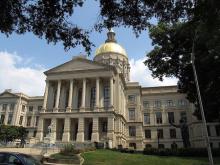
Federal Communications Commission (FCC) mapping has long been criticized for inaccuracies. Now, state and local initiatives are taking up the challenge of poor broadband mapping and developing ways to create their own maps that better reflect the reality of broadband coverage in their communities. The Georgia Broadband Deployment Initiative (GBDI) recently showcased several county-level maps they’ve developed that provide the detail that FCC maps lack.

Therein the Problem Lies

As experts have noted, FCC data on which maps are based are inadequate because their foundation is based on census blocks. If one premise in a census block can be served by an Internet access provider, that provider will report on the Form 477 that the entire census block is served. In rural areas where census blocks can be very large tracts of land, this can leave many premises indicated as served but actually unserved. 

We developed this graphic to illustrate the issue:

diagram-census-blocks-2018.jpg

When local communities apply for funding that’s based on the need to connect unserved and underserved premises, they can be disqualified due to incorrect mapping data. For local leaders who need to get their communities connected and expect to apply for grants and loans, FCC mapping can derail their funding and delay or end a proposed project.

This past August, the FCC announced that they will finally take steps to improve mapping and began seeking comments on the new Digital Opportunity Data Collection. Read the announcement [PDF].

Fixing the Maps

In Georgia, the GBDI sought to obtain information on a more granular level to obtain an accurate representation of where residents and businesses need to be connected and where they lack the kind of connectivity they need. 

Open Broadband and Alexander County, North Carolina, Bringing Fixed Wireless to the Mountain

Fixed wireless Internet access from Open Broadband will soon be offered in special pilot areas of Alexander County, North Carolina, reports the Taylorsville Times.

According to the Times, the company started installing equipment on a local mountain; once it has been tested and configured, residents and businesses will be able to subscribe. People in Alexander County can join the wait list now and will be notified when service comes to their area.

“Alexander County conducted a broadband survey back in June 2017, which showed a tremendous need for expanding broadband Internet service in the county,” said Dr. Jeff Peal, Chairman of the Alexander County Board of Commissioners. “To get a better understanding of our need and how service could be improved, the county awarded a contract in September 2017 to Open Broadband for a feasibility study. After learning those results, we began investigating ways to move this critical project forward.”

...

The Alexander County EDC applied for, and received, a $50,000 grant from the Appalachian Regional Commission (ARC) in early 2019 to help fund the pilot program. The EDC then issued a request for proposals in March to find an Internet Service Provider (ISP) with the best plan, qualifications, and price point. Upon review of the proposals, the EDC Board of Directors approved a contract with Open Broadband to conduct the pilot program. Per the contract, Open Broadband provided a $50,000 match to the ARC grant, and Alexander County Government contributed $36,470 to the project.

Peal told the Times that the pilot project results will determine the future of the partnership between Open Broadband and the county. 

“Pending the results from this pilot program, we hope to continue this partnership and work to expand the broadband network to cover as much of Alexander County as possible in the next few years,” Peal stated. “County officials and staff will continue to pursue all opportunities to expand broadband Internet service to our residents and businesses.”

The Internet Society Leads Charge to Connect, Collaborate for Decades - Community Broadband Bits Podcast 376

The history of the Internet Society (ISOC) reaches back to the early 1990s when a group of early Internet pioneers, realizing the power of connectivity, developed an organization aimed at  bringing safe and secure Internet access to everyone. Since then, ISOC has worked in policy, deployment, and the difficult task of creating collaborations. This week, we have ISOC's Director of the North American Bureau Mark Buell and Senior Policy Advisor Katie Watson Jordan to talk about the organization, its history, and the work they do.

In addition to learning about the growth of the organization, which now has chapters all over the globe, Mark and Katie describe their current community network project in remote Ulukhaktok, Northwest Territories, Canada. They discuss their role in this and other community network projects, including the next location in Hilo, Hawaii. Read more about Ulukhaktok and the challenges they faced in developing their network in Katie's recent article on the project

Mark and Katie discuss ISOC's policy and access work. In addition to helping leaders establish better guidelines that encourage infrastructure deployment, they have led in matters of security and privacy. They also note that, one of the greatest strengths of ISOC has evolved into the organization's ability to bring people and entities together to achieve common goals. A prime example is their annual Indigenous Connectivity Summit, this year held November 12th and 13th in Hilo, Hawaii. Katie and Mark explain the success of past Summits and talk about expectations for this year's event.

You can register for the 2019 Summit here. Did we mention it's in Hawaii? HAWAII???

This show is 33 minutes long and can be played on this page or via Apple Podcasts or the tool of your choice using this feed

Transcript below. 

We want your feedback and suggestions for the show-please e-mail us or leave a comment below.

Listen to other episodes here or view all episodes in our index. See other podcasts from the Institute for Local Self-Reliance here.

Thanks to Arne Huseby for the music. The song is Warm Duck Shuffle and is licensed under a Creative Commons Attribution (3.0) license.

Methow Valley Broadband Action Team Seeks Planning Proposals for Better Broadband in Central Washington

In central Washington, the Methow Valley, Okanogan County, and the Colville Confederated Tribes Broadband Action Teams (BAT) are teaming up to improve connectivity and shrink the digital divide across the Methow Valley. As part of the process the BAT has released a Request for Proposals (RFP) for technical assessment and technical implementation planning to help them meet their goals. Deadline for proposals is September 30th, but the BAT has indicated that they will grant an extension upon request.

Review the RFP here.

Making Improvements

Methow Valley boasts its scenic treasures, including the North Cascades National Park and the Columbia River. Tourists visit the region for hiking, mountain biking, cross-country skiing, and vibrant arts scene. Like other similarly situated communities where natural beauty is an important feature, high-quality Internet access is difficult to come by.

According to the RFP:

Many residents of the Methow Valley live below the poverty line and have limited access to affordable, high-speed Internet services. This lack of access has impacts on education, economic growth and viability, emergency services, and quality of life. Simply put, this area lacks reliable wide-spread broadband access necessary to overcome these challenges. 

In September, the Washington State Department of Commerce's Community Revitalization Board awarded a $50,000 grant to the BAT and the Twisp Public Development Authority (PDA) to dig deeper into the need for broadband service in the Methow Valley. Okanogan County provided a match of $16,667 to secure the state grant. The funding has allowed the BAT to move forward on this project.

Read more in the TwispPDA Methow Valley Position Paper [PDF] here.

In 2018, the BAT began working toward better connectivity by creating a work plan, seeking out stakeholders, and obtaining community input. This year, they wish to expand on their planning process and conduct a technical assessment. In order to complete this phase of the plan, the BAT wants a consultant who will:

Inside the Connect America Fund with Carol Mattey - Community Broadband Bits Podcast 375

The Connect America Fund (CAF) from the federal government has been both praised and criticized as a mechanism to expand rural broadband deployment. In this episode of the podcast, Principal of Mattey Consulting Carol Mattey talks in depth with Christopher about the program. Carol was a Deputy Bureau Chief in the Wireline Competition Bureau at the FCC to help develop the program and has worked on the National Broadband Plan.

In addition to offering a primer on CAF for those of us who aren’t familiar with its inception or purpose, Carol offers a historical perspective that includes the broad goals of the program. She looks back and offers her opinions on the aspects of the program she considers successful and those that need improvement. Carol and Christopher consider the challenges of creating such a program, including political pressures and the difficulty of navigating unchartered waters. 

They compare the different phases of the CAF program and how large national ISPs and smaller entities have used the awards. Christopher and Carol also discuss possible changes in benchmarks that could make the resulting infrastructure more future proof and useful to rural communities.

For more conversations about CAF with other guests that we’ve had on the show, check out:

This show is 35 minutes long and can be played on this page or via Apple Podcasts or the tool of your choice using this feed

Transcript below. 

We want your feedback and suggestions for the show-please e-mail us or leave a comment below.

Listen to other episodes here or view all episodes in our index. See other podcasts from the Institute for Local Self-Reliance here.

Thanks to Arne Huseby for the music. The song is Warm Duck Shuffle and is licensed under a Creative Commons Attribution (3.0) license.