
Fast, affordable Internet access for all.
rural
Content tagged with "rural"
Rural Folks Need Broadband Too
A northeastern Minnesota county is doing just that and may have the answer, at least for those in the "second Minnesota." Lake County hopes to blaze a trail to a faster Internet with private businesses paying most of the cost. County officials want to lay fiber optic cable, capable of carrying high-speed signals, to every home and business with electricity. If it happens, Lake County could become a model not only for Minnesota but the country by offering its rural citizens the same service as their big-city cousins receive.As detailed in the article, Lake County has lost economic development opportunities precisely because they cannot guarantee fast and affordable connectivity to those who otherwise want to locate there. What he does not make clear is that Lake County will own this network. It will be operated by National Public Broadband - a nonprofit. The private sector is not interested in bringing true broadband to the North Shore and local citizens should be glad of it - they will get a far superior network than Qwest could have built. Once the public builds this fiber network (using private sector contractors), other private sector companies will provide services over it. This is a good model - the public builds the infrastructure and allows private companies to deliver services. The public can ensure everyone has equal access by physically connecting every residence and business. Unfortunately, one of the MN Task Force members - who should know better - is quoted as saying it isn't "financially feasible" to build fiber to every home. What is or is not financially feasible is debatable.
Comments on Round Two for Broadband Stimulus
RUS and NTIA released a joint Request for Information (RFI) seeking comment on further implementation of the Broadband Initiatives Program (BIP) and the Broadband Technology Opportunities Program (BTOP). Comments must be received by November 30, 2009. The input the agencies expect to receive from this process is intended to inform the second round of funding.We offered five pages of comments, responding directly to the questions - I am led to believe that this is the preferred way of responding to such requests for information. Thus, the format consists of a short introduction and then questions (in italics) followed by our responses. Unsurprisingly, we generally encourage NTIA and RUS to better serve the public interest by requiring more transparency in the second round. We also call on them to stop accepting "advertised" speeds in their broadband definition and use actual delivered speeds in order to ensure communities are not discouraged from applying because their incumbent providers exaggerate the capabilities of their network. Most importantly, we call on NTIA and RUS to encourage public sector entities to apply by ceasing to consider all private networks to operate in the public interest. As we previously documented here, NTIA subverted the intent of Congress with the rules from round one. The rules should prefer public and nonprofit entities as they are directly accountable to the public and should therefore be the first in line to receive public money for essential infrastructure. As the number of applications to NTIA and RUS was far higher than expected, making the public interest requirements stronger should be a natural response.
Bristol Virginia Utilities - Doing Well
“The broadband expansion fortifies the existing fiber route between BVU and Citizens as well as giving our area a redundant fiber-optic line to Northern Virginia, where bandwidth needs are increasing all the time. It is necessary to our region’s future and the survivability of our existing telecom network,” he [Virginia Delegate Terry Kilgore] noted.BVU was the first municipal network in the U.S. providing the triple-play over a full fiber-to-the-home network. And it is doing quite well according to its annual audit report.
Conducted by Brown Edwards & Co., certified public accountants, the audit revealed increased revenues and no surprises, partner and accountant Richard Linnen told the BVU board of directors at its Monday meeting. “It was a clean opinion and an unqualified audit, as it is every year,” Linnen said.Such independent audits are a useful exercise to ensure these essential networks are operating efficiently and accountably. Additionally, these audits are useful to refute false claims of impropriety from private sector companies looking to discredit publicly owned networks.
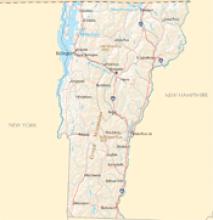
Rural Vermont Fiber Update
First off, compared to the VTel project, I'm immediately inclined to favor ECF's by the simple fact that they're a public project, which the original stimulus language suggested should get priority, and they're looking for a loan rather than a grant, and I think so long as a project will be self-sustaining, it's always better to loan money that you'll get back some day than to just give handouts of free money. I also prefer ECF's project because they're going to be bringing fiber to every home in their service area. They're not going to leave anyone behind, creating second-class digital citizens. Finally, I think that ECF's project has a greater chance of establishing a model that the rest of the country can learn from, proving both that fiber can be economical in rural areas and that open multi-service networks can be financially viable.Vermont was also one of the four states to receive the first awards for mapping broadband.
Verizon Actions Show Carriers Will Not Wire Rural America
The Need to Permit Broadband from Public Entities
While the provision of broadband service by public entities is a contentious topic, there have been no comprehensive studies of municipal broadband service providers that would provide easy answers to policy makers. Instead researchers have considered single cities or one type of provider. There are several reasons for the dearth of comprehensive studies. One is that the technologies involved are so new. Another is that indispensable data sets are often proprietary, confidential or nonexistent. To aid the Task Force in its duties, we have gathered information from the publicly available sources. To supplement these data sets, the Brennan Center distributed a questionnaire (the “Brennan Center Questionnaire”) to the Nebraskan members of the Center for Rural Affairs and Common Cause to gather information about the challenges experienced by Nebraskan Internet users. ... In Part I of this white paper, we will explore the status of broadband deployment both nationally and in Nebraska. We have found that some Nebraskans lack access to broadband providers and others live in areas where there is unaffordable broadband service. A significant minority (43% living outside of towns in 20054 and 7.4% of Nebraskan towns in 2006 according to the Nebraska Telecommunications Association) lacked access to broadband service. These numbers most likely understate the magnitude of the problem because of the reporting methodologies used. Around half of Nebraska’s towns are only served by a monopoly wired broadband provider who can charge high prices for broadband service. The data also demonstrate that rural Nebraskans in particular are more frequently priced out of the broadband market than their urban counterparts. Those living in small Nebraskan towns and in the countryside, and even many living just outside larger Nebraskan cities are faced with unaffordable broadband service.
WashPo: Headline Wrong, Story Mostly Correct
"If you want to get broadband out, you have to do it with [those] who brought you to the dance in the first place, and in this case it is the incumbent cable and telephone carriers who have 85 percent of lines in the country," said Robert Atkinson, president of the Information Technology and Innovation Foundation, a Washington tech policy think tank.Mr. Atkinson appears to educate himself solely with the press releases and reports of incumbent-financed think tanks. He has systematically ignored the potential for publicly owned networks - as we have shown, these networks are some of the fastest and most affordable networks in the country. Instead, he opines about the need for incumbents to build more of their super slow DSL networks - as though that is what the country needs to remain competitive in the 21st century.
Paul Bunyan Coop Brings Fiber to Rural Minnesota
Currently, over 4,000 locations are served with our fiber-to-the-home network, which represents about 30 percent of our entire network. For these customers, thanks to the benefits of fiber optics, we can deliver high-speed Internet services up to 40 Mb (both upload and download) and a host of advanced television services including multiple streams of high-definition television, digital video recording, and on-demand services.For those who claim that people in rural areas just don't understand broadband or don't want it, this company has an answer:
One specific example the fiber optic network capacity can have on a business is Northwood DNA, Inc. This is a business operating in a very rural area, Becida, MN, that provides DNA sequencing and genotyping services globally. The services they provide require receiving and sending large data files electronically. Prior to the deployment of the fiber optic network, their business was only able to report two to three test results per day. Today, with the benefits of the all fiber optic network, they report over 50 test results per day.The full story starts on page 9 of the 2009 July FTTH Prism.
Five Days on the Digital Dirt Road
InternetforEveryone.org is working to shed light on the millions of Americans who live without regular Internet access or lack the training or equipment to get online. A small reporting team is traveling to communities across the country to tell people's stories. Free Press' Megan Tady interviewed residents of Los Angeles, Calif., and Washington, D.C. On this site, you can follow our trek and get an up-close view of America’s urban digital divide. InternetforEveryone.org is working to shed light on the millions of Americans who live without regular Internet access or lack the training or equipment to get online. A small reporting team is traveling to communities across the country to tell people's stories. Free Press' Megan Tady interviewed residents of Los Angeles, Calif., and Washington, D.C. On this site, you can follow our trek and get an up-close view of America’s urban digital divide.