
Lawmakers are pushing the Trump administration to stop being murky on whether states will be able to access tens of billions in “non-deployment funds” mandated by Congress that have been temporarily hijacked by the administration’s unpopular changes to a once-in-a-lifetime federal grant program to expand high-speed Internet access.
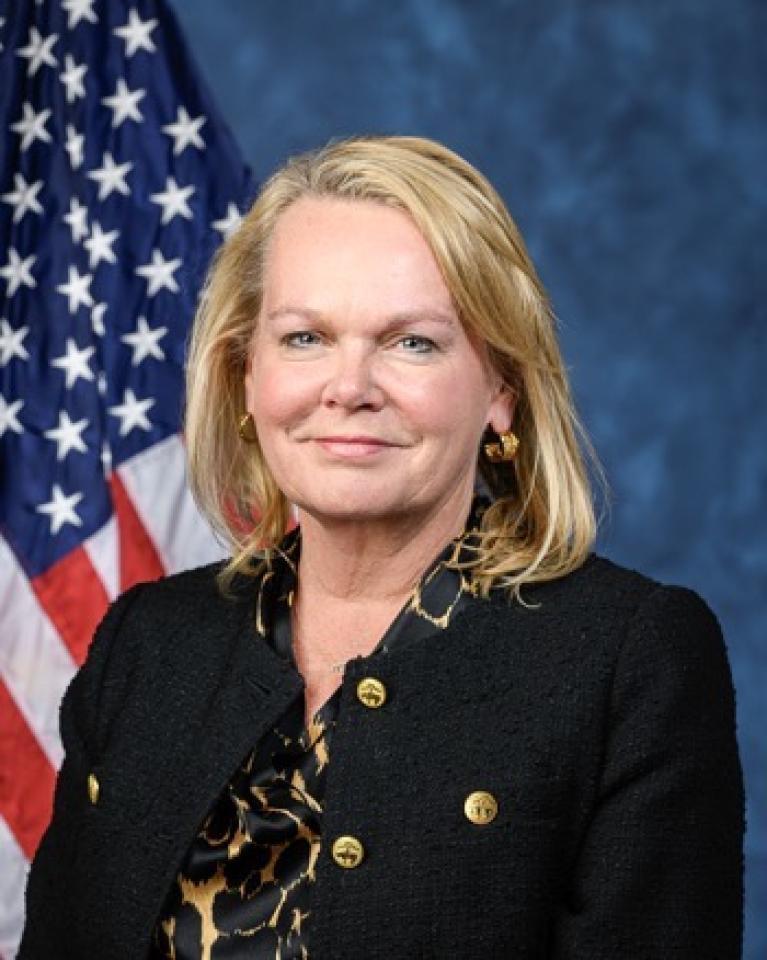
Representative April McClain Delaney (D-MD) is the latest politician to send a letter to the Trump NTIA asking for competent guidance on what will happen to the estimated $21 billion in “non deployment funds” suddenly stuck in limbo.
“States cannot build a workforce without workforce development funding; they cannot ensure safe adoption without digital safety education; they cannot support vulnerable populations without telehealth and remote-learning infrastructure; and they cannot protect critical networks without robust cybersecurity capacity,” Delaney and three other lawmakers wrote.
A year ago the Trump administration made numerous controversial changes to the $42.5 billion Broadband, Equity, Access, and Deployment (BEAD) program included in the 2021 infrastructure bill. That included removing rules ensuring that the resulting taxpayer-funded Internet access would be equitably deployed and affordable.
But it also involved redirecting billions of dollars away from future-proof fiber networks, including municipally-owned open access networks, and instead doling it out to Jeff Bezos and Elon Musk in exchange for low-Earth orbit satellite networks they in many instances had already planned to deploy without subsidization.
These downgrades from more reliable fiber resulted in nearly $21 billion in “savings,” now deemed “non-deployment funds.” While Congress specifically mandated that this money be used for internet access (or adjacent policy fixes like digital education), there has been a mad dash by some politicians to repurpose the funds elsewhere.
According to Delaney, politicians sent a letter to Howard Lutnick and NTIA boss Arielle Roth last summer inquiring what was to be done with the $21 billion, and has yet to receive any response.
“Eight months later, states still lack the basic guidance needed to responsibly plan for and deploy a significant portion of their BEAD allocations,” Delaney said. “This uncertainty persists even as states begin receiving deployment funds and preparing to launch deployment activities. States require clarity on eligible nondeployment uses, and American taxpayers deserve transparency about how these dollars may be spent.”
Where are the Benefits and Bargain?
The Trump administration changes to the BEAD program were dubbed the “benefit of the bargain” by the Trump administration. But the changes introduced costly new delays for states forced to suddenly completely retool their broadband plans – mostly with an eye on making deployments less equitable, less affordable, and less effective.
A cornerstone of the changes shovel potentially billions of dollars to Musk and Bezos LEO satellite ventures. While services like Starlink are a great niche option for completely unserved rural users, data indicates the networks will get too congested to meaningfully scale.
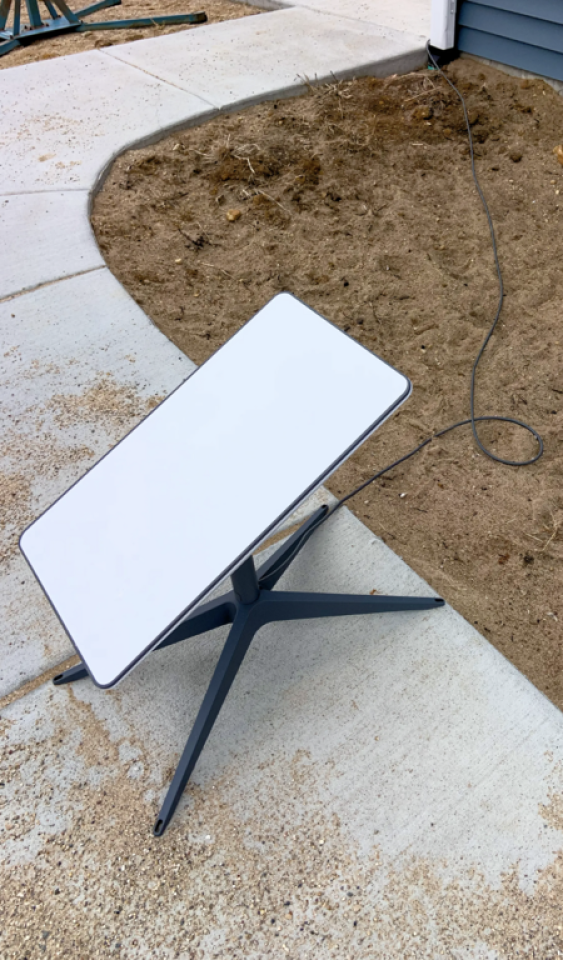
Such LEO offerings are also often too expensive for many Americans long-trapped on the wrong side of the digital divide. Other issues related to LEO satellite technology, including potential harm to the ozone layer and negative impacts on astronomical research, continue to make it an inferior choice to fiber optic networks, or in some cases even 5G cellular technology.
The shift to focus heavily on LEO creates savings that aren’t really savings, since additional future investments may be needed should Starlink fail to deliver next-generation speeds, or fail to remain operational under Musk leadership entirely..
On February 10, 2026 Secretary Lutnick testified before the Senate Appropriations Subcommittee that these “non-deployment” funds would still make their way to the states and not be returned to the Treasury. But NTIA silence since has raised concerns the administration is looking to hijack the funding in direct contradiction of Congressional law.
On April 22, 2026, Secretary Lutnick told the Senate Appropriations Subcommittee on Commerce, Justice, Science, and Related Agencies that the NTIA would complete its nondeployment guidance “over the next two months.”
As June winds its way to a close, the NTIA has still failed to issue any clarity about what happens next, causing amplified concern for states that have already been forced to dramatically retool or scale back Internet access deployment plans.
“The Department must now formalize this position in writing so that state broadband offices can plan responsibly and so that the ‘savings’ narrative does not continue to create confusion about program implementation,” Delaney wrote. “Continued ambiguity slows deployment, undermines rural connectivity, and jeopardizes the core objectives of the BEAD Program.”
As timelines stretch out, global military conflicts and tariffs risk driving up the cost of remaining fiber deployments, raising the specter of bid defaults and cancelled projects highly reflective of problems seen with the FCC’s Rural Digital Opportunity Fund (RDOF). Should that happen, billions more in taxpayer subsidies could find their way to Bezos and Musk.
A smattering of funding has reached states like Nebraska and Louisiana, but the actual number of customers provided new infrastructure to date is estimated to be somewhere around a few hundred homes. Five years and $42.5 billion later, and Americans languishing without high-speed Internet have yet to see any benefits or bargains from their own taxpayer funds.
“As BEAD funds begin reaching our states, it is essential that they have complete clarity on how remaining funds may be used for nondeployment activities as directed under 47 U.S.C. § 1702(f). States and the communities we represent have waited long enough,” Delaney wrote. “We request a thorough response to this inquiry by June 16, 2026.”
The lawmakers did not receive a response from the NTIA, something that may be a point of contention when Roth appears before the Energy and Commerce oversight committee tomorrow on June 30.
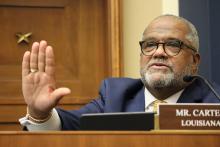
Header image of Congressman Troy Carter courtesy of House Energy and Commerce Committee Facebook page
Inline image of Representative April McClain Delaney courtesy of public domain
Inline image of Starlink home satellite dish courtesy of Wikimedia Commons, Creative Commons license, CC0 1.0 Universal