
feature

Content tagged with "feature"

Related Topics
Displaying 181 - 190 of 202

Save the Date: Building for Digital Equity #B4DE Holiday Edition

With the holiday season upon us, the Institute for Local Self Reliance (ILSR) Community Broadband Networks Initiative and the National Digital Inclusion Alliance (NDIA) are gearing up for the final Building for Digital Equity (#B4DE) event of the year and encouraging digital equity practitioners to save the date.

The popular (and free) virtual gathering will be held December 12, 2023 from 3 to 4:15 pm ET and will feature a holiday-inspired theme: Digital Equity Unwrapped: End of Year Reflections/The New Year Ahead.

You can register for the event now here.

Coming on the heels of our last B4DE event in October, which is still reverberating through digital inclusion circles across the nation, we are excited to follow up with a jolly and informative agenda that will cover:

  • The latest on the Affordable Connectivity Program (ACP).
  • Lightning Rounds on digital inclusion work with covered populations.
  • Setting the table on forthcoming Digital Equity Act funding and how communities are preparing.
  • Unpacking digital discrimination and its practical implications.

The keynote speaker for the event will be Patrick Messac, Director of #OaklandUndivided, an equity-based, collective impact initiative launched in Oakland, California.

Hoopa Valley Tribe and State of California Embark on Historic Collaboration

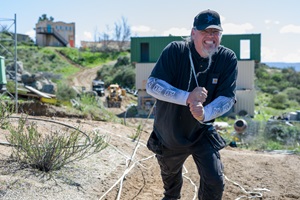
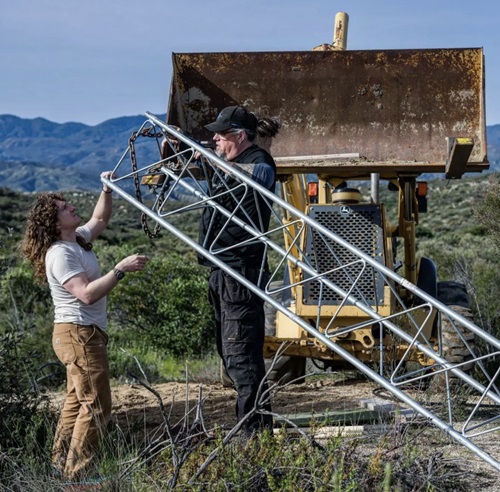
A new chapter in state-Tribal relations is being written as the importance of robust and reliable telecommunication becomes all-too-apparent, especially in the face of more frequent extreme weather events. For the first time, a Tribe in California is building high-speed Internet infrastructure in collaboration with the state, thanks to the resilience of the Hoopa Valley people.

Tucked along the Trinity River in the northwestern corner of the state, the Hoopa Valley Reservation is located in a rural and heavily wooded region that spans over 89,000 acres, home to over 2,500 Tribal citizens. Last summer, the area was ravaged by closely-timed wildfires and thunderstorms, followed by massive landslides that collapsed into the region’s riverways, including the Trinity River, a sacred body of water for the Hoopa Tribe.

As the river turned to mud and dead fish began to wash up on its banks, alarmed residents had limited means of connecting with one another, getting timely information about what was going on, or contacting emergency services. That was because of a hidden casualty of the wild weather: the Tribe’s wireless Internet network, which sustained severe damage that not only hindered communication but also extended the time it took to assess the damage.

IN OUR VIEW: Save ACP And Then Some

With the $14.2 billion Affordable Connectivity Program (ACP) on track to run out of funds by spring/early summer 2024, finally there is a request from the White House to extend funding for the program that over 21 million housholds now rely on to help pay for high-speed Internet service.

Last week, the Biden administration formally asked Congress for another $6 billion to extend the program through November 2024, joining a chorus of public interest groups (including AARP) calling on Congress to replenish the rapidly depleting fund.

(According to our calculations, an additional $6 billion would not fund the program through December 2024 as the White House said. It would fund the program through the end of November 2024. It would take $6.9B to get through the end of December).

Image
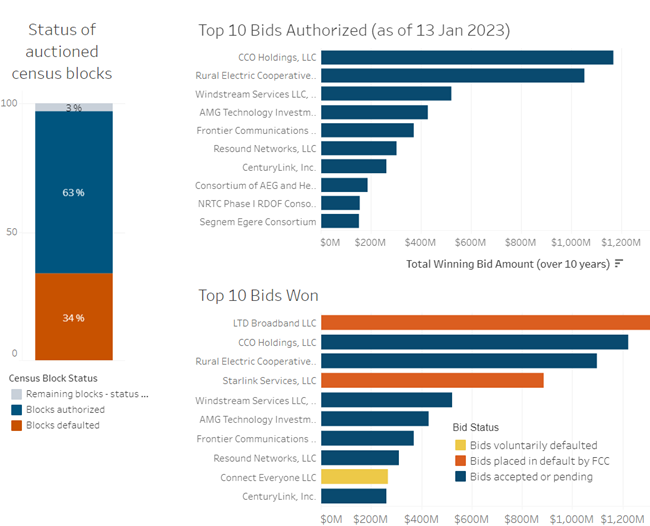
ACP Dashboard as of 10.31.23

First established with the passage of the Infrastructure Investment and Jobs Act (IIJA) in 2021 as part of the Biden administration’s “Internet for All” initiative, the ACP – currently administered by the Federal Communications Commission (FCC) – provides income-eligible households with a $30 monthly subsidy ($75 per month for those living on Tribal lands) to pay for their Internet service bill. The program also provides a one-time $100 benefit to go towards the purchase of an Internet-connected device such as a laptop or tablet.

Memphis Launches $700 Million Plan To Expand Fiber Access

Memphis Mayor Jim Strickland has introduced an ambitious new plan to incentivize private telecom providers to deliver affordable fiber to 85 percent of the Tennessee city of 633,000. The project, part of the city’s Memphis 3.0 master plan, will spend more than $700 million to expand broadband in a city where less than a quarter of residents–most of them wealthy–have access to next-generation fiber.

On September 23, city leaders introduced a new city ordinance amendment establishing new, streamlined permitting and fee requirements. Their goal: to incentivize companies willing to expand fiber optic broadband to at least 60 percent of Memphis’ residential and business premises and 60 percent of all existing low-income premises.

Not long after, city leaders unveiled more details about their "Smart Memphis Fiber" effort. After issuing an RFP last year, Memphis officials say they’ve struck a partnership with Paris-based Meridiam and Blue Suede Network to build a $700 million fiber optic network with an eye on eventually reaching 85 percent of the total Memphis population.

Image
Memphis 3.0 Plan cover sheet

“City Government will incentivize any interested company by reducing our costs through reductions in permitting fees and right-of-way fees,” Strickland said in a recent presentation before the city council. “Additionally, we will streamline our process to allow a company to get to work faster. We are also putting our own skin in the game.”

Syracuse Launches Surge Link Community Broadband Network

Syracuse officials have launched a new wireless community broadband network they hope will help bring affordable broadband access to the city of 145,000.

Dubbed Surge Link, the effort is backed by more than $3.5 million in federal funding and aims to deliver free broadband access to the city’s lowest income neighborhoods.

Motivated by peak pandemic connectivity headaches, Syracuse put out a request for proposal (RFP) late last year. The city then hired US Ignite as an advisor, and selected Geneva-based Community Broadband Networks (no relation to our program here at ILSR) to build a fixed wireless network capable of delivering discounted access starting with 2,500 underserved Syracuse households.

City officials tell ILSR the network is using Fixed Wireless Access technology, specifically Citizens Broadband Radio Service (CBRS), which is an emerging technology a growing number of municipalities and other nonprofit community groups have been experimenting with as a way to bring broadband to unserved and underserved residents in dense settings. And while CBRS has promise, as US Ignite notes, “because the technology is relatively new, the hardware and software associated with CBRS networks is also new. Vendors may still be working out the kinks in their solutions, particularly if those solutions are being used in novel ways, or need to interface with other older systems.”

It should also be noted that another New York community (Westchester County) embraced CBRS, only to find that it could not deliver the capacity they wanted to many people who needed the service. 

Cleveland's Two-Pronged Attack To Make ‘Worse-Connected City’ Label A Relic Of The Past

Cleveland, Ohio is putting the finishing touches on an ambitious plan to build a citywide open access fiber network–and deliver affordable fixed wireless service–at minimal cost to city residents. The double-edged proposal aims to bring both meaningful broadband competition–and lower rates–to the long neglected city of 1.7 million people.

Last month, the city announced it had awarded $20 million in ARPA (American Rescue Plan Act) funds to Cleveland-based digital equity non-profit DigitalC. Under the proposal, DigitalC will spend 18 months building a fixed wireless broadband network capable of providing locals with symmetrical 100 Megabit per second (Mbps) service for $18 a month.

DigitalC’s fixed wireless service, EmpowerCLE+, launched in 2018 and accelerated its deployment in 2020 to meet the needs of frustrated parents and workers during peak COVID.

Speaking at ILSR’s and the National Digital Inclusion Alliance (NDIA) Building for Digital Equity (B4DE) event last week, DigitalC CEO Joshua Edmonds noted that the EmpowerCLE+ network currently passes 23,500 households in Cleveland, with 2,300 current subscribers. The city’s new agreement with the city should expand the network’s potential reach to 99.9% of homes in Cleveland.

Image
Joshua Edmonds on B4DE

“We're thankful for the opportunity and we're just really hoping that people use this as motivation to change things within their respective markets,” Edmonds told ILSR in a phone interview.

Lamoille FiberNet CUD Gets Green Light For Major Vermont Broadband Expansion Plan

Vermont’s nascent Communication Union Districts (CUD) are pioneering creative efforts to deploy affordable broadband to the rural parts of the Green Mountain State. That includes the Lamoille FiberNet CUD, which has greenlit a major new plan to expand affordable access to fiber in the most neglected parts of rural Vermont.

At an Aug. 14th meeting, the Vermont Community Broadband Board (VCBB) approved Lamoille FiberNet’s $1.3 million pre-construction grant, followed by a mid-September approval of the CUD’s $13.6 million construction grant.

“This grant means that, by the end of 2024, we can bring high-speed internet to almost all the homes and businesses in our CUD that are unserved or underserved,” Lamoille FiberNet Communications CUD Chair Jeff Tilton said in a statement.

With the Lamoille CUD covering 10 towns in the north central part of the state (Belvidere, Cambridge, Eden, Elmore, Hyde Park, Johnson, Morristown, Stowe, Waterville and Wolcott), Lamoille plans to have Fidium Fiber and Consolidated Communications deploy and manage 630 miles of new fiber connecting more than 4,800 unserved and underserved Lamoille County homes and businesses. The network will be deployed in two phases.

Building for Digital Equity Event Encore

If you missed today’s Building for Digital Equity (#B4DE) livestream event"Building Connected Communities: Sustaining the Momentum" – no sweat.

You can still see the entire program below. The latest installment of #B4DE was packed with practical information and inspiration on everything from the latest on the Affordable Connectivity Program (ACP), outreach to veterans, telehealth and broadband adoption – mixed with on-the-ground intel from local communities pushing the digital equity movement forward.

Image
B4DE event screenshot

Co-hosted by ILSR’s Community Broadband Networks Initiative and the National Digital Inclusion Alliance (NDIA), the event was capped off by keynote speaker and emerging digital equity leader Joshua Edmonds, CEO of Digital C in Cleveland, who painted a powerful and expansive vision of digital equity work based on insights that have emerged from working in the trenches.

The entire #B4DE live stream, sponsored once again by UTOPIA Fiber, can be seen below. And, for other Digital Inclusion Week (DIW) engagements check out NDIA’s page here.

Murfreesboro, TN Soon To Be Awash In Affordable Fiber Thanks To Local Cooperative, Google Fiber

Murfreesboro, Tennessee suddenly finds itself awash with looming broadband competitors thanks to the city’s booming growth. In less than a month, United Communications – owned by not-for-profit electric cooperative Middle Tennessee Electric (MTE) – and Google Fiber have unveiled major plans to expand affordable gigabit fiber within city limits.

MTE-owned United Communications says it has some big plans for the city of 157,000, starting with broadband upgrades for the utilities’ 77,000 existing electricity customers.  

According to a recent announcement, the cooperative-owned ISP will spend $85 million in existing cash reserves to deploy 1,400 miles of fiber in the city, bringing affordable gigabit access to existing MTE electricity customers. As with many utility deployments, the upgrades will prove beneficial for electrical grid monitoring and maintenance.

“We’ve already completed phase one in the Boro, which includes our fiber backbone and service to more than 1,000 homes and businesses. As part of phase one, we also built fiber to the square in downtown Murfreesboro,” United President and CEO William Bradford said in a statement. “It was a privilege to put our fiber infrastructure to work by connecting our neighbors in disadvantaged communities and adding resiliency to the local emergency communications network.”

Image
Middle Tennessee Electric logo

Last year, United received $53.4 million in grants from the Tennessee Emergency Broadband Fund (made possible by the The American Rescue Plan Act of 2021) to help shore up broadband access in numerous Tennessee counties, including Bedford, Franklin, Giles, Lincoln, Marshall, Maury, Moore and Williamson.

Digital Equity Advocates Say California Risks Bumbling Plan To Deliver Equitable Broadband

California digital equity advocates say that recent cuts to the state’s ambitious broadband deployment plan unfairly harm low-income and minority communities. And despite promises from state leaders that the cuts will be reversed, local equity advocates say the process used to determine which neighborhoods should be prioritized remains rotten to the core.  

In 2021, California state leaders announced a $7 billion, multi-armed plan to bring affordable, next-generation fiber to every state resident. A key part of the plan involved building a $4 billion statewide middle-mile open access fiber network designed to drive down the costs of market entry, improve competition, and reduce broadband prices.

At the time, California officials said “the statewide network will incentivize providers to expand service to unserved and underserved areas.” Groups like the EFF lauded the “historic” investment, likening it to bold, early efforts to ensure rural electrification.

But last May, California officials quietly announced they’d be making some notable cuts to the state’s affordable broadband expansion plan. Blaming inflation and rising construction costs, the state’s renewed budget called for a 17 percent reduction in planned broadband investment, on average, across the state.