
Pulse

Content tagged with "Pulse"

Related Topics
Displaying 1 - 10 of 14

The Most Unbuffered Network – Episode 33 of Unbuffered

Unbuffered Logo - Two text bubbles

In this episode of Unbuffered, Chris is joined by Brieana Reed-Harmel, Broadband Division Manager at the City of Loveland, Colorado, which runs the municipal network Pulse Fiber. 

Brieana shares the details of Vector Fiber, Pulse's new 20-gigabit residential service and the first of its kind in Colorado. Launched on National Internet Day, the tier offers a direct fiber handoff and a static IP address for sophisticated home users who previously had to buy business service.

Together, they discuss how Pulse keeps its entry tier affordable at $50 a month for 500 Mbps, and how the network's original Nokia equipment made the jump from 10 to 20 gigs possible with little more than upgraded optics. Brieana also reflects on what it means for a city utility that just marked 100 years of public power to build the next century of community infrastructure.

Moving to the competitive landscape, Brieana explains how Pulse has held its own as CenturyLink's Quantum Fiber overbuilds the city and wireless providers court customers. Local customer service has proven to be its biggest advantage, with some customers who left for competitors' promotions coming back. 

Chris highlights Ookla data showing single-digit ping times on Pulse, putting it alongside regional neighbors NextLight and Fort Collins Connexion among the best networks in the country.

Concluding with a look beyond residential service, Brieana describes Pulse's expansion into the neighboring town of Timnath, including connecting its traffic signals for the first time. She also explains how the network has supported emergency response during floods and fires in Larimer County, and why the future of municipal broadband is about much more than competing with incumbents. They also explore the potential of fiber optic sensing for traffic and water systems.

This show is 31 minutes long and can be played on this page or via Apple Podcasts or the tool of your choice using this feed. 

You can also check out the video version via YouTube.

Transcript below.

We want your feedback and suggestions for the show-please e-mail us or leave a comment below.

Listen to other episodes in our index. See other podcasts from the Institute for Local Self-Reliance.

Thanks to Whitedrift for the song Operator, licensed Creative Commons Attribution (3.0).
Loveland’s City-Owned Fiber Network Launches Colorado’s First 20 Gig Home Internet Plan

The home Internet service with the fastest speeds in Colorado isn’t coming from Comcast or Quantum Fiber. 

It’s coming from the city-owned fiber network in Loveland.

On International Internet Day (October 29), Pulse Fiber announced the launch of its new 20 gig residential Internet service — the first provider in the Centennial State to offer symmetrical 20 gigabits-per-second home connectivity.

Branded as Vector Fiber, the new ultra fast tier introduces a connection capacity that is a rarity for residential offerings — something Pulse officials say is “designed for a niche but growing segment” in the Front Range city of about 80,000.

“Vector Fiber is ideal for residents who push the limits of what a home connection can do,” said Brieana Reed‑Harmel, Loveland’s broadband division manager. “Whether they’re running a business out of their home, managing massive datasets, or developing the next breakthrough technology, 20 Gigs ensures they never hit a ceiling.”

The new service offers features typically reserved for commercial-grade connectivity. In addition to 20 Gig symmetrical speeds, it comes with a professional SFP handoff — a small pluggable fiber port for the home router that lets subscribers use all 20 Gigs without a data bottleneck. The service also provides a static IP address — a permanent Internet address that allows end-users to host websites, servers, automation hubs and to remotely access files, cameras, and home systems.

“The result is a high‑performance platform built for residents whose technical requirements exceed what standard home [I]nternet services can deliver,” officials said of the new service. “Comparatively, the majority of [I]nternet providers nationwide do not offer plans in excess of 10 Gigs.”

Who Needs 20 Gigs?

Municipal Broadband Leaves Big National ISPs in the Dust, Report Finds

A new speed analysis published by Ookla finds that municipal broadband providers consistently leave their private Internet service provider (ISP) competition in the dust.

“Small Towns, Big Speeds: How Some Municipal Broadband Providers Outperform Their ISP Peers” examined speed test data that included some of the largest municipal networks in the U.S. from December 2024 through December 2025 and compared their performance to each other and to their privately-owned ISP competitors.

Though it wasn’t in-depth study on other aspects of performance (or business models) – but a more narrowly-focused comparison of speed among 14 municipal providers – still the analysis shines a light on a leading performance indicator: “eight municipal providers in the U.S. that we monitored using Ookla Speedtest data beat their broadband competitors in median upload speeds and one municipal provider, Sherwood Broadband, outpaced the competition in median download speeds.”

Here are some of the report’s topline takeaways:

  • Fort Collins, Colorado’s Connexion was the leader in median upload speed, delivering an average median upload speed of more than 300 (Megabits per second) Mbps for the entire 13-month period from December 2024 to December 2025.
  • Sherwood Broadband in Sherwood, Oregon, was the top provider in median download speeds, delivering an average median download speed that surpassed 400 Mbps eight months out of a 13-month period from December 2024 to December 2025.
  • UTOPIA Fiber in Utah is a standout in latency, delivering the lowest latency of all 14 municipal broadband providers with a multi-server latency consistently in the low 6 milliseconds (ms) to 8 ms range.

The Problem With 'Unfair Competition'

Webinar Redux: Why Cities Can’t Afford to Wait on Smart Infrastructure

Two city utility managers, an economist, and a fiber technologist walk into a virtual webinar …

And what followed was a deep dive into why delaying investment in smart city infrastructure is increasingly costly.

The hour-long livestream event  – co-hosted by the Institute for Local Self-Reliance (ILSR) Community Broadband Networks initiative and the American Association for Public Broadband (AAPB) – brought together municipal utility managers, an economist, and a leading fiber technologist to explore how cities can future-proof themselves with digital infrastructure.

Guests who appeared on “Building Smarter Cities and the Cost of Doing Nothing” today emphasized how “smart cities” are built on fiber networks and what city investments in the gold-standard of Internet connectivity can do to boost economic development while improving the quality of life for local residents and businesses.

They highlighted the real costs of inaction, pointing to slower economic growth and lost municipal revenue opportunities as something many cities or towns overlook when thinking about local infrastructure.

Image
Screenshot of the panelists talking during the webinar

The webinar featured Huntsville Utilities VP of Engineering Stacy Cantrell who provided key insights into the public-private partnership Huntsville Utilities struck with Google Fiber and what it has meant to “Rocket City.”

Another virtual case study was provided by Brieana Reed-Harmel, Broadband Manager for Pulse Fiber, discussing how the city’s fiber network is propelling economic revitalization efforts in Loveland and how the success of the network is now being extended into neighboring communities.

Webinar To Explore ‘Smart City’ Infrastructure and the Costs of Ignoring It

Once again, the Community Broadband Networks team at the Institute for Local Self-Reliance (ILSR) will team up with the American Association for Public Broadband (AAPB) to host another thought-provoking webinar – “Building Smarter Cities and the Cost of Doing Nothing.”

Moderated by AAPB Executive Director Gigi Sohn and ILSR’s Sean Gonsalves, the livestreamed discussion will bring together community-driven broadband champions who are redefining what it means to be a “smart city” — and what communities risk when they fail to invest in modern connectivity.

Slated for November 20th starting at 12 noon ET, interested attendees for the free 60 minute webinar are invited to register now here.

From Huntsville’s groundbreaking public–private partnership with Google Fiber to Loveland’s city-owned-and-operated Pulse Fiber, network operators in those communities will share real-world lessons on how they were able to turn infrastructure into opportunity. 

The livestreamed webinar will feature Stacy Cantrell, Vice President Engineering for Huntsville Utilities; Brieana Reed-Harmel, Broadband Manager for Pulse Fiber; and will also include expert insights from Dr. Bento Lobo (University of Tennessee at Chattanooga) who will unpack the economic data behind smart city investments, while Paul Dickinson (Founder of Smart Infrastructure Solutions) will offer a glimpse into the next generation of intelligent infrastructure.

As the panel dives into the why and how communities are transforming their local digital landscapes, the forum will explore the technologies, policies, and partnerships powering the cities of tomorrow — and why doing nothing is the most expensive choice of all.

‘Innovation’ Think Tank Pushes Lazy Smear Of Community Broadband

Here at ILSR we’re no stranger to telecom monopoly-backed efforts to mislead the public about the significant benefits of community owned broadband access.

That’s why a new “study” by the industry-backed Information Technology and Innovation Foundation (ITIF) maligning municipal broadband doesn’t come as much of a surprise.

The study professes to take a look at a very small number of municipal broadband networks, then makes sweeping and patently false claims about the entire sector.

“In most cases, local governments have neither the competence nor the economies of scale to deliver broadband as well as private ISPs,” the study concludes. “So, favoring government-owned networks wastes societal resources, creates unfair competition, and is frequently unsustainable in the long run.”

Image
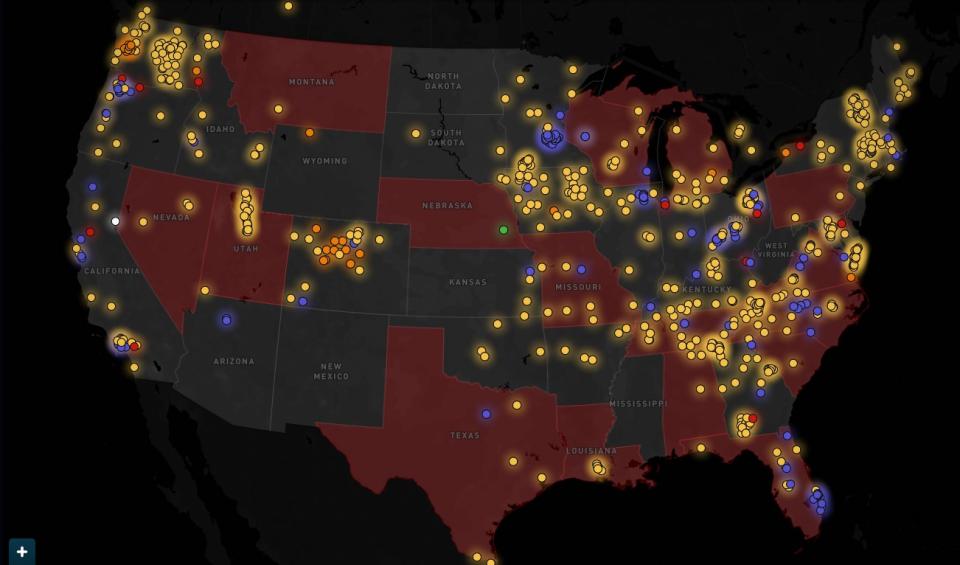
Community Nets map

There’s numerous problems here. One being that the survey only looked at 20 municipal broadband networks in a country where more than 450 community broadband networks – serving close to 800 different communities – now pepper the American landscape.

The study author acknowledges the study’s sample size was “too small for the data to represent all U.S. [government-owned broadband networks] reliably,” then proceeds to make broad sweeping assumptions unsupported by any actual evidence.

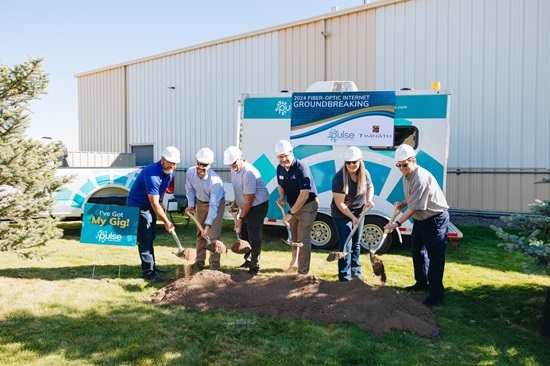
Timnath, Colorado Breaks Ground On New $20 Million Fiber Build

Timnath, Colorado officials have broken ground on a new $20 million fiber network that should dramatically expand affordable fiber access to the town of 7,100 residents.

Working in partnership with the city of Loveland’s Pulse Fiber, the project has been several years in the making, and – as with most of the successful municipal operations in Colorado – was fueled by ongoing public frustration with the speed, availability, and cost of monopoly-dominated regional broadband access.

“This project is about more than just Internet access,” Timnath Town Manager Aaron Adams said in a statement.

“It’s an investment in our future, ensuring that we have the infrastructure in place to support economic growth, attract new residents and businesses, and improve quality of life for everyone in Timnath.”

Last year the two cities signed an Inter-Governmental Agreement (IGA) greenlighting the plan to bring ubiquitous, affordable high-speed Internet access to Timnath. Under the arrangement, Tinmath is slated to receive 25 percent of the network’s gross income. That should equate to a 2 to 6 percent return on capital investment over 20 to 30 years, with the network fully paid off in 26 years.

Image
Timnath CO fiber network groundbreaking

Timnath’s project was heavily funded by the town’s capital improvement funds, which were in turn bolstered by broadband grants received via the 2021 American Rescue Plan Act (ARPA).

Municipal Broadband in Colorado Big Winners In Latest Wave Of State Grants

Colorado has long been home to some of the most innovative municipal broadband projects in the country. That trend has only accelerated with last year’s voter-approved elimination of municipal broadband restrictions, and it’s now being buoyed by a massive new wave of state grants that should further expand affordable broadband to long-neglected parts of the state.

Colorado Gov. Jared Polis recently announced the first of multiple broadband investments using stimulus funding from the U.S. Treasury’s Capital Projects Fund (CPF) program. The CPF is funded by $10 billion made possible by the American Rescue Plan Act (ARPA), and is a key part of the state’s goal to bring affordable broadband to 99 percent of Colorado residents by 2027.

According to the Governor’s office, the state just authorized $113 million in CPF funds on 13 projects that will bring fiber service to nearly 19,000 homes and businesses across Colorado. State officials say the funding will be heavily focused on projects in the South and Southwest portion of the Centennial State, where connectivity needs are greatest.

Image
Colorado State Seal

The Colorado Broadband Office says it received 112 applications asking for more than $642 million in broadband funding across the state–five times greater than the allotted awards.

Loveland, Colorado’s Municipal Fiber Network Crosses Finish Line

As Loveland, Colorado’s municipal broadband network continues to rack up industry accolades on its path to providing world-class high-speed Internet service, the city is now celebrating another important milestone.

Last week, Pulse Fiber officials announced that construction of its community-owned broadband network is now complete with every household and business in this city of 77,000 now having access to affordable gig-speed service.

The $110 million construction project, which began in earnest only four years ago, is the largest capital project in the city’s history, reaching the finish line on time and on budget, city officials said.

In a press announcement Steve Adams, Loveland’s City Manager, captured the meaning of the moment:

“As we celebrate the successful conclusion of this historic project, Pulse stands as a shining example of what is possible when the community unites to pioneer innovative, collaborative solutions. We did this for ourselves, and we made it happen together.”

“This infrastructure has been designed and built with future generations in mind, ensuring Loveland remains at the forefront of modern, robust, and future-proof Internet delivery,” Pulse Broadband Manager Brieana Reed-Harmel added.

Image
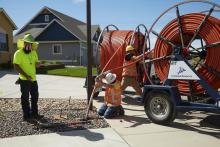
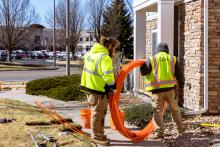
Pulse Fiber construction

Pulse officials candidly acknowledged that the pathway to the leading edge of Internet connectivity wasn’t easy, as the city had to navigate network construction through a global pandemic, supply chain disruptions, and inflation. But despite those challenges, Pulse Fiber has deployed 631 miles of conduit and over 1,300 miles of fiber throughout the city.