
muni

Content tagged with "muni"

Displaying 781 - 790 of 977

FCC Chairman Genachowski Recognizes Value of Munis in Statement on Google

Google's fiber rollout in Kansas City prompted kudos, specualtion, wonder, and analysis. While Google has the ability to invest in such an expensive and huge undertaking. Municipal networks have been bringing next-generation broadband to the public for years.

Local communities all over the country know first hand the economic benefits and improved quality of life that come with publicly owned networks.

In his official statement on the Google rollout, FCC Chairman Julius Genachowski acknolwdged the value of community networks to America and its Broadband Plan. The official announcement:

For the United States to remain globally competitive, we need to keep pushing the boundaries of broadband capabilities and foster testbeds of broadband innovation. Abundance in broadband speeds and capacity – moving from megabits to gigabits – will unleash breakthrough innovations in healthcare, education, business services, and more.

Today’s announcement by Google, the Gig.U projects across the country, and similar continued advances by providers and municipalities are important and welcome developments that are pushing frontiers in speed and bandwidth, while also enhancing consumer choice. As outlined in the National Broadband Plan, it’s vital both that we connect every corner in America to broadband and that we spur next-generation innovation through next-generation broadband networks. (Emphasis added by us.)
Dunnellon, Florida's Fiber Dreams Now a Reality

We reported on Dunellon, Florida, last year - time for a refresher and an update.

You may recall that Dunnellon is a small community with only about 1,900 people in 2004, located in the north central part of the state. The City of Dunnellon watched as surrounding communities gained jobs and people, while its phosphate mining industry limped along.

Dunnellon decided to invest in its own fiber network to spur economic development and provide the services Comcast and AT&T considered unprofitable in the rural area. The town secured financing through a traditional bank loan in 2010. Dunnellon's biggest challenge was building a network from scratch, but the town now has over 100 miles of installed fiber in Marion County. The service, Greenlight Dunnellon Communications, offers triple play at great rates.

From an article on the Communications Technology website:

The potential to improve the local economy through Dunnellon’s high-speed fiber network also is evident. Several neighboring counties, the local Marion County school district and numerous businesses are in the process of finalizing contracts to secure high-speed connectivity through the city’s network and to leverage such benefits as disaster recovery and failover. The city also believes area healthcare providers will benefit from the ability to connect directly to nearby facilities.

According to [Eddie] Esch, [the City of Dunnellon’s director/Public Services and Utilities] “As we progress in this project, we have uncovered so many exciting and promising new opportunities that it’s like watching the bubbles in a glass of 7-Up percolate to the top!”

Community Broadband Bits 7 - Mary Beth Henry of Portland, Oregon

For the 7th Community Broadband Bits podcast, we talk with Mary Beth Henry from Portland, Oregon. Mary Beth is the Director of the Portland Office for Community Technology and Mt Hood Cable Regulatory Commission, as well as a past president of NATOA. Our discussion covers the long struggle to ensure local businesses and residents had a real choice in broadband providers in Portland. We start with how the famous "Brand X" Supreme Court decision came into being. But after Portland lost that case (indeed, after all of America lost due to that decision) it continued to push for smart telecommunications policies to benefit the community. Now Portland has its own network serving public entities (IRNE - the Integrated Regional Network Enterprise) and the public is discussing what it can do to get beyond the CenturyLink and Comcast duopoly. Below, we have embedded videos that Portland produced as part or Portland's Broadband Strategic Plan. You can find more documents and information about Portland's approach here. We want your feedback and suggestions for the show - please e-mail us or leave a comment below. Also, feel free to suggest other guests, topics, or questions you want us to address. This show is 18 minutes long and can be played below on this page or subscribe via iTunes or via the tool of your choice using this feed. Search for us in iTunes and leave a positive comment! Listen to previous episodes here. You can download the Mp3 directly from here. Read the transcript of this episode here. Find more episodes in our podcast index. Thanks to Fit and the Conniptions for the music, licensed using Creative Commons.

Slate Commentary: Want to Pay Less and Get More?

Today, Slate published an opinion piece by me and Sascha Meinrath from the Open Technology Institute at New America Foundation talking about the important role of community broadband in solving the nation's broadband problem. A snippet:
In the meantime, local communities are taking matters into their own hands and have created remarkable citywide fiber-to-the-home broadband networks. Many offer services directly to residents, providing a much-needed alternative to the cable and telephone companies. And by creating meaningful consumer choice among competitors, these networks are driving lower prices—spurring new investment and creating new jobs—and keeping more money circulating in the local economy.

Opelika, Alabama Breaks Ground on New Fiber Network Hub Home

We have followed events in Opelika's network project for almost two years. In addition to creating a smart-grid for its municipal electric utility, the City plans to offer triple-play services. We previously covered Charter Cable's astroturf campaign to oppose the network and how the campaign failed when Opelikans passed the referendum.

This week, the 27,000 residents of Opelika saw their efforts begin to materialize at a ground breaking ceremony at the site of the new Opelika Power Services Facility. Chris Anthony, of the Opelika-Auburn News covered the story:

Site work is well under way on the $3.7 million facility, which leaders say will be an integral part of the fiber-optic network being built throughout the city. In addition to housing the administrative office and warehouse, the facility will also be the home of Opelika Power Services’ fiber hub.

Mayor Gary Fuller notes how the people of Opelika entered the business of municipal utilities over one hundred years ago, when the community purchased the then-private electric utility. He spoke about how the people of Opelika carry on that self-reliant streak with their new fiber network.

According to, Beth Ringley, Interim Director of Opelika Power, 90% of the fiber is installed underground throughout the city and should be nearly completed by the end of the summer. The $41 million project is scheduled for completion in the spring of 2013 and the first customers are expected to connect at that time.

“It’s a big, big day for the city of Opelika,” Mayor Gary Fuller said. “It’s important for our future.”

Two videos offer further coverage of this new community network. These videos are no longer available.

Government Technology Video Focuses on Chattanooga Community Fiber

Government Technology interviews some local officials in Chattanooga about its network - the nation's first network offering 1 gigabit connections throughout the entire community. The slowest Internet connection available, 30/30 Mbps, is available in bundles that rival Comcast and AT&T in price. But the Comcast and AT&T services are pathetic in comparison - particularly when it comes to customer service. We published an extensive case study explaining how Chattanooga EPB built its network.

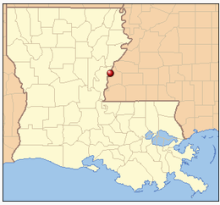
Vidalia, Louisiana Pursues Fiber Dreams

Vidalia, a Louisiana town with 4,300 residents, is a small town with a big idea. Vidalia one of the poorest regions in the country with an unemployment rate hovering around 9.4% so area leaders seek new ways to improve opportunity. The Vidalia Broadband Initiative aims to connect every home with a gig and provide 10 gig capacity for every business connection. 

From a June, 2011 Natchez Democrat story:

“We realize the importance of being connected to the Internet,” [City Manager Ken Walker] said. “And the only way to really meet the need to ensure adequate Internet access is through direct fiber optics to each building.”

Along with other communities in the region, Vidalia anticipated using part of a 2010 Broadband Technology Opportunities Program (BTOP) grant for $80 million to build their network, estimated at $9 million. But the entire BTOP grant was revoked when it became apparent that the Governor's Administration intended to violate the rules of the grant by giving the new infrastructure to big carriers that had no intention of adhering to the open access rules. 

Vidalia decided to forge ahead and seek funding on their own. The community is seeking out a variety of funding sources, including UDSA Rural Utility grants. In the meantime, Vidalia is taking advantage of any and all opportunities to invest in fiber assets.

The town has its own electrical utility and wants to develop a smart-grid. The City has been actively involved with negotiations with a local telephone and data company to provide service, but is planning on an open access model hoping to encourage competition. The City's long term goal is to provide fiber to each home in Vidalia and give residents a choice of providers. Right now, there are two providers in the community and service is described as "often slow and interrupted."

Community Broadband Praised for Helping Small Businesses

Writing for the American Express Open Forum, author Jack Shultz helped to compile a list of what he considers the best small towns for business in the U.S. Ponca City made the list and was specifically singled out for the wireless network owned by the City:
This town has a very progressive economic development organization. They even have their own Youtube video promoting Ponca City as the place to locate your business. The city’s history has been shaped by the petroleum industry since Conoco Oil once had their headquarters here. Now, they highlight their fast-track permitting, workforce training, state and local incentive programs and a completely wireless community. [emphasis in original]
A local article in Ponca City News notes,
All residents in the city limits of Ponca City have access to free Wi-Fi adding to the ease of web-based business and small start-ups.
As we have noted many times, publicly owned broadband networks can play an important role in economic development strategies.

Seattle's Short History of and Bleak Future for Community Broadband

We have followed Seattle's on-again, off-again consideration of a community broadband network for years and have occasionally noted the successful cable network in nearby Tacoma. Seattle Met's Matthew Halverson has penned a short, impressive article explaining the trials and tribulations of Tacoma while also exploring why Seattle's Mayor has abandoned his goal of a broadband public option. Before the massive cable consolidation that has left us with a handful of monopolists, we had a larger number of smaller monopolists that abused their market power to limit competition. One of the worst was TCI, which refused to upgrade its awful services in Tacoma, which pushed Tacoma to build its own network. TCI suddenly decided it did care about Tacoma.
TCI wouldn’t go down easily, of course. For the next year, as the City built out its system, the cable giant took advantage of the utility’s biggest weakness: All of its plans, from the kind of equipment it would buy to its construction schedule, were public information. So when Tacoma Power put in an order with its supplier for, say, coaxial cable, it found that TCI had already bought every foot of it. “But we started in one area of town and luckily we were able to get just enough material,” says Pat Bacon, Click’s technical operations manager. “We just inched our way through it and, before you knew it, we were a presence.” By July 1998, Click had its first cable subscriber, and the first broadband Internet user signed on in December 1999.
A substantial portion of the article is devoted to the dynamics around open access between the utility and independent providers -- an important read for anyone considering the open access approach. Halverson did his homework on this article and I think he got it mostly right. I think the FiOS-wired suburbs do present a larger threat to Seattle than suggested, but it certainly does not compare to the approaching-existential crisis faced by Tacoma fifteen years ago. I wish I could disagree with his conclusion that Seattle is unlikely to get a community fiber network but unless the community rises up to demand it, elected officials are unlikely to see any benefit to making such a long term investment.

What if FiberNet Monticello Had Been Canned in 2008?

Monticello faced a number of key decision moments throughout the history of its FiberNet. Given the recent changes in management and decision not to make up the different between debt service and revenues, some may be wondering if proceeding with FiberNet was the smart decision. It was 2008 and the economy hadn't entered its death spiral. Monticello had overwhelmingly voted by a 3:1 margin for the local government to bond for and build the network. When Monticello was beginning to sell its bonds, the incumbent telephone company (TDS) filed a lawsuit against the City, with the extremely dubious claim that Monticello did not have the authority to do what other cities in Minnesota had done. Courts later tossed it, finding that the TDS suit had no merit and making TDS reimburse Monticello for some of its costs due to the frivolous suit. But the goal was never to win the lawsuit, it was to delay and harass. Monticello had to wait a year to begin building its network. Though TDS had previously maintained that its DSL was just fine for the needs of residents and busineses, it began pulling permits to significantly upgrade its DSL to a FTTH product. (TDS has steadfastly maintained, while investing more in Monticello than any other Minnesota community, that community networks result in less investment from incumbents.) At any rate, Monticello had a decision. It faced an expensive court case and the City's action was apparently driving TDS to improve its poor network. Monticello could have backed down in the face of TDS' bullying. And if it had? From what we have seen elsewhere, this is our best guess: TDS Telecom Logo TDS could have delayed its upgrades or changed its mind entirely when the economy tanked. If it continued with upgrades, it would likely have made some token investments but not lowered its prices because the threat of actual competition was removed.