
muni

Content tagged with "muni"

Displaying 431 - 440 of 977

San Francisco Looks to Expand Muni Fiber and Wi-Fi

San Francisco has long been considered a modern, glittering, tech capital. For years its leaders have struggled with ensuring residents and businesses actually had next-generation Internet access as AT&T and Comcast only provide the same basic services that are available in most cities. In a recent Backchannel article, Susan Crawford discusses how the City by the Bay is taking steps to develop its vision, its long-term plan, and hopefully a network that will improve connectivity in a city of over 800,000 8.5 million.

San Francisco has developed an Information and Communication Technology Plan, which still needs approval from the City Board of Supervisors. According to the article, the plan calls on the city to take an incremental approach on its path to improved connectivity. They plan to use a similar method as Santa Monica by connecting municipal facilities - many of which are already connected via fiber - and then shedding expensive leased circuits. By eliminating that expense, the city will cut $1.3 million for Internet access and networking services from its connectivity costs.

Last year the City also put dig once policies in place, a decision other communities attribute as one of the keys to a cost-effective deployment. Like Santa Monica, the City currently leases dark fiber to ISPs. They plan to entice more ISPs who want to bring broadband to residents and businesses by expanding that practice. San Francisco plans to streamline the process and work with developers on strategically linking new developments to Internet hubs with dark fiber.

As Crawford notes, the City has created free Wi-Fi in select areas of town with plans to serve public housing and commercial corridors. Miquel Gamiño, San Francisco's CIO, told Crawford they hope to make Wi-Fi available on a larger scale:


LUS Fiber Brings Free Wi-Fi to Airport

LUS Fiber is now sharing its municipal gigabit network with travelers at the Lafayette Regional Airport, reports KLFY News 10. According to the article, free Wi-Fi is available at the airport supported by LUS Fiber.

“Today’s travelers expect to stay connected when they are away from the office or home. With complimentary WiFi, guests can check important email, post to social media and browse the Internet,” said Steven Picou, Executive Director of Lafayette Regional Airport. “We recognize that to deliver complimentary Internet access contributes towards a positive customer impression of the airport, as well as Lafayette.”

LUS Fiber and the city of Lafayette has recently attracted a number of high tech companies and understands the value of first impressions. The airport is the perfect place to dazzle visiting potential employers:

“We know that businesses choose to come to Lafayette for a variety of reasons and many have cited our 100% fiber-optic network as one of those reasons,” said City-Parish President Joey Durel. “As a gateway to Lafayette, we want visitors to experience the ultra high speeds of a Gigabit Internet connection, from the moment they arrive to the moment they leave.”

Lincoln, Illinois, Once Again Looking at Fiber

Lincoln, Illinois, has contemplated investing in a fiber-optic municipal network since 2009 and, while they have not taken steps to deploy yet, the community appears to be ready to dive in. The Lincoln Courier reports that the City Council recently considered investing $100,000 to deploy fiber in the downtown business district.

Lincoln, located right in the center of the state, is home to approximately 14,500 people. At the meeting, City Administrator Clay Johnson described the need as essential for economic development:

"Fiber optics are the sewer and water for economic development; what businesses look for when they want to locate in your area or expand in your are is, ‘do they have access to high speed internet’ and in a lot of areas, no they don’t."

Johnson believes that existing fiber from local Lincoln College could be integrated into a network that would eventually lead to better access to businesses and as backhaul for downtown Wi-Fi. His "extremely preliminary" estimate is $140,000 - $160,000 for a fiber connection from the college down one of the main commercial corridors.

He also suggested that a long-term plan would include connectivity for local schools as a cost-saving measure.

In 2009, former Mayor Keith Snyder's administration embraced the idea of investing in municipal fiber infrastructure as part of a downtown revitalization plan. In 2012 the community received a $600,000 grant of which $16,500 was dedicated to develop an initial plan for a network. City leaders ultimately decided to direct remaining funds toward other projects in 2012 and the City Council is once again taking up the possibility of fiber.

In Reedsburg, Expansion Weighed After Muni Fiber Success - Community Broadband Bits Episode 147

The first gigabit city in Wisconsin, Reedsburg, has a municipal fiber network operated by the city-owned electric utility. This week, we talk with General Manager of the Utility Commission, Brett Schuppner. Reedsburg fiber goes back to 2003, which makes it one of the oldest FTTH networks in the nation. Located about an hour outside of Madison, Reedsburg has seen more investment from local industrial businesses because of its fiber network. 

They received a broadband stimulus award to expand their network into some surrounding rural areas and are now considering how they can continue expanding the network deeper into surround Sauk County without federal assistance. We talk about what goes into these expansion discussions - what is the dynamic when one community has a great network and the County would like it to expand? Read all of our Reedsburg coverage here

This show is 13 minutes long and can be played on this page or via Apple Podcasts or the tool of your choice using this feed.

Transcript below.

We want your feedback and suggestions for the show-please e-mail us or leave a comment below.

Listen to other episodes here or view all episodes in our index. See other podcasts from the Institute for Local Self-Reliance here.

Thanks to Persson for the music, licensed using Creative Commons. The song is "Blues walk."

Gigabit Networks and Utah: March 24th Luncheon and Webcast

On Friday, April 24th, make plans to attend the Utah and Broadband Breakfast Club Luncheon Event. If you can't make it in person, attend the webcast. The topic: Gigabit Networks in Utah.

From the announcement:

In announcing in late March that Google Fiber will expand to Salt Lake City (its eighth metropolitan area nationwide), the broadband world turned its envying eyes on Utah. With Google Fiber in Provo and now Salt Lake -- and with Gigabit Networks available in the 11 cities served by the Utah Telecommunications Open Infrastructure Agency, or UTOPIA -- Utah is poised to be the first state where a substantial portion of its residents have access to the fastest-possible broadband internet services.

What does Google's investments say about the economic health and technology-savvy nature of Utah? What do cities and citizens get from Google Fiber that they haven't gotten from traditional telecom companies? And, for cities and states seeking to get a Gig, what are the best options to build and enhance Gigabit Networks?

A panel of experts will discuss what Google and Gig networks mean to Utah and its citizens. The webcast is free and the event is $25 for Nonmembers of the Utah Breakfast Club or $15 for Members. Lunch will be served at the Utah State Capitol at 11:30 a.m. MT and the panel discussion will and webcast will start at 2 p.m. ET/Noon MT.

As a bonus, you may now obtain a free three-month trial membership to the Utah Breakfast Club.

Panelists will be:

  • Devin Baer, Head of Fiber Business, Salt Lake, Google
  • Paul Cutler, Mayor, City of Centerville, Utah
  • Justin Jones, Vice President, Public Policy and Communications, Salt Lake Chamber
  • David Shaw, Shareholder, Kirton McConkie; Chair, Government and Utilities Practice Group
  • Moderated by Drew Clark, Of Counsel, Kirton McConkie; Founder, Utah Breakfast Club

Register online for the webcast or buy tickets for the live event.

Leverett Starts to Light Up in Massachusetts

The celebrated municipal network in Leverett, Massachusetts, is starting to serve select areas of the community. Customers' properties on the north side of town are now receiving 1 gigabit Internet service from the town's partner Crocker Communications. These early subscribers are considered "beta sites." Telephone service will become available when the network has been fully tested.

According to the press release:

The Town's initial plan was to turn on all subscriber locations at the same time; but interest from pre-subscribers was so strong that the Town's Broadband Committee arranged to offer sequential connections as individual homes are spliced into the network distribution cable. 

We learned about Leverett in 2012 as they explored the possibility of a municipal network. Lack of Internet access and problems with traditional phone service drove the community to take the initiative. Since then, they have been heralded as a model for self-reliance by the press, featured in case studies, and included in a white paper from the National Economic Council and Council of Economic Advisors.

LeverettNet subscribers pay a monthly $49.95 fee to the local Municipal Light Plant (MLP), the agency that maintains and operates the infrastructure. As more subscribers sign-up, that fee will decrease.

For stand-alone gigabit Internet access, subscribers pay an additional $24.95 per month. Stand-alone telephone service will be $29.95 per month. Those services will be $44.95 per month when bundled together.

A subscriber with bundled services of 1 gigabit symmetrical Internet access and telephone service pays a total of $94.90 per month, which includes the MLP fee. 

According to the press release, LeverettNet currently has 600 pre-subscribers, a take rate of 70%. Community leaders expect the network to be completed by August.

What Does It Mean to Be A Gigabit City? Sharing Positive Outcomes Together (SPOT)

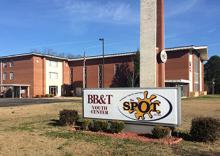
In North Carolina, Wilson’s Greenlight gigabit fiber network is doing everything it can to ensure everyone benefits from this important municipal investment. The city-owned network is a key partner in a digital inclusion program, Sharing Positive Outcomes Together (SPOT), which focuses on the children least likely to have high quality Internet access in their homes.

Though the digital divide remains a serious policy challenge, Wilson Greenlight and SPOT demonstrate s that solutions can be inspiring and fun. 

Training With a 4-Dimensional Approach

SPOT is an after-hours educational program focused on children ages 5 to 18 and attracts youth from all backgrounds, including those who are homeless or fostered to those with professional parents burdened by demanding work schedules. Among other components, its mission is to promote an atmosphere of accountability, confidence, and self-esteem. SPOT invites its children to dream, be “ambitious, inspired, high school graduates,” while “addressing and closing society's darker cracks that way too many young lives fall into.” “Leave it at the door and come grow” is part of its motto.

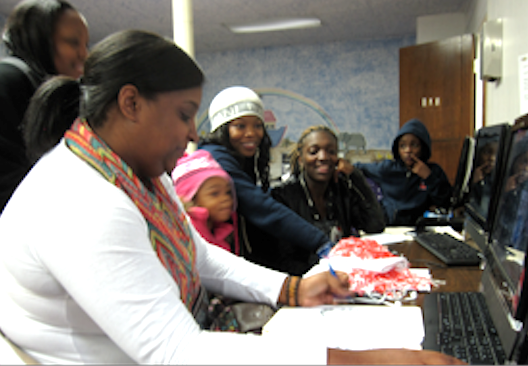
To reach such lofty goals, SPOT uses a four-dimensional approach called “project-based learning.” This New Tech School method requires that all elements of STEAM (science, technology, engineering, math and the arts) are part of the program and must utilize technology. According to SPOT’s Executive Director, Matt Edwards, “Learning is activity-based. Kids learn by seeing, touching, doing, and  incorporating technology into their program … and everything is interactive and Internet oriented with kids.”  Embodying this approach, SPOT recently won a $53,000 grant from the state of North Carolina to realize its 21st Century Learning Initiative. The initiative  will hinge on access to high capacity bandwidth and wireless access throughout its 30,000 square foot former Tabernacle church building. 

SPOT Kids at computers

The  Kids Are Teaching Us

Tennessee Bill to Strike Anti-Muni Laws Tabled Until Next Session

Senator Janice Bowling and Representative Kevin Brooks have decided to table their legislative efforts to remove state restrictions in Tennessee. While backing for SB 1134 and HB 1303 was growing beyond the walls of the state Capitol, the sponsors decided to shore up stronger legislative support rather than risk derailing the bill entirely. 

Brooks told the Tennessean:

"We have had a lot of good progress, and we don't want to throw it all away," Brooks said. The votes were not there in the Senate, and he and co-sponsor state Sen. Janice Bowling, R-Tullahoma, have asked to roll the bill to the beginning of the 2016 calendar, giving them more time to garner support from their colleagues.

"We have pressed the pause button to keep it alive," Brooks said.

Communities around the state, including Bristol, went on record in support of the bill. The Tennessee Farm Bureau, representing 600,000 members, also backed the legislation

Energized by the recent FCC decision nullifying state laws restricting Chattanooga from expanding, Bowling, Brooks, and other local leaders thought the time was right to once again try to eliminate state barriers. The FCC decision has already been formerly challenged by Tennessee's Attorney General with the support of the Governor. Rather than depend on federal intervention to establish an environment that will encourage connectivity, SB 1134 and/or its companion HB 1303 would have solved the problem on the home front.

Gilberts Voters Say No to Tax Increase for Muni

On April 7th, voters in Glberts, Illinois, chose not to raise taxes to deploy a municipal fiber network, reports the Daily Herald. According to the article, 81 percent of ballots cast voted against the proposal. Voter turnout was low, with only 682 ballots cast out of 4,002 registered voters in town.

As we reported last month, local developer Troy Mertz plans to deploy fiber to each structure in a new housing development, The Conservancy. His fiber company will also install fiber to nearby municipal and public safety buildings and the Gilberts Elementary School. The plan was to issue General Obligation (GO) bonds to finance a publicly owned network throughout the rest of the community. The proposal would have raised taxes approximately 1.8 percent or $150 per year on properties with a market value of $250,000.

For the developer the plan will remain the same:

Mertz still plans to go ahead and connect The Conservancy's planned fiber optic network to municipal and public safety buildings plus Gilberts Elementary School, saying it was built into his development plans.

"The goal of village was always to getting fiber to our industrial areas," said Gilberts Village President Rick Zirk. "As a community, we asked the rest of the village, 'Do you want the same service and the same options that the new part of town and the industrial park?' And it seems that they don't want to pay for it."

There is a definite lesson here for any other communities considering a similar plan - educate the voters and make sure they are excited about it! From what we can tell, there was little effort to make people aware of the plan and the turnout for the vote suggests that no one was particularly excited to make it happen.

Longmonters Loving NextLight in Colorado

Longmont's NextLight municipal broadband service is surpassing projected take rates, reports the Longmont Compass. The business plan called for 34 percent but as LPC builds out the FTTH network, the first phase of the project has achieved 45 percent.

In response to the positive response, LPC will speed up completion of the project. From the Compass:

“Our schedule was already aggressive, but we’ve heard repeatedly that our community is eager to receive high-quality, high-speed broadband,” LPC general manager Tom Roiniotis said. “So we’re accelerating the deployment.”

LPC now plans to “close the circle” from two directions at once as it completes its citywide buildout, rather than move around Longmont in one counterclockwise sweep. That means the final phase of the build is now scheduled to start in the first quarter of 2016 instead of the first quarter of 2017.

As we reported last fall, gigabit symmetrical service for $50 is available for customers who sign up within three months of service availability in their area. That rate follows customers who move within Longmont and transferable to to the next home owner.