
competition

Content tagged with "competition"

Related Topics
Displaying 41 - 50 of 709

Revisiting the Fight for Community Broadband and Public Networks - Episode 620 of the Community Broadband Bits Podcast

In this special episode of the podcast, Chris is joined by Gigi Sohn, Executive Director of the American Association for Public Broadband (AAPB). Originally aired last summer, they discuss the crucial role of state and local governments in broadband policy, efforts to grow community broadband networks across the U.S., and the ongoing challenges these networks face from incumbents and dark money groups.

Gigi also shares insights into her work with Benton, where she helps build coalitions in Missouri, Arizona, and Pennsylvania to ensure effective use of broadband funding. Additionally, the conversation highlights AAPB’s mission to double the number of municipal broadband networks in five years and the importance of defending these networks from attacks like those in Bountiful, Utah.

This show is 47 minutes long and can be played on this page or via Apple Podcasts or the tool of your choice using this feed.

Transcript below.

We want your feedback and suggestions for the show-please e-mail us or leave a comment below.

Listen to other episodes or view all episodes in our index. See other podcasts from the Institute for Local Self-Reliance.

Thanks to Arne Huseby for the music. The song is Warm Duck Shuffle and is licensed under a Creative Commons Attribution (3.0) license

Kendall County, Illinois Builds Its Own Fiber Network After Being Snubbed By Monopolies

Frustrated by years of substandard broadband service from regional telecom monopolies, Kendall County, Illinois residents have joined the growing chorus of Americans that are tackling the problem head on by building their own better, faster, more affordable fiber networks.

The Kendall County network, part of a public-private partnership (PPP or P3) with Pivot-Tech, is being funded by a tax-free revenue bond.

Kendall County officials tell ILSR that the full cost of the network, which will include private investment from Pivot-Tech, is expected to ultimately be $67 million, serving more than 13,000 locations county wide.

Image
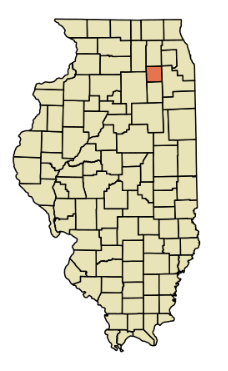
Kendall County IL map

The first phase of the network build will consist of a combination of fixed wireless and fiber last and middle middle connectivity, supported by $15 million in state broadband grants made possible by 2021 American Rescue Plan Act (ARPA) legislation. Construction is slated to begin this fall, and officials say the county will own the finished network.  

“The network is a combination of fiber and fixed wireless, with the goal to serve as many customers by fiber as possible,” Kendall County Administrator Christina Burns told ILSR. “The fixed wireless access count planned in phase one will be approximately 1,900. The remainder will be fiber to the premises.”

County officials are still finalizing the selection of a consumer-facing ISP.

“We have identified an ISP and are working through the details,” Burns said. “We do still plan for the network to be open access, hoping to bring more ISPs on in the future.”

Like so many communities we cover, the county’s foray into community broadband was forged by decades of local frustration with limited local broadband competition, high prices, and patchy service, which was painfully highlighted during COVID lockdowns.

Maine Issues RFP For Long-Planned MOOSE Net Middle Mile Fiber Network

The Maine Connectivity Authority (MCA), Maine’s quasi-governmental public agency in charge of broadband expansion and digital equity, is seeking proposals to help design and construct a major 536-mile fiber network that should dramatically improve affordable fiber access across vast swaths of the Pine Tree State.

For several years Maine officials have proposed spending $53 million to build a major middle mile fiber network known as the Maine Online Optical Statewide Enabling Network (MOOSE Net).

The middle mile network would extend fiber into numerous underserved Maine communities, boosting broadband competition and access while hopefully lowering prices.

Last year, Maine received a $30 million grant to help fund the network’s construction, courtesy of the National Telecommunications Information Administration’s (NTIA) $980 million Enabling Middle Mile Broadband Infrastructure Program. The MCA’s proposal was one of just 32 proposals selected out of 260 applicants for federal broadband funding.

AAPB Launches New Mentorship Program For Communities Considering Municipal Broadband

As interest in municipal broadband continues to grow across the U.S., the American Association for Public Broadband (AAPB) has launched a mentorship program that will pair communities interested in building publicly-owned, locally controlled broadband networks with cities and towns that have successfully done so.

“We’re excited to match AAPB members with communities seeking to take control of their broadband futures,” AAPB Executive Director Gigi Sohn said in announcing the program.

“We want to demystify the process for those communities that want to ensure that everyone in their city or town has affordable access to everything that broadband enables, and we believe that our members that own their broadband infrastructure are the best people to do that.”

Image
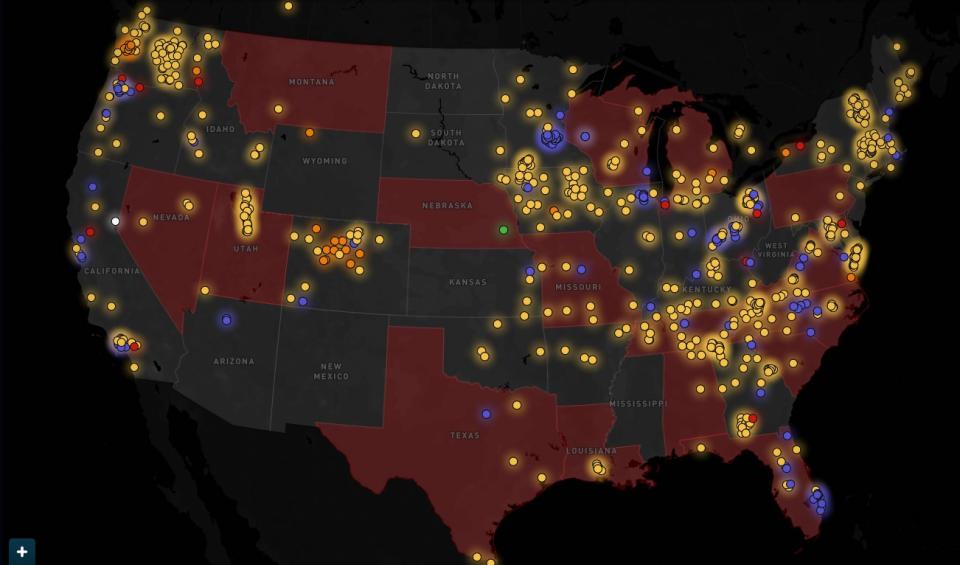
Community Nets map

While an increasing number of communities are exploring municipal broadband as a solution to local connectivity challenges after decades of frustration with the spotty, expensive service of big monopoly providers consistently ranked as among the most hated companies in America, local officials still must navigate the logistical, technical, financial, and political challenges associated with building and operating municipal networks.

Indio, California Gets $9 Million Grant For Fiber Network

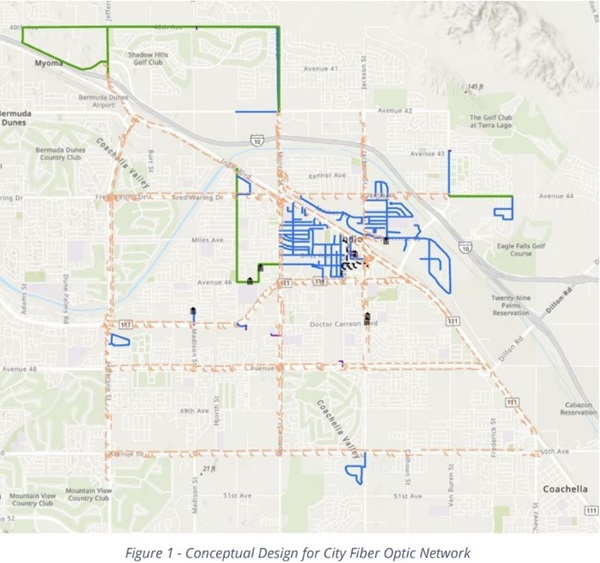
Indio, California has been awarded a $9 million state grant the city will use to expand affordable broadband access. The grant award was made possible by California’s $2 billion Last Mile Federal Funding Account Grant Program (FFA), part of a broader $6 billion California “Broadband For All” initiative aimed at bridging the digital divide in the Golden State.

According to Indio officials and the now-finalized CPUC award, Indio – an incorporated city located in Riverside County and home to 92,000 residents – will receive $8.9 million to deliver gigabit-capable fiber to 479 unserved locations and an estimated 3,632 unserved local residents.

“We are still in the design phase and should release an RFP within the next couple of months for the actual build,” Indio Director of Information Technology Ian Cozens told ILSR.

Image
Indio CA fiber map

With 75 percent of the project’s initial target area classified as low-income, city leaders say residents can expect static pricing for at least ten years. The city will also ensure there’s a low-cost option for low-income families left adrift after House and Senate Republicans blocked the funding renewal of the federal Affordable Connectivity Program (ACP).

City officials, however, do not intend to stop there. The plan is to build a citywide fiber network, the full cost of which is estimated to be $35.2 million.

Oakland Secures $15 Million Grant To Bring Broadband Into Underserved Neighborhoods

After two years enmeshed in the unglamorous work of coalition-building, speed test data collection, and pushing state leaders to invest in better telecommunication infrastructure across Oakland’s most disadvantaged neighborhoods, digital equity advocates in the East Bay city are finally seeing the fruits of their labor pay off.

The city was recently awarded a $15 million grant from the state’s $2 billion dollar Federal Funding Account, administered by the California Public Utilities Commission (CPUC).

The grant will fund the construction of a city-owned, open-access, hybrid middle mile/last mile fiber network – one of a half-dozen grant awards the CPUC approved in the first round of funding, most of which went to support community broadband initiatives.

Courtesy of federal Rescue Plan dollars, the infusion of cash will allow the city to deploy nearly 13 miles of new middle mile 144-count fiber, upgrade almost 12 miles of existing city-owned fiber, and add 9 miles of new last mile fiber connections. As the city’s network is built, it will be connected to the state’s new massive open access middle mile network now under construction.

The FFA grants are part of California’s larger Broadband For All initiative, a $6 billion effort aimed at seeding competition and expanding broadband access across the Golden State.

The Oakland project not only paves the way for the city to connect 14 community anchor institutions (CAIs) and nine public safety buildings, it will also expand high-speed Internet access to thousands of unserved and underserved addresses in West and East Oakland.

INCOMPAS Views Broadband As A Highly Concentrated Arena

*In partnership with Broadband Breakfast, we occasionally republish each other's content. The following story by Broadband Breakfast Reporter Jericho Casper was originally published here.

The broadband market is often described as robustly competitive. But some have their doubts.

With the Federal Communications Commission (FCC) preparing a biennial report to Congress assessing competition in communications, some industry stakeholders have voiced concern over the growing dominance of a few major players.

Last Thursday, representatives from INCOMPAS, the trade association for competitive communications companies, met with FCC officials to discuss the forthcoming 2024 Communications Marketplace Report. This report is intended to guide FCC policies that foster competition, innovation, and consumer choice in the industry.

Image
INCOMPASS President Angie Kronenburg

During the meeting, INCOMPAS President Angie Kronenberg and Attorney Lindsay Stern emphasized the ongoing issue of high market concentration in the fixed broadband internet access service sector, urging the FCC to more closely examine the barriers that stifle competition.

In an August 12 filing at the FCC, INCOMPAS pointed out that the top four broadband providers—Comcast, Charter, AT&T, and Verizon—dominate nearly 80% of the fixed BIAS market, leaving most consumers with only one or two options for broadband service, especially at higher speed tiers.

Brownsville, Texas is Lit and Ready To Launch Into The Future

U.S. News & World Report recently ranked Brownsville, Texas as one of best places to live in the Lone Star State and as one of the most affordable places to retire.

Now – as the border city continues to make progress on an ambitious revitalization initiative – it is adding to its “best, most affordable” resume by transforming the digital landscape with a citywide fiber network to bring fast, reliable, and affordable Internet service to its nearly 200,000 residents.

The effort is being launched on the back of a city-owned middle mile fiber backbone and partnership with Lit Fiber to build out last mile service, operating as Lit Fiber BTX.

“We just lit up our first subscriber and will have 10,000 locations-passed by the end of the year,” Rene Gonzalez, Lit Fiber’s Senior Vice President of Policy and Regulatory Affairs, told ILSR this week.

“Brownsville was a place that had been neglected. But now, SpaceX is here. We are here. It’s exciting.”

The excitement was palpable last week at the BTX Demo Center in downtown Brownsville where city and Lit Fiber officials held a “special community social” to celebrate service getting turned on for the first LIT Fiber BTX subscriber and to showcase what the network will offer city residents and businesses moving forward.

Small ISPs And Munis Top Consumer Reports Ranking While Altice, Comcast Fare Poorly

Consumer Reports’ latest survey of the most popular ISPs in America is once again dominated by smaller providers and community-owned and operated broadband networks.

The magazine’s semi-paywalled report measured the opinions of 48,000 readers on a 100 point scale across four criteria: value for money, connection reliability, customer service, and speed.

The top ranked (95 points) ISP in the nation according to Consumer Reports was Greenlight, a small fiber operator that deploys largely around upstate New York. The second (92) was EPB, the community-owned fiber network in Chattanooga, Tennessee whose deployment has helped the city envision an estimated $2.69 billion return on its initial investment.

Image
EPB laying fiber

At the same time, regional monopolies that benefit from muted competition and oversight continued to fare poorly in the magazine’s rankings.

Expensive and usage-capped satellite broadband services fared the worst (HughesNet (14) and Viasat (14)), followed by a peppering of regional cable and telco monopolies like Comcast Xfinity (28), CenturyLink/Lumen (25), Mediacom’s Xtream (25), or Altice’s Optimum (20).

Ting Brings Competition, Fiber Service and Microtrenching to Centennial, Colorado

The City of Centennial, Colorado is making steady inroads bringing affordable fiber Internet service to the city of 106,000, leveraging its city-owned fiber backbone and a partnership with the Charlottesville, VA.-based fiber provider Ting.

Just south of Denver – in a city known for its high-tech industry, craft breweries, and family-friendly neighborhoods – voter-approved efforts to get out from under the thumb of regional monopolies has driven a surge of competition, most recently exemplified by Ting’s continued delivery of affordable gigabit fiber.

Ting Public Affairs manager Deb Walker told ISLR that while the company couldn’t break out specific details on the number of passed fiber locations in the Centennial market, they’re making inroads on fiber deployments across Colorado.

“Now that Ting has city-wide networks built or under construction in three markets in the Denver region (Centennial, Greenwood Village and Thornton), and they share certain operational resources, we report progress on those markets together in our quarterly Ting Build Scorecard,” Walker said.

Image
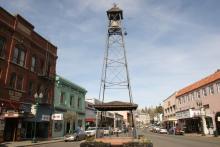
Streets at SouthGlenn in Centennial Co

“At the end of the first quarter of 2024, we had almost 31,000 serviceable addresses in the region, mostly in Centennial as we’re just starting the other two markets,” she added.

In 2021 Ting also unveiled the construction of a new 16,000 square foot office complex and data center, Walker said. Ting is also collaborating with Colorado Springs Utilities, which is building a fiber network throughout the city and connecting local homes and businesses.