
competition

Content tagged with "competition"

Related Topics
Displaying 31 - 40 of 709

New York Announces Another $140 Million in Municipal Broadband Grants

New York’s Municipal Infrastructure Program (MIP) continues to provide grant funds to build municipal broadband networks across the state, as state broadband officials recently announced the program’s largest round of funding to date.

As we reported in June, the MIP program – specifically designed to fund municipally-owned networks as part of the Empire State’s $1 billion ConnectALL initiative – awarded $70 million to a half dozen projects earlier this summer.

Then, earlier this month, another $140 million in grant awards were announced for an additional six projects, promising to deliver “more than 1,200 miles of publicly-owned fiber optic infrastructure and wireless hubs, connecting (passing) over 60,000 homes and businesses with affordable, symmetric service – offering equal download and upload speeds at rates below regional averages.”

Image
NY ConnectALL logo

The funding will be used to expand broadband infrastructure (and seed competition) in the Central New York, Finger Lakes, Mohawk Valley, North Country, Mid-Hudson and Western New York regions.

In a prepared press statement, New York Gov. Kathy Hochul characterized the grants as “a transformative step forward in our mission to connect every New Yorker to affordable, high-speed Internet.”

Open Access ErieNet Fiber Network Gets Underway In Western New York

Erie County, New York’s ErieNet broadband initiative is poised to begin construction in Buffalo, NY, after the Buffalo Common Council recently passed a resolution approving the Telecommunications License Agreement with ErieNet LDC. The approval is a major step toward bringing affordable next-gen broadband access to long-neglected parts of Western New York.

ErieNet is a nonprofit, local development corporation (LDC), launched in September 2022, designed to construct and manage a municipal-based open-access fiber optic backbone. ECC Technologies has been chosen to handle sales, marketing, and tech support operations for the network.

“Construction has already begun for ErieNet with underground conduit installations, and utility work necessary to make utility poles ready for ErieNet fiber optic cable attachments,” ECC Technologies’ VP Matthew Crider tells ISLR. “We expect segments of our network to come online beginning in March of 2025; and have the ErieNet 400+ mile open access network substantially built by the end of 2025.”

Image
ErieNet map

“Bringing high-quality broadband to Erie County begins in the City of Buffalo, and the Common Council’s approval opens up the way to make that happen,” Erie County Executive Mark Poloncarz said in a prepared statement.

Crider told ILSR that the current construction budget for the network is approximately $34 million, funded through American Rescue Plan Act (ARPA) broadband grants.

Bell Canada’s Ziply Acquisition Raises Questions About Open Access In The Pacific Northwest

Canada’s biggest telecom giant has acquired Ziply Fiber – and a sizable swath of municipal operation agreements for open access fiber scattered across the Pacific Northwest. Bell Canada and Ziply’s joint announcement indicates that the full deal will be around $5 billion Canadian, plus an additional $2 billion in acquired debt.

The acquisition could help accelerate Ziply’s planned expansion across the Pacific Northwest, where the company’s fiber network currently passes 1.3 million locations across Montana, Idaho, Oregon, and Washington State.

At the same time, Bell Canada’s history of anti-competitive behavior could herald a culture shift at the ascending provider. Ziply and Bell Canada’s rapid-fire acquisition of smaller providers across the Pacific Northwest could also risk undermining the pro-competitive benefits of the kind of open access policies Ziply previously embraced.

Image
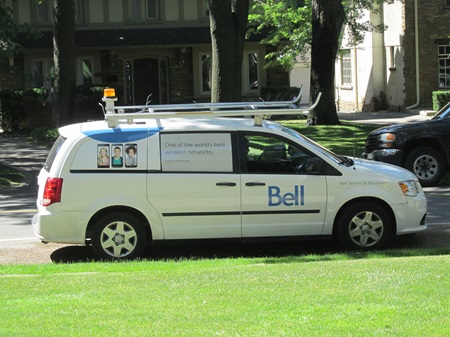
Bell Canada service vehicle

Ziply was formed when WaveDivision Capital purchased Frontier Communications’ Pacific Northwest operations in 2020. It has quickly become a major player across the four states thanks in part to numerous public private partnerships with municipalities, and a 2022 announcement of $450 million in new private sector funding.

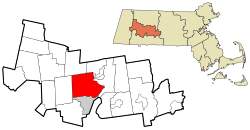
Northampton, MA Welcomes Gateway Fiber, Hasn’t Ruled Out Municipal Network

Though Northampton, Massachusetts residents still broadly support the construction of a city-owned municipal fiber broadband network, city officials are celebrating the arrival of Gateway Fiber, which will soon be delivering a more affordable fiber option, and more broadband competition, to the traditionally underserved city.

Gateway Fiber recently unveiled plans to deliver multi-gigabit speeds to large swaths of the city. The company, which will finance the entirety of the build, says it’s already invested $3 million in the project so far.

It’s a welcome arrival for a city that’s been frustrated by substandard service provided by regional telecom monopolies, and flirting with the idea of its own municipal broadband network for the better part of the last decade. Some of the city’s efforts on this front have made it easier for providers like Gateway to serve the city of 29,000.

Image
Northampton MA map

“While we don’t have a final cost estimate for the project, it will be a multi-million-dollar investment that will benefit both residents and small businesses in the Northampton area,” Gateway Fiber representative David Workman tells ILSR. “The project is 100 percent funded by Gateway Fiber, and we are also exploring grant opportunities that can be used to address digital equity.”

California Announces Another $207 Million In Last Mile Broadband Grants

California’s $2 billion Last Mile Federal Funding Account Grant Program (FFA) has announced another $207 million in new broadband grants across Amador, Los Angeles, and Solano Counties.

The FFA program, part of a broader $6 billion California “Broadband For All” initiative, is aimed at boosting broadband competition and driving down costs statewide.

According to the state’s announcement, $61 million in new grants were awarded by the California Public Utilities Commission (CPUC) for five Last Mile FFA broadband infrastructure grant projects in Amador and Solano Counties, bringing affordable fiber Internet access to approximately 10,000 Californians.

Image
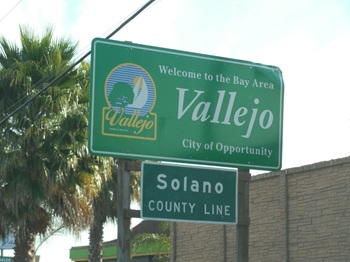
Vallejo CA welcome sign

The CPUC award details indicate that the grants will be awarded to the Golden State Connect Authority (GSCA) and the City of Vallejo to help bring fiber access to 2,278 unserved locations in Amador and Solano counties.

The City of Vallejo will leverage $3.8 million in state grants to complete four different projects laying predominantly underground fiber, with the city retaining ownership of the finished network and Smart Fiber Networks providing last mile consumer-facing service.

Building Better Middle Mile Networks

On the most recent episode of the Connect This! Show, the panel was joined by California-based Internet Exchange builder Matt Peterson of SFMIX. Matt has been in the broadband space for many years on the deployment and operations side of the wholesale and peering system, and joined the show today to talk about the need for better, more practical, more forward-thinking middle mile networks across the United States. However the federal Broadband Equity, Access, and Deployment program (BEAD) ultimately ends up, if we want to see more competition and the most efficient use of public dollars there is no doubt that we will need additional infrastructure connecting those last-mile networks that hook up businesses, residents, and community anchor institutions around the country.

These are the networks that connect our networks back to the larger Internet; they traverse county roads and state highway systems. Some are owned by and exclusive to the largest providers, like AT&T. Others, like Project THOR in Colorado, were collectively built to increase resiliency for the public good, as well as stimulate last-mile retail service in underserved and unserved parts of the country. California is in the midst of multi-billion dollar middle mile endeavor, and a handful of others states are likewise making significant investments. 

So the question is: are we building enough middle mile in the United States, and equally importantly, are we building it correctly? With all sorts of public and private interests involved, and networks that are often measured in the thousands of miles (or tens of thousands of route-miles of fiber), often with public money, it's an important thing to get right.

We wanted to underline the importance of these things by featuring this segment of the show. The panel talks about the consequences of decisions about everything from where these networks are built, how they are funded, transparency and marketing, and the importance of talking to the last-mile operators that will be interconnecting with them. 

Watch Christopher Mitchell (ILSR) and Travis Carter (USI Fiber) with regular guests Kim McKinley (UTOPIA Fiber) and Doug Dawson (CCG Consulting), joined by special guest Matt Peterson (SFMIX) talk about it all below. 

The middle-mile discussion starts at the 36:00 mark.

Arkansas Electric Cooperatives Pass 1 Million Broadband Connection Milestone

The Electric Cooperatives of Arkansas say they recently finished delivering fiber broadband capability to more than one million Arkansans as part of a $4.66 billion expansion.

More than 40,000 miles of fiber have been installed by 17 cooperative broadband providers, including 15 local broadband providers, one wholesale broadband provider, and one middle-mile fiber company.

In a prepared statement, Arkansas cooperatives indicate they have $2.2 billion in additional projects lined up connecting an additional 13,000 residents in the “Natural State.” Once completed, Arkansas cooperatives will have deployed 53,000 miles of fiber and connected 1.2 million state residents to fiber.

Informed by their efforts at rural electrification nearly a century earlier, U.S. electrical cooperatives have increasingly been pushing into fiber broadband deployment. Initially as a way to better monitor and manage complex modern electrical grids, then ultimately as a way to extend access to predominately rural customers trapped on the wrong side of the digital divide.

Image
Arkansas family happy with elec coop broadband

Nearly 80 percent of the state cooperatives’ investment in fiber infrastructure has been self-funded without grant subsidies, the coalition notes. Many of the markets they’ve targeted have long been neglected by regional cable and phone giants that believe the investment into rural counties isn’t worth the time and resources, or won’t be profitable enough, quickly enough for Wall Street.  

Post Election Broadband Redux

Now that the election has been settled, many in the broadband space are wondering what, if anything, will change with the incoming Trump administration.

Of course no one has a crystal ball, but there are a number of telecommunication policy developments we will be tracking, which include numerous fronts where there will likely be changes.

What those changes will be exactly will only become apparent sometime next year.

BEAD and DEA

The BEAD (Broadband Equity, Access, and Deployment) program and Digital Equity Act (DEA) programs are at the center of the universe in the national effort to ensure everyone has high-speed access to the Internet.

Image
NTIA logo

However, in the run-up to the election, GOP leaders were highly critical of the BEAD program, saying it was taking too long to dispense funds to build new networks, questioned the NTIA favoring the building of fiber networks, and criticized aspects of the effort they consider to be a waste of taxpayer dollars.

Placerville, California Strikes Gold With New Grant to Build City-Owned Open Access Fiber Network

Placerville, California will soon be a place with a municipally-owned open-access fiber network as the city of 10,000 looks to provide its residents and businesses with local choice and more affordable broadband service.

The years-long effort was launched after frustration with what the city’s 2021 Broadband Master Plan described as the “equivalent of an ISP (Comcast) Monopoly.”

“Because of this,” the plan noted, “residents and businesses in Placerville are exposed to the common limitations of monopolies” – a high-priced reality that prompted 98 percent of city survey respondents to say “yes” to a municipally-owned network.

Now, three years after that report was published – and thanks to a $20.1 million award from the California Public Utilities Commission (CPUC) Last Mile Federal Funding Account (FFA) grant program – a city that was once nicknamed “Hangtown” is now set to cut the noose of the ISP monopoly.

Nice Knowing You, BEAD, and Building Better Middle Mile Networks | Episode 101 of the Connect This! Show

Connect This! Show

Catch the latest episode of the Connect This! Show, with co-hosts Christopher Mitchell (ILSR) and Travis Carter (USI Fiber) joined by regular guests Kim McKinley (UTOPIA Fiber) and Doug Dawson (CCG Consulting) and special guest Matt Peterson (SFMIX). They talk about some of the sea changes we expect to see with the change in federal administrations with relation to BEAD before a long conversation with California-based IX builder Matt Peterson about whether we need more middle mile in this country and how we might best build it.

Join us live on November 8, at 2pm ET or listen afterwards wherever you get your podcasts.

Email us at [email protected] with feedback and ideas for the show.

Subscribe to the show using this feed or find it on the Connect This! page, and watch on LinkedIn, on YouTube Live, on Facebook live, or below.