
competition

Content tagged with "competition"

Related Topics
Displaying 311 - 320 of 709

Overbuilding Encourages Competition - Community Broadband Bits Podcast, North Carolina Bonus Episode One!

We're pleased to bring you the first episode from a special bonus series of the Community Broadband Bits Podcast titled "Why NC Broadband Matters." The series is a collaboration with the nonprofit NC Broadband Matters, whose focus is on facilitating the expansion of ubiquitous broadband coverage to local communities for residents and businesses. We'll be working with NC Broadband Matters on this series to develop nine more episodes that center around broadband in North Carolina.

"Overbuilding Means Providing Internet Choice: How One Small Company is Closing North Carolina's Digital Divide," is a conversation between host Christopher Mitchell and Alan Fitzpatrick of Open Broadband. The North Carolina company delivers high-quality Internet access to local communities. As Fitzpatrick notes in the interview, Open Broadband uses different types of technology, depending on what's most effective in each region. The goal is delivering quality Internet access.

logo-nc-hearts-gig.png Christopher and Alan talk about how the term "overbuilding" is now associated with waste, rather than with competition. They discuss the benefits of overbuilding and competition, problems with of lack of choice, and Alan reviews some potential long-term policy changes that could encourage investment. Alan and Christopher talk about local government involvement in promoting competition for better access to high-quality connectivity. They also touch on how lack of competition can increase the digital divide and how North Carolina could make changes to allow local governments to work with private providers in order to expand Internet access.

We want your feedback and suggestions for the show-please e-mail us or leave a comment below.

This show is 28 minutes long and can be played on this page or via Apple Podcasts or the tool of your choice using this feed, at the Community Broadband Bits page, or at the NC Broadband Matters page. We encourage you to check out other "Why NC Broadband Matters" content at the podcast feed so you don't miss future bonus content that may not appear in the Community Broadband Bits Podcast feed. 

Transcript below. 

We want your feedback and suggestions for the show-please e-mail us or leave a comment below.

Listen to other episodes here or view all episodes in our index. See other podcasts from the Institute for Local Self-Reliance here.

Thanks to Shane Ivers for the Music: What's The Angle? by Shane Ivers - https://www.silvermansound.com a Creative Commons Attribution (4.0) license.

Observations from Tech Writer Karl Bode - Community Broadband Bits Podcast 379

If you're a regular reader of MuniNetworks.org, you've seen Karl Bode's name and it's almost certain you've read his work elsewhere. Karl has had his finger on the pulse of telecom, broadband, and related legislative events for a long time.

This week, Karl comes on the show to talk about how his career trajectory led to where he is right now, the surprising and unsurprising things he's seen, and how media coverage of telecom and technology has changed over the years. There are some issues, notes Karl, that should be handled more aggressively both in developing policy and in how the media covers them. The impact of large monopolistic Internet service providers, privacy concerns, and network neutrality are a few matters that affect us more than most people realize. 

Christopher and Karl talk about the FCC and corruption of the commenting system that surrounded the decision to retract federal network neutrality protections. They also talk about Washington D.C.'s different attitudes toward big tech companies such as Google and Facebook versus big ISPs like AT&T and Comcast.

This show is 32 minutes long and can be played on this page or via Apple Podcasts or the tool of your choice using this feed

Transcript below. 

We want your feedback and suggestions for the show-please e-mail us or leave a comment below.

Listen to other episodes here or view all episodes in our index. See other podcasts from the Institute for Local Self-Reliance here.

Thanks to Arne Huseby for the music. The song is Warm Duck Shuffle and is licensed under a Creative Commons Attribution (3.0) license.
Fast Company Focuses on Ammon, Idaho's Fiber, for The New Capitalism Series

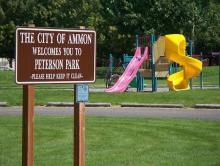
Ammon, Idaho, got our attention years ago but as benefits from the city’s publicly owned fiber optic infrastructure continue to grow, others are taking notice. Most recently, contributing editor at Fast Company, Jay Woodruff wrote about the community’s investment in Fast Company's “The New Capitalism” series

Woodruff notes that Ammon, with only about 16,500 people, has surpassed large cities in quality of connectivity and choice of Internet access providers. Woodruff quotes Bruce Patterson, Technology Director in Ammon: “If you were to ask me what the key component of Ammon is, I would say it’s a broadband infrastructure as a utility. We’ve just found a way to make it a true public infrastructure, like a road.”

Woodruff describes how the infrastructure is being integrated into the community’s larger development:

Residents of Ammon can choose to opt in to the network, which the city began building in 2011. Patterson expects that by the end of 2019, 900 of the town’s 4,500 residences will have joined the network. The city is growing, adding new residential addresses at a rate of about one per day, and Patterson says that every single developer is choosing to include the fiber infrastructure in new construction.

When asked what makes Ammon’s network better than other options available in communities such as New York and San Francisco, Patterson offered four factors:

PUBLIC UTILITY: The city of Ammon manages the network the same way it handles water services or road maintenance. “If we could simply come to a point as a nation where we would say internet infrastructure is essential and we’re going to make sure that everybody has access to it,” Patterson says, “that would be a huge step forward.”

Ammon Continues to Expand Open Access Network, Super-Affordable Rates Attract Attention

Ammon, Idaho’s open access software defined network has earned accolades from industry experts and been hailed as a model approach for other communities. It has been praised for serving the community, providing reliability, and offering affordable options. Amid news of expansion, the positive effects of competition via the publicly owned network have recently flashed across news and social media. People who don’t live in the Idaho city are shocked to learn how affordable high-quality Internet access can be. 

Growing a Good Thing

In March, City of Ammon Fiber Optics began to deploy in the city’s Bridgewater neighborhood, where they expected to connect around 300 of the potential 500 subscriber households with this particular expansion. Three more neighborhoods are lined up for expansion this summer and into the fall.

The city provides several options for residents in Ammon, including the Local Improvement District (LID) approach, to finance expansions of the infrastructure. Their method allows the community to continue to build the network without borrowing or bonding. Community members within the boundaries of the project area can sign up at the beginning of the process to pay for connecting over a 20-year period. If they decide to pass initially and connect later, they must pay the connection fee out of pocket. In 2018, the city of Ammon developed this explainer video:

If people want to pay the full connection fee all at once, they have the option to do so, but many people choose to pay through the LID. Connecting to the networks usually costs between $3,000 - $3,500. Groups of neighbors come together to create the LIDs because deploying in an area where there are multiple homes interested in connecting to the network is less expensive than a single home connection. The more property owners who opt in to connect to City of Ammon Fiber Optics, the lower the cost is to every one who wants to connect.

Keeping it Clear

Going for a Gig in Grinnell, Iowa: Competition on the Horizon

Grinnell, Iowa, home to about 9,000 people, has a need for speed. That’s why the city is looking to Mahaska Communication Group (MCG) to provide high-speed Internet service of up to 1 Gbps (1,000 Mbps) over a Fiber-to-the-Home (FTTH) network. After MCG announced the possibility in mid-April 2019, Windstream Communications now also plans to bring FTTH to Grinnell according to The Scarlet and Black.

“Undeniable Correlation"

MCG has already distributed a two-question survey to residents in the Grinnell area to determine interest in the FTTH network. To give residents an estimate of the prices, MCG linked the price list for Oskaloosa. The prices are $50 for 25 Mbps (download) / 25 Mbps (upload) and $75 for 1 Gbps/1 Gbps. The company also offers triple play packages of Internet, TV, and phone.

The Grinnell Area Chamber of Commerce stated that MCG may start building the FTTH network in 2020. Similarly, Windstream has revealed a plan to start building its own FTTH network in Grinnell in the Fall of 2019. City Manager Russ Behrens told The Scarlett and Black:

"At the end of the day, our goal is not necessarily to support one [Internet service provider] over the other, it’s to provide the best broadband service to the community that we can, so that’s what we’re trying to do.”

He also mentioned that there was “an undeniable correlation" between the MCG interest and the Windstream announcement.

Two Years of Examination

Considering Upstate New York's Connectivity Problem and Middle Mile Investment; Our Take on ErieNet

Erie County, New York, and its county seat of Buffalo have had high-quality Internet access on their minds for several years. Now, County Executive Mark Poloncarz proposes a project to deploy middle mile infrastructure to attract local ISPs and generate competition. We're pleased to see county leadership taking another shot at better connectivity for the people in Erie County, but we hope community leaders will approach the project realistically; in order to bring high-quality Internet access to everyone, the county may need to play a more significant role in the future.

A Lingering Problem, A Possible Solution

Even though it's the county seat, a 2015 report from Erie County's Municipal Broadband Committee noted that the Buffalo Metropolitan Area's peak speeds ranked 294th in the state and that areas existed where there was no option for Internet access of ANY kind. The results horrified elected officials at the time; they issued a Request for Proposals (RFP) to study the feasibility of a county-wide publicly owned broadband network. 

After a survey of residents and businesses, and an assessment of the current situation in Erie County, the final feasibility study recommended several actions, including a middle mile open access network investment. You can review the entire 2017 feasibility study here.

Problems with lackluster and even nonexistent Internet access have lingered in Buffalo and Erie County throughout the past two years. Community leaders have considered the feasibility study and given providers Verizon, Spectrum, AT&T, CenturyLink, and others operating in the region the chance to improve services to the entire county.

Idaho Falls Pilot Is a Go; Sign-ups Now Available for Fiber Connectivity

Idaho Falls residents in select areas are now able to tap into fast, affordable, reliable connectivity through their city’s fiber optic network. Idaho Falls Fiber (IFF) and Idaho Falls Power (IFP) recently announced that premises in three residential areas of the city can now sign-up to connect to the open access Fiber-to-the-Home (FTTH) network. 

Check out the IFF Fiber Service Areas Map.

With A Little Help From UTOPIA

Idaho Falls has operated Circa, a municipally owned dark fiber network for around eight years. The infrastructure has been managed by IFP to offer connectivity to local businesses and municipal facilities, but a few years ago, community leaders began investigating ways to use the resource for residential purposes.

After working with two separate consulting firms and reviewing options and recommendations, city leaders decided to move forward. Located across the Snake River from Ammon, Idaho Falls may have been inspired by the accolades Ammon has collected in developing their open access software defined network. With significant infrastructure in place via the Circa Network, a residential pilot program is a logical step toward improving connectivity for the entire community.

Idaho Falls leadership began collaborating with folks from UTOPIA Fiber, who they hired to design and manage the pilot. As in places such as Owensboro, Kentucky and Anacortes, Washington, the city chose to pursue the pilot to examine how FTTH might be received by residents, what technical issues might arise, and to help spread the word that high-quality Internet access would be available from the municipal utility.

ILSR Joins 4Competition Coalition to Oppose Sprint and T-Mobile Merger

At the Institute for Local Self-Reliance, we believe that competition for goods and services helps communities, consumers, and the economy. This belief carries over into the mobile Internet access market, which is one of the reasons we oppose a merger between Sprint and T-Mobile. We’re not alone and we’ve now joined with other organizations as part of the 4Competition Coalition.

As the prospect of 5G wireless connectivity becomes more probable, these two companies claim that they need to merge in order to remain competitive with the other two mobile Internet access providers. In reality, reducing mobile subscriber options from four to three, creates no benefit for anyone except the companies with less competition.

In a press release announcing ILSR’s decision to join the Coalition, Christopher stated:

“Market competition between Sprint and T-Mobile has made mobile Internet access available to millions of low-income households. We are deeply concerned that this merger will harm those households and leave them without any affordable Internet access.”

Along with ILSR, trade group INCOMPAS joined the 4Competition Coalition. INCOMPAS also strongly advocates ample choice in the broadband arena and recognized Sprint and T-Mobile’s past work to keep competition alive.

So Much to Lose

Losing a mobile Internet access provider as an option is bad, but it isn’t the only consequence that we face if the merger goes through. The Coalition recognizes that results will likely be job losses, higher rates, locking out new entrants to the market, broken promises regarding 5G, and harm especially to people in rural areas. At least 11 states are also not convinced that a Sprint/T-Mobile merger is in the interest of their citizens and are reviewing the proposal.

Taking Control Through Software Defined Networks - Community Broadband Bits Podcast 338

Many of us are accustomed to Internet access from companies that own the infrastructure, offer only a few options, and are one of a small number of providers. For the most part, we've learned to accept that model, but will it ever change? This week’s guest, President of EntryPoint Networks Jeff Christensen, explains why that model is broken and how we can fix it through software defined networks (SDNs). We can turn that model around to put control in the hands of users.

EntryPoint works primarily with municipalities to develop open access networks that separate infrastructure from services. As you’ll hear from Jeff, this approach takes the open nature of the Internet even further to encourage innovation, competition, access to goods, services, information, and ideas. EntryPoint’s approach turns the traditional closed system most American’s are used to on its head.

Jeff explains how the growing use of the cloud and changes in other technology have brought us to the moment when we can change how we interact with the Internet. Moving forward, users rather than ISPs, will drive technology innovations. Christopher and Jeff discuss how cloud edge computing will drive that shift, how SDNs enable innovation, and how municipalities fill a role they are already familiar with as keepers of infrastructure. They also get into some of the considerations to keep in mind if a community is looking at SDN technology.

Ammon, Idaho, has already adopted a dynamic open access approach with a SDN; Jeff and Christopher discuss the way the community has blazed a trail for other municipalities and the benefits it is bringing. They talk about Ammon’s innovative financial approach, Local Improvement Districts (LIDs), and the way it has allowed the community to move forward with their cutting-edge approach.

For more, check out the EntryPoint intro video, Jeff’s TED Talks below, and peruse information at the EntryPoint website.

Modern Networks, Innovation, and Cities - TEDxRiverton, March 2018

The Internet Disruption Every City Needs - TedxSaltLakeCity, October 2017


This show is 37 minutes long and can be played on this page or via Apple Podcasts or the tool of your choice using this feed

Transcript below. 

We want your feedback and suggestions for the show-please e-mail us or leave a comment below.

Listen to other episodes here or view all episodes in our index. See other podcasts from the Institute for Local Self-Reliance here.

Thanks to Arne Huseby for the music. The song is Warm Duck Shuffle and is licensed under a Creative Commons Attribution (3.0) license.

Image credit geralt via pixabay.

Roanoke Valley Broadband Authority: Progress Made, All Indicators Favorable

As they look back over their accomplishments, the Roanoke Valley Broadband Authority (RVBA) has more than the holidays to celebrate at the close of 2018. In addition to stimulating competition in the region, the RVBA network is attracting more investment and helping local nonprofits operate more efficiently.

Dual Purpose

For Feeding America Southwest Virginia in Salem, connectivity from RVBA is critical. “Without that Internet connection reliability, it would be very difficult for us to achieve our mission,” says IT Director Eric Geist. The food bank is one of the enterprise customers that the RVBA serves in the region, providing affordable access to organizations and institutions such as nonprofits, businesses, and institutions.

By providing affordable connectivity and services focused on the needs of businesses, the RVBA network has helped drive competition in the region. According to CEO Frank Smith’s research, prices have dropped 25 - 30 percent. The change squares with the RVBA mission to enhance and promote economic development by improving connectivity services and prices in Salem, Roanoke, and the counties of Roanoke and Botetourt. They've seen results in the past three years with greater expectations ahead.

The History

Before the network, the valley was caught in a connectivity “donut hole.” The populations in Salem and Roanoke had access to some cable Internet access and were large enough to prevent the region from obtaining grants to entice providers to upgrade. In 2013, local governments decided to work together to improve connectivity and funded a feasibility study, which recommended an open access network.