
California

Content tagged with "California"

Displaying 1 - 10 of 263

When Giant ISPs Get Bigger, State Commissions Fight Back - Episode 8 of Unbuffered

Unbuffered Logo - Two text bubbles

In this episode of Unbuffered, Chris is joined by Ernesto Falcon, Program Manager of Communications and Broadband Policy at the California Public Utilities Commission for a conversation about competition, mergers, and how to make sure the lowest-income households have access to an Internet connection that allows them to participate in the economy and civic life, as well as access telehealth and educational services on an equitable playing field.

Along the way, they talk about how public advocate offices like the state of California's serve the public interest, and serve also to inform policies that make state infrastructure and affordability programs as impactful as possible. Ernesto shares how recent research (and community partners) have driven new insight and tools to help level the playing field in a marketplace mishapen by promotional pricing schemes by the biggest ISPs. Finally, Chris and Ernesto talk about the Charter Spectrum/Cox merger, and the strong set of comittments the state of California has gotten in exchange for letting the action proceed, including multi-year commitments that should make getting online easier for all households.


Remote video URL

This show is 50 minutes long and can be played on this page or via Apple Podcasts or the tool of your choice using this feed

You can also check out the video version via YouTube.

Transcript below.

We want your feedback and suggestions for the show-please e-mail us or leave a comment below.

Listen to other episodes (formerly Community Broadband Bits) or view all episodes in our index. See other podcasts from the Institute for Local Self-Reliance.

Thanks to Whitedrift for the song Operator, licensed Creative Commons Attribution (3.0).

California PUC Issues $3.29 Million In Digital Literacy Grants

As digital inclusion advocates across the nation push for the restoration of Digital Equity Act funding a year after President Trump unilaterally “terminated” the bipartisan Congressional law, the California Public Utilities Commission (CPUC) has approved $3.29 million in grants aimed at dramatically shoring up digital training and public broadband access in communities across the state.

All told, more than 18 new digital literacy projects and three expanded public broadband access projects will be funded, impacting more than 16,000 Californians.

According to the CPUC announcement, the projects, paid for from the California Advanced Services Fund (CASF) Broadband Adoption Account, will provide digital literacy training to 5,345 participants and deliver broadband access to 10,800 additional community members in underserved areas.

The funded CPUC projects run the gamut across all corners of the state, from $180,325 to provide digital literacy and data skills training for veterans in Santa Barbara and Ventura counties, to $751,780 to help fund five different digital literacy projects assisting older Americans in Alameda County, Orange County, Riverside County, San Francisco, and San Jose.

Image
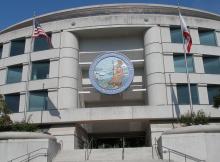
CPUC office building with state seal above doorway

The biggest grant, $1.19 million, will be used to help fund eight Golden Bridge Program digital literacy projects serving seniors, low-income residents, justice-involved youth, and high school students in the Sacramento region.

California Activates Nation’s Largest Middle-Mile Network, Connecting Tribal, Rural Areas

*The following story by Broadband Breakfast Reporter Kelcie Lee was originally published here.

California just activated the nation’s largest open-access middle-mile network, bringing it one step further in closing the digital divide. 

On Thursday, the California Department of Technology (CDT) announced that after five years of planning, building, and promising access, the state’s $3.2 billion Middle-Mile Broadband Initiative (MMBI) is now operational. The high-speed network connected the last mile to the state’s first customer, the Bishop Paiute Tribe, a Native American community in Inyo County. 

This connection represents a key resource for places across the country that have been historically underserved or unserved, including rural and tribal areas. California Gov. Gavin Newsom said the MMBI plans to construct 8,000 miles of fiber across the state, and he hopes to get more than 5,300 miles completely built out by the end of 2026.  

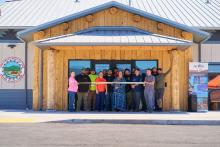
California’s MMBI milestone was celebrated by a ceremonial signing between CDT and Bishop Paiute Tribe leadership as well as a live network light up demo. As the switch was flipped, students and children were seen using computers with their new internet service.

Abundant Home Broadband for All Californians: A Pathway to Digital Prosperity

Image
Abundant Home Broadband

Broadband ISPs should be held to a higher public interest standard and regulated like traditional utilities in California, a new joint study by nonprofit state policy news outlet Cal Matters and UC Berkeley’s Possibility Lab argues. 

The study specifically looked at the broadband sector in California, where 15 percent of California households – predominately in low income and minority communities – lack broadband access. This neglect has resulted in a stark digital divide between affluent and marginalized communities across rural and urban communities alike. Data has consistently shown that lower income, marginalized communities often wind up paying significantly more money for notably slower service than their more affluent, less diverse counterparts. The study concludes that dramatic federal and state policy failures have resulted in unchecked monopolies and muted competition that directly harms the public interest. It urges state leaders to aggressively embrace municipal broadband cooperatives to address regionalized market failure and improve overall accountability.

Read Abundant Home Broadband for All Californians: A Pathway to Digital Prosperity [pdf].

California Should Regulate Broadband ISPs Like Utilities, Report Says

Broadband ISPs should be held to a higher public interest standard and regulated like traditional utilities in California, a new joint study by nonprofit state policy news outlet Cal Matters and UC Berkeley’s Possibility Lab argues. State governments should also vocally support community broadband networks as a direct challenge to monopoly power, the authors state.

The study specifically looked at the broadband sector in California, where 15 percent of California households – predominately in low income and minority communities – lack broadband access. It concludes that dramatic federal and state policy failures have resulted in unchecked monopolies and muted competition that directly harms the public interest.

While the study lauds California’s dramatic $6 billion “Broadband For All” initiative, which is driving historic new investment into last and middle mile network upgrades, it also states that the state’s full vision for equitable access cannot be achieved without rate controls, universal access requirements, and strict reliability standards for large incumbent ISPs.

The study also urges state leaders to aggressively embrace municipal broadband cooperatives to address regionalized market failure and improve overall accountability.

“California should actively encourage and support the formation of municipal broadband
cooperatives across the state, particularly in underserved rural and suburban communities
where incumbent providers have failed to deliver adequate service,” the study observes.

Monopoly Dysfunction, Muted Competition

Like most U.S. states, California communities are dominated by a handful of cable and phone giants that have leveraged their immense political power to box out local competition creating dominant regional monopolies and duopolies.

Fort Bragg Fiber Deployment Sees Delays, Higher Costs

Fledging efforts to build a fiber network in Fort Bragg, California have seen some headwinds in the wake of the project’s original build partner being dismissed. The need to find a new vendor to help the city toward its goal has resulted in significantly higher costs and some notable delays, though city leaders say they’re still dedicated to guiding the project to completion.

The original plan to deploy affordable fiber broadband to the city of 7,000 was slated to cost somewhere around $14.7 million. When the city announced its plan to begin construction last year, that number jumped to $17.3 million. Recently issues have now increased the planned total cost for the project to $18.9 million.

Construction began last Spring, but it didn’t take long for the city to realize that the fiber deployment was going to exceed the city’s original projections.

“In July or June, it became obvious that the level of restoration in the streets was going to far exceed what we could afford,” City Economic Development Manager Sarah McCormick told the Fort Bragg City Council at a meeting back in January.

At the same time, the city's original build partner, construction management firm GHD, was dismissed by the city after it could not originally account for being over budget due to boring costs. GHD had been awarded a $1.4 million contract to oversee the project.

“We quickly terminated that part of the contract because that was his job — to track the project,” McCormick said.

Analysis later found that the higher costs were due to the late addition of telecom fiber flower pots – enclosures allowing for the core fiber trunk to be split off to serve individual locations and residences – something inexplicably omitted from the original design.

“When they made that change, they didn’t change the bill of materials for boring,” McCormick said. “That would have been like a real no-brainer thing to see if you were the construction manager and tracking the project.”

Navigating a New Path

Updated Resource: Community Networks Continue to Win Big in California's Infrastructure Grant Program

Last May, we shared a dashboard we built to track how community networks were doing in California's Last-Mile Federal Funding Account broadband grant program. With a new round of winners recently announced, we've updated our dashboards to show who, where, and how much community networks are getting. In the first round, they were seeing unprecedented success, punching far above their weight in comparison to the monopolies (which have a long track record of success in landing the bulk of state broadband grant dollars across the country). 

We're happy to say that the latest round shows community networks doing equally well. In late 2025 and early 2026, California announced an additional nine grants. Every county in California has now received grant funding for last-mile broadband expansion. Two of the awards were multi-county projects, stretching to include counties that were also served through the first round of funding.

Hoopa Valley Utility Authority was a big winner again, selected for a nearly $40 million award to serve areas of Trinity and Humboldt Counties. The project, called Hoopa TRAIL for Hoopa Trinity Rural Access Initiative Linkup, will serve nearly two thousand locations with gigabit symmetrical speeds. Taken together, community networks secured half of the awards and funding announced in this round. Other awards went to the Contra Costa Transportation Authority, for a planned public-private partnership, Comcast, AT&T, a regional Internet service provider, and a unique nonprofit-private partnership. Altogether, over $110 million was awarded in this round of grants, bringing the running total in the program to $1.23 billion.

A $20 Verizon Internet Deal on Paper – Will Depend Heavily on Enforcement

California’s Public Utilities Commission (CPUC) recently signed off on Verizon’s $20 billion merger with telecom giant Frontier with some notable conditions. As part of Verizon’s settlement with the CPUC, they’re being required to offer affordable broadband, improve network resilience, and expand fiber and cellular access into long-neglected portions of the Golden State.

According to the CPUC approval announcement, the agency voted 5-0 to approve the merger after months of deliberation and negotiation with Verizon.

One cornerstone of the CPUC’s agreement is that Verizon will be required to offer significant support for its "Verizon Forward" service, which offers home Internet access for as low as $20 a month (either 300 megabit per second (Mbps) symmetrical fiber or 100/20 Mbps wireless) to California homes that qualify for existing low-income assistance programs.
 
Under that part of the arrangement, Verizon pledges to maintain that $20 per month price point for the next decade.

Verizon’s Frontier Deal Comes With Strings Attached

This comes on the heels of a recent CPUC study that found “the average monthly price for a plan at or above 100 megabits per second (Mbps) download and 20 Mbps upload – the Federal Communications Commission’s benchmark for broadband speeds – is $116.68” – “far above what many households can afford.” The study further indicates that in large swaths of the state “low-income households spend more than 15% of their discretionary income on broadband service.”

Maryland Lawmakers Advance Broadband Affordability Bill Despite Federal Pushback

Despite a memo issued by the NTIA last summer that sought to discourage states from passing affordable broadband legislation similar to New York State’s Affordable Broadband Act, two dozen state lawmakers in Maryland have signed on to the Broadband Opportunity and Fairness Act, state legislation that seeks to address the single biggest barrier to Internet access anywhere: affordability.

HB-382, if passed, would require Internet Service Providers (ISPs) operating in Maryland to offer low-cost Internet service plans to eligible low-income households.

Introduced by Delegate Kris Fair (D-3A, Frederick Co.), the bill now has 25 co-sponsors and is slated for a Feb. 12 legislative hearing before the House Economic Matters Committee. Companion legislation has yet to be filed in the Senate, though Delegate Fair’s office says they are in discussions with state Senators about advancing a bill through that chamber as well.

Stepping Up and 'Doing Something'

Meet the Municipal Networks that Launched in 2025

By any measure, 2025 was a tough year in the grand project to extend fast, affordable, reliable broadband access to every home in the United States. The Digital Equity Act was abruptly cancelled, BEAD was restructured, small- and large-scale outages were common, and prices from the monopolies rose yet again.

But good things happened, too. In 2025, we saw seven new municipal broadband networks across the country that were lit up for service. As is usual, it was a mixture of partnerships, business models, and construction approaches to meet the unique challenges of a patchwork broadband landscape.

A Bountiful 2025 for Municipal Broadband

In California, the Gateway Cities Fiber Optic Network launched (eventually covering 23 cities); it will eventually cover 72 community anchor institutions and almost 5,000 unserved locations across member cities with the help of state grants.