Community Broadband Media Roundup - February 17
Georgia
USDA invests $4.4 million in rural broadband infrastructure in Georgia’s Gilmer County, USDA
Illinois

Fast, affordable Internet access for all.
Georgia
USDA invests $4.4 million in rural broadband infrastructure in Georgia’s Gilmer County, USDA
Illinois

Make it to Colorado in the spring for Mountain Connect on May 18th - 20th. This is one of Christopher's favorite events located at the picturesque Keystone Resort and Conference Center in the Rockies. This year's theme is "Broadband: The Great Enabler for Disruptive Technologies."

A pair of Michigan cities are taking the next step toward a municipal broadband network by pursuing a feasibility study.
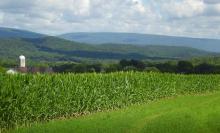
Local officials in eight mostly-rural counties in southwest Pennsylvania are combining efforts to determine first, what connectivity is available and, second, what can be done to improve it.

As the Fiber-to-the-Home (FTTH) project moves along in Traverse City, Michigan, utility board members are establishing the elements to set the service apart from other Internet access options in the community.

Whether you're a tech entrepreneur, manage a large industrial operation, or you specialize as an artisan who sells niche products online, fast, affordable, reliable connectivity is now a critical utility for your business.

In 2012, the Medina County Fiber Network (MCFN) first began offering fiber optic connectivity to businesses and community anchor institutions in the county. Jump forward eight years later and the network is now proving the case that Ohioans also want fast, affordable, reliable connections in the small communities where national providers aren't willing to upgrade.
Colorado
Project Thor aims to bring Summit County into broadband future by Deepan Dutta, Summit Daily

Gascosage Electric Cooperative, serving members in south-central Missouri, recently joined the list of ReConnect recipients. The co-op will use a $14 million grant and loan combination to deploy gigabit Fiber-to-the-Home (FTTH) to members in four counties where people are unserved and underserved.
Natural Choice
At the end of 2019, Congress passed the Revitalizing Underdeveloped Rural Areas and Lands (RURAL) Act, fixing a tax law change that threatened to raise rates and delay the expansion of broadband for rural cooperative members across the country. Passage of the RURAL Act ensures that cooperatives can accept federal funds for broadband deployment, disaster relief, and other efforts without risking their nonprofit tax exempt status.
Sixteen months ago, OMUFiberNet in Owensboro, Kentucky, was about to celebrate the 500th subscriber. Now, that number has doubled, reports that Messenger-Inquirer.

Almost six years ago, we told readers about Ottawa, Kansas, where the community of around 13,000 people had invested in publicly owned fiber optic connectivity for local businesses.
Arizona
For remote tribes, free airwaves licenses mean chance to connect by Jon Reid, Bloomberg Law

In November 2017 we reported that Mount Washington, a town of roughly 200 people in southwestern Massachusetts, had deployed its own infrastructure for broadband service.

I have stepped down from my role as Policy Advisor at Next Century Cities, an organization that I helped to found and one that I believe is very important to ensuring everyone can use fast, affordable, and reliable Internet access.
Community leaders in Independence, Missouri, have recently brought up the topic of publicly owned networks and indicated that they'd like to learn more about how Independence might fare with a muni.
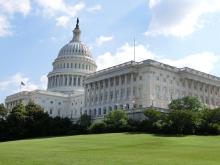
As federal, state, and local leaders increasingly recognize the need to make Internet access universal, they are also realizing that adoption is a separate issue. In an effort to better understand digital equity, the House Subcommittee on Communications & Technology of the Committee on Energy and Commerce recently sat down to listen to experts on digital equity. They discussed common misconceptions, hurdles that make wide-scale adoption difficult, and offered policy recommendations to help us achieve digital equity.
As the USDA continues to award federal ReConnect funds for rural connectivity, we're glad to see that communities in West Virginia are not being ignored.

Despite state laws requiring referenda and public reporting, Iowa is home to successful municipal networks, which have been undeterred by these potential stumbling blocks. A bill in the Iowa Senate, however, may present a new barrier discouraging new networks in places where Iowans need it the most. In communities where Internet access companies aren't offering the caliber of services residents and businesses need, the proposal would restrict the possibility of competition.