
pilot project

Content tagged with "pilot project"

Displaying 1 - 10 of 100

Southwick Rescues Municipal Broadband Effort With Smaller Fiber Pilot Project
A crushing near-miss at the ballot box last year hasn’t stopped the town of Southwick, Massachusetts from chipping away at Comcast’s local monopoly. 

The town is now making progress on a scaled-down pilot project aimed at helping sell locals on the benefits of community-owned-and-operated affordable fiber optics.

After falling just 14 votes shy of the two-thirds majority required to authorize a full $16 million municipal fiber build at Town Meeting (353-204) last year, local officials refused to shelve the project. 

Instead, the Select Board approved a municipal agreement with Westfield Gas & Electric’s Whip City Fiber to construct a targeted pilot network funded entirely by existing money.

The smaller phased deployment aims to prove out subscriber demand, connect vital anchor institutions, and demonstrate that a publicly owned fiber-to-the-home (FTTH) network can pay for itself without leaving general taxpayers on the hook.

According to local news outlet The Reminder, this scaled-back pilot project will target three of the original 19 fiberhoods targeted under the original plan to deploy fiber to the entire town of 9,346.

Pilot Cleared for Takeoff

Rather than wait around to convince hesitant voters at another contentious town meeting, Southwick leadership pivoted to what was already sitting in the town’s war chest.

Yellow Springs, Ohio Eyes Next Steps After Successful Fiber Trial

Yellow Springs, Ohio has been thinking about a city-owned fiber network since 2016, when the municipality issued its first white paper discussing its potential benefits.

Since then, the city has made steady inroads on making those plans a reality, recently culminating in a fiber pilot project currently being used by 100 local homes and businesses.

Launched in 2022, the pilot project currently offers locals two tiers of fiber access: A “standard tier” at a symmetrical 300 megabits per second (Mbps) for $45 a month, and a “premium” tier offering symmetrical gig speed service for $65 a month. There currently are no usage caps, long-term contracts, or installation fees.

Image
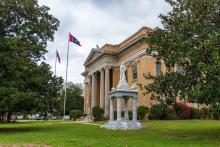
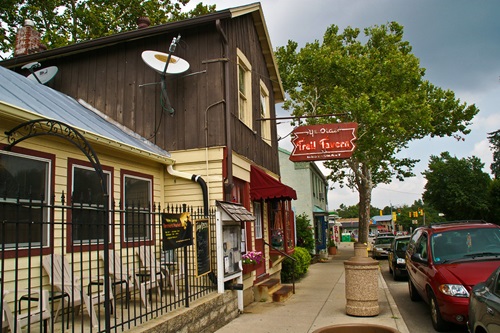
Downtown Yellow Springs

“Final pricing will be determined after the pilot project, and could be higher or lower depending on the ‘take rate,’ customer service offerings, and other knowledge gained from the pilot,” the project FAQ states.

Currently the fiber network covers roughly 600 potential homes around Yellow Springs, and was funded entirely via a $300,000 grant from Broadband Ohio. The city also provides free Wi-Fi via 12 Wi-Fi access points spread throughout the city’s downtown business district.

Like so many U.S. communities, Yellow Springs sees a dearth of meaningful broadband competition, resulting in spotty access, high prices, and substandard service.

Charter Communications (Spectrum) enjoys a monopoly over next-gen broadband access across the majority of the city. Some areas are peppered with sluggish and expensive AT&T DSL.

Wireless Mesh Brings Durable Change in Rhode Island - Episode 575 of the Community Broadband Bits Podcast

This week on the podcast, Christopher is joined by Jennifer Hawkins, CEO of One Neighborhood Builders (ONB). ONB is a nonprofit organization based in Providence, Rhode Island that works to improve lives through housing and community connection. In 2020 we spoke with Jennifer about the wireless mesh network the nonprofit piloted to address community needs at the onset of the Covid-19 pandemic. It launched to much fanfare, and ONB has been steadily working to increase its reach and impact since.

After three years and half a million dollars in capital costs, the ONE|NB Connects network has improved its wireless service to 100Mbps symmetrical speeds. And while not everyone in the Olneyville neighborhood can access the network inside of their homes (it's a gap network, after all), with thousands of unique users per month able to access reliable connections for as long as they need, Jennifer tells Chris that they are starting to see the benefits for households facing significant health and economic disparities in the community. They end the show by talking about how ONB is using the expertise it has built along the way to plan for even more durable changes: baking wired infrastructure into new affordable housing MDUs.  

Read a case study of the impact of the ONE|NB Connects network for more.

This show is 33 minutes long and can be played on this page or via Apple Podcasts or the tool of your choice using this feed. 

Transcript below.

We want your feedback and suggestions for the show-please e-mail us or leave a comment below.

Listen to other episodes here or view all episodes in our index. See other podcasts from the Institute for Local Self-Reliance here.

Thanks to Arne Huseby for the music. The song is Warm Duck Shuffle and is licensed under a Creative Commons Attribution (3.0) license.

LA County Selects Pilot Communities for Major Broadband Expansion

LA County is accelerating its plan to deliver affordable broadband access to the city’s unserved and underserved, with an eye toward building one of the biggest municipal broadband networks in the nation. But the county is first taking baby steps, recently announcing target communities prioritized in a pilot program aimed at bridging the digital divide.

In late 2021, the LA County Board of Supervisors unanimously approved a major new broadband expansion plan. The plan’s first order of business: deliver free broadband to the 365,000 low-income households in Los Angeles County that currently do not subscribe to service, starting with a 12,500-home pilot project.

Last September, the LA County Board of Supervisors approved using a total of $56 million in American Rescue Plan funding to help connect these families to fast, free, and reliable Internet service.

To help coordinate the effort, LA county designated the Internal Services Department (ISD) as the lead agency responsible for managing this and any future projects. The ISD is now working in conjunction with the Los Angeles County Board of Supervisors to determine which areas of the county should see funding and logistical priority. 

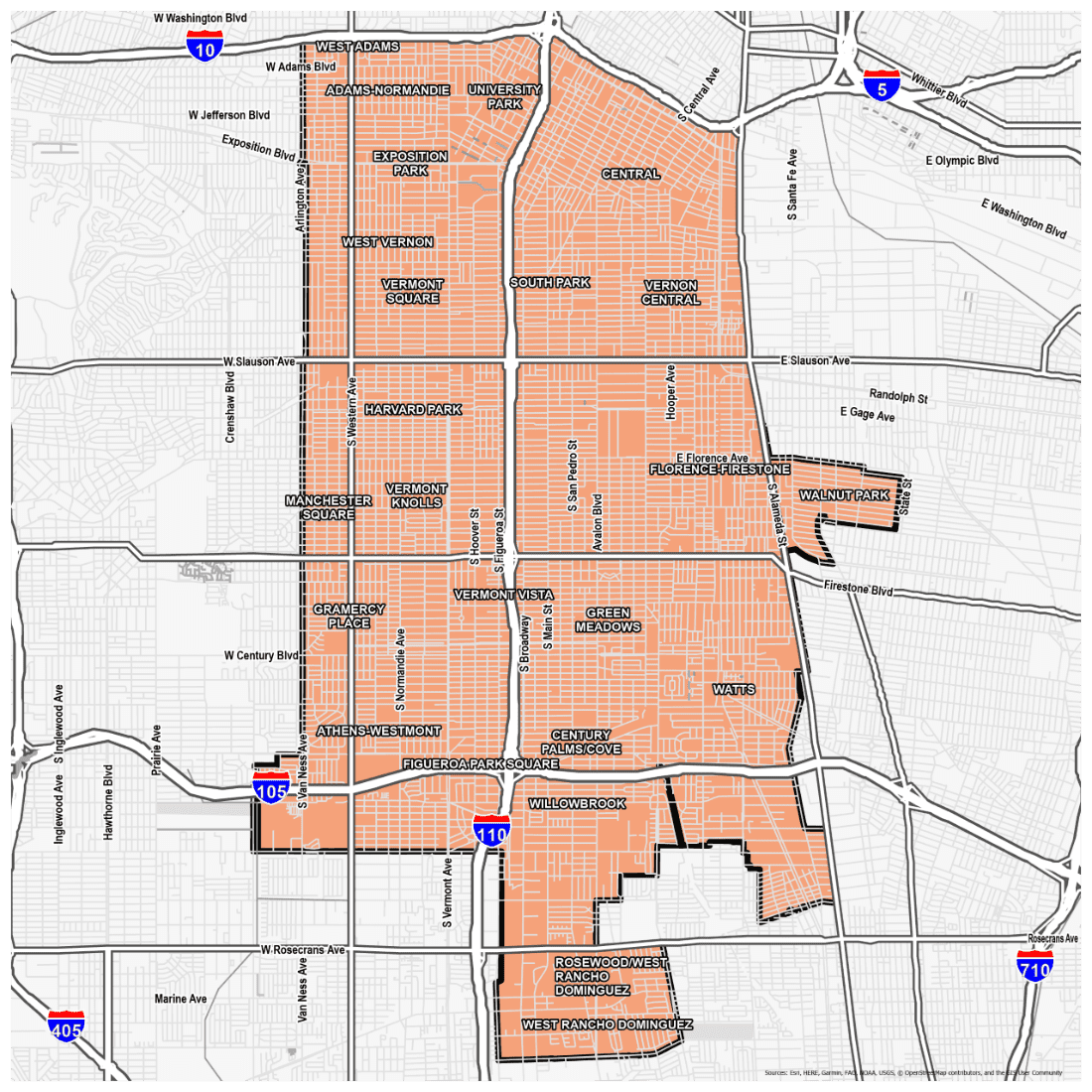
The ISD and LA County Supervisor Holly Mitchell recently released a map of priority locations where the County will build low-cost internet for households in the Second District. 

“I joined the Los Angeles County Board of Supervisors in the height of the pandemic,” Mitchell said in an announcement. “And it became very clear that access to reliable Internet was critical to our success of emerging out of the pandemic. In the Second District, as much as 30 percent of households lack home internet [access]. This is unacceptable, and Los Angeles County is working aggressively to upend this. We are leading the nation on a plan to crush the digital divide.” 

Duluth, Minnesota Ponders A Major Bet On Open Access Fiber

Like countless U.S. communities, Duluth, Minnesota (pop. 86,000) got a crash course on the importance of affordable broadband during the Covid-19 crisis. Those struggles in telecommuting and home education helped fuel a dramatic new broadband expansion plan that, if approved by the city council, could revolutionize affordable access citywide.

Last April, the Duluth Economic Development Authority signed a $65,000 contract with Entrypoint LLC to examine the possibility of building a community-owned fiber network in Duluth. The result: a new Digital Access Master Plan that proposes the city spend $7-9 million to build a pilot open access fiber network in Lincoln Park next year. 

“Reliable high-speed internet is no longer a luxury,” Duluth Mayor Emily Larson proclaimed in a recent state of the city address. “It’s an essential utility no less important to our future success than our roads, water, and electricity.”

A Pilot Project, and Potentially More

Image

Under the proposal, 75 percent of the new network would be buried fiber and 25 percent would be microtrenched along public roads. The $7 to $9 million estimated price tag is based on a 60% take rate, short-term interest at 5 percent, and a long-term interest rate of 3 percent for 20 years. The initial pilot project would bring fiber to an estimated 1,900 Duluth residents next year. 

“A 60% take-rate may seem aggressive given the strong market position of the incumbent cable operator,” the plan states. “However, the survey data suggests a strong desire among residents and businesses in Duluth to see competition, choice, better pricing, and the reliability of a fiber optic network.”

Duluth, Minnesota Ponders A Major Bet On Open Access Fiber

Like countless U.S. communities, Duluth, Minnesota (pop. 86,000) got a crash course on the importance of affordable broadband during the Covid-19 crisis. Those struggles in telecommuting and home education helped fuel a dramatic new broadband expansion plan that, if approved by the city council, could revolutionize affordable access citywide.

Last April, the Duluth Economic Development Authority signed a $65,000 contract with Entrypoint LLC to examine the possibility of building a community-owned fiber network in Duluth. The result: a new Digital Access Master Plan that proposes the city spend $7-9 million to build a pilot open access fiber network in Lincoln Park next year. 

“Reliable high-speed internet is no longer a luxury,” Duluth Mayor Emily Larson proclaimed in a recent state of the city address. “It’s an essential utility no less important to our future success than our roads, water, and electricity.”

A Pilot Project and Potentially More

Under the proposal, 75 percent of the new network would be buried fiber and 25 percent would be microtrenched along public roads. The $7 to $9 million estimated price tag is based on a 60% take rate, short-term interest at 5 percent, and a long-term interest rate of 3 percent for 20 years. The initial pilot project would bring fiber to an estimated 1,900 Duluth residents next year.

“A 60% take-rate may seem aggressive given the strong market position of the incumbent cable operator,” the plan states. “However, the survey data suggests a strong desire among residents and businesses in Duluth to see competition, choice, better pricing, and the reliability of a fiber optic network.”

Dixie EPA’s Accelerated Buildout Reflects a Big Connectivity Push by Mississippi Cooperatives

Over the past eighteen months, southeastern-Mississippi based Dixie Electric Power Association (Dixie EPA) has gone from presenting its initial buildout plans for a fiber-to-the-home (FTTH) network, all the way to connecting its 5,000th subscriber. Because of electric cooperatives like Dixie that are getting organized and prioritizing connectivity for their members, Mississippi is likely to become one of the states with the best rural connectivity within the next five years.

Founded in 1938 in Laurel, Mississippi, Dixie EPA’s present-day coverage area stretches across southeastern Mississippi in parts of Covington, Jasper, Jones, Clarke, Wayne, Perry, and Forrest counties. The cooperative provides electric service to 30,000 premises. 

In September 2020, about six months into the COVID-19 pandemic, Dixie began pre-registering subscribers for Internet service under the cooperative’s newly-created subsidiary, DE Fastlink. Dixie was part of a collective of electric cooperatives that had just received a recent state appropriation of $65 million in CARES Act funding for rural broadband deployment. The funding was administered under the Mississippi Electric Coop Broadband Covid Grant Program by Mississippi Public Utilities. Dixie planned to match in full its own $3.3 million award, which, according to the terms of the grant, had to be spent by the end of that year. 

Chattanooga Coalition Tackling Internet Access, Devices, and Healthcare in Neighborhood Project

A recently announced $610,000 grant award from the Tennessee Valley Authority to a partnership in Chattanooga, Tennessee will fund a pilot project to fund a set of holistic interventions in the Orchard Knob neighborhood to create healthier, more cost-efficient, better-connected homes for 1,000 residents.

The initiative, driven by a coalition made up of the Enterprise Center, EPB Fiber, Parkridge Health System, Habitat for Humanity, Tech Goes Home, and the Orchard Knob Neighborhood Association, aims to tackling an array of social determinants of health all at once. From The Chattanoogan:

Together, the partners plan to simultaneously invest in infrastructure and test new strategies for improving social determinants of health and quality of life of residents within a historically underserved neighborhood. Ultimately, the program in Orchard Knob will serve as a model for other communities across the Tennessee Valley.

Image

It's happening as a result of funds contributed by the TVA's Connected Communities initiative, which aims to help "communities within the Valley leverage tech- and data-driven solutions to improve residents’ lives, deliver environmental benefits and scale economic opportunities." So far, these include projects like outfitting the Cheatham County School District with a solar array and battery backup, technology upgrades at more than a dozen Knoxville Recreation Centers, and improved connectivity at public housing sites in Murfreesboro.

Field Reports: Municipal Broadband and Digital Equity in Baltimore

This week, we bring you a special field report from Maryland-based radio and podcast producer Matt Purdy. Through interviews with citizens, digital equity advocates, and the city's new Director of Broadband and Digital Equity, Purdy documents the connectivity struggles that have persisted in Baltimore's historically marginalized neighborhoods for decades.

Those challenges have only become more pronounced with the pandemic, prompting local officials to begin making moves in the direction of something we've not yet seen in a community the size of Baltimore: building a city-owned, open access fiber network.

This is a great story, so we won't give anything else a way. Listen below, or here.

In Missoula, Montana, a Wireless Mesh Network Builds Community and Connections

A year after a group of local broadband champions got together to see how they could improve Internet access in Missoula, Montana, the Missoula Valley Internet Cooperative has successfully raised funds and designed, deployed, and launched a wireless mesh network delivering 150 Megabit per second (Mbps) symmetrical service to more than 50 of 550 pre-registered households for, on average, $40-60/month. The community-owned option has injected some welcome competition to a stagnant local broadband market, with a second network already in the planning stages in a community to the north.

Both efforts are being driven by the Pacific Northwest Rural Broadband Alliance (PNWRBA), a Missoula, Montana-based nonprofit aiming to build resiliency, local capacity, and expand quality Internet access to the region by making use of a variety of community-oriented business models. The nonprofit serves not only to coordinate grassroots organizing efforts, but provide technical assistance and lead policy engagement with local leaders. It is running a dual mission. First, to bring faster and more affordable Internet access via a community-owned model to the area. And second, to prove out a series of models in the region with the hopes of generating additional community-based approaches to improving broadband in the region and beyond.

Grant Creek