
affordability

Content tagged with "affordability"

Related Topics
Displaying 111 - 120 of 270

CBRS Spectrum: A Potential Boon To Community Broadband

Recent federal government efforts to expand use of public Citizens Broadband Radio Service (CBRS) spectrum could be of significant help to municipalities and local communities looking to bridge the digital divide with the increasingly popular wireless technology.

CBRS spectrum refers to 150 MHz of spectrum in the 3.5 GHz band. In 2015, the FCC adopted rules for shared commercial use of the band, creating a three-tiered structure to avoid interference with military radar during collaborative use of the spectrum.

For municipalities, the spectrum has already proven to be a valuable way to deploy wireless access to the public. In Syracuse, New York, the city last fall launched a new public wireless network on the back of CRBS. In Longmont, Colorado, the St. Vrain Valley School District used CBRS to build a private LTE network connecting 4,000 students in partnership with NextLight, which operates Longmont's city-owned municipal fiber network.

Not all community deployments of CRBS have delivered satisfactory results for municipalities, however. The STEM Alliance in Westchester County, New York retired their efforts to deploy a CBRS network in Yonkers after they struggled with urban capacity constraints and low usage.

San Francisco Wins National Award For Providing Free High Speed Internet Service To Affordable Housing Residents

As the Affordable Connectivity Program (ACP) is now bankrupt and no longer helping low-income households pay for home Internet service, the City of San Francisco is being honored with the 2024 Community Broadband Project of the Year Award by the National Association of Telecommunications Officers and Advisors (NATOA) for its Fiber to Housing (FTH) program.

Built on the back of the city’s municipally-owned fiber optic network – which since 2002 has been used to connect city and public safety facilities, hospitals, libraries and street lights – California’s fourth most populous city is well on its way to extending the city-owned network to deliver free high-speed Internet service to 30,000 affordable housing units across the city.

Image
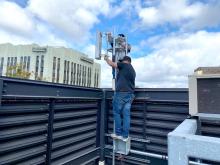
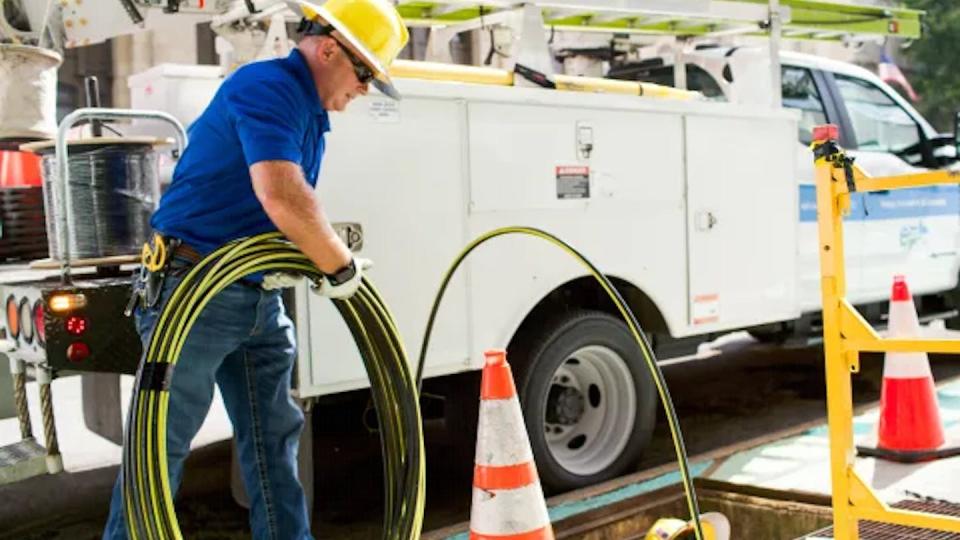
San Francisco technicians deploying fiber across roof

The program currently serves over 14,300 affordable housing units in the city, as well as 1,500 beds at homeless shelters across 115 sites, city officials say. An additional 10,000 residential units are expected to be connected in the coming fiscal year, with the aim of serving 30,000 units by July 2025.

According to the city’s website, the program has connected 52 public housing locations across the city to “fiber-optic and Ethernet cabling in every housing unit.” An additional 63 housing locations are getting free Internet through onsite Wi-Fi with download speeds ranging from 60 to 120 Mbps (Megabits per second), which exceeds the 50 Mbps service Comcast’s Internet Essentials offers.

New York State Is Trying To Make It Easier For Municipal Broadband To Succeed

In March, Charter Communications tried (and failed) to include a poison bill in New York State’s budget bill that would have hamstrung community broadband. In stark contrast, a New York legislator this month introduced new legislation he says would make it easier than ever for New York state municipal broadband projects to thrive.

State Senator Jeremy Cooney of Rochester has introduced the Broadband Deployment Assistance Act of 2024 (S9134), which would streamline the permitting process for municipal broadband projects by "amending the general municipal law, in relation to requiring substantially similar permits for broadband deployment to be processed together at the same time and on an expedited basis."

“With a quicker timeline and more efficient process for local governments, we can create affordable options for New Yorkers that empower them to take control of their digital destiny,” Cooney wrote in an editorial published at Syracuse.com.

Image
New York State Seal

Cooney says he was motivated by a lack of broadband competition in New York State. New York is dominated by Charter Communications, which was almost kicked out of the state in 2019 for poor service and  misleading regulators about broadband deployment conditions affixed to its 2016 purchase of Time Warner Cable.

Building For Digital Equity 'Pathways To Affordability' Reprise

In case you missed it, on Monday we streamed our second Building for Digital Equity (#B4DE) event of the year. The focus this time: "Pathways To Affordable Connectivity" in the absence of the Affordable Connectivity Program (ACP).

You can watch the livestream in its entirety below.

As expected, the agenda delivered a number of gems for those working in the trenches to bridge the digital divide.

Image
GPSN

Co-hosted once again by Pamela Rosales with the National Digital Inclusion Alliance (NDIA) and Director for the Institute for Local Self Reliance (ILSR) Community Broadband Networks Initiative Christopher Mitchell, #B4DE began with a concise and candid acknowledgement of the moment: namely, the collapse of the ACP.

However, despite the challenge the loss of that program poses, #B4DE offered a lineup of digital inclusion practitioners providing a grounds-eye view of how they and their organizations are continuing the work of knocking down affordability barriers.

The three lightning round speakers covered devices and the creation of "device ecosystems." Attendees heard from Dave Sevick, Executive Director of the Pennsylvania-based Computer Reach; Ashley Martinez, Digital Equity Manager with Free Geek in Portland, OR; and Scot Henley, Executive Director of Digitunity based in North Conway, NH. Click on their names below to see their slide decks.

Houston, Missouri’s Municipal Fiber Network Revs Up City’s Economic Development Engine With Big City Connectivity

In the Show Me State – cradled in the center of the Ozarks – Houston, Missouri is the biggest small city in Texas County.

And what local officials have shown its 2,100 or so residents over the last four years is that it can build its own modern telecommunication infrastructure to help spark economic development and offer big city Internet connectivity at affordable rates.

It began with a citizen survey in 2019, asking residents if they would be interested in a municipal broadband service, given the inadequate offerings of the big incumbent providers. Since then – not only has the city built an 18-mile fiber ring for an institutional network (I-net) to connect the city’s facilities – it has built a fiber-to-the-home (FTTH) network that now covers 95 percent of the 3.6 square-mile county seat.

Image
Houston MO fiber cabinet

“The project started in 2020 and we went live in the spring of 2021,” Randon Brown, Technology Director for the City of Houston Fiber Department, tells ILSR. “Construction of the project has taken approximately four years. (Today) 95 percent of the town (network) is operational and can be serviced.”

The city has spent $3 million of its own money to fund construction of the aerial fiber network, Brown said.

The network passes 1,200 premises with 272 subscribers now getting service from Houston Fiber, “which encompasses a mixture of residential and business customers” – though that number will soon rise to 364 (30 percent take rate) in the near future as more residents and businesses are in the pipeline waiting to be connected, he added.

Destination Crenshaw Breathes Life Into 'Open Air Museum' and Emerging ‘Digital Equity Zone’

On a map, the Crenshaw District is a 2.9 square-mile neighborhood in South Central Los Angeles, home to nearly 30,000 mostly black residents.

In the popular imagination, Crenshaw is the backdrop for the Oscar-nominated movie "Boyz In the Hood" – the real life neighborhood that cultivated the likes of former Los Angeles Mayor Thomas Bradley; rappers-turned-actors Ice Cube and Ice T; and the late rapper/entrepreneur Nipsey Hussle.

But on the streets of Crenshaw, a transformative vision is unfolding – an initiative local leaders describe as “a reparative development project.”

The idea is to inspire and empower neighborhood residents with strategic investments rather than displace them through gentrification. The effort is being led by Destination Crenshaw, a nonprofit community organization established in 2017 to celebrate the history and culture of Black Los Angeles.

The most visible part of the vision is to create the largest Black public art project in the nation along Crenshaw Boulevard, the 1.3 mile spine of the neighborhood – or what Destination Crenshaw describes as an “open air museum” centered around “pocket parks” and a “comprehensive streetscape design” that will feature commissioned murals and sculptures from local Black artists.

Countdown To Next Building For Digital Equity Event: ‘Pathways To Affordability’

As FCC Chair Jessica Ronsenworcel this week lamented the end of the Affordable Connectivity Program (ACP), the next Building For Digital Equity event is ready to address the now-what question.

Slated for June 10 from 3 to 4:15 PM ET, the upcoming #B4DE will focus on “Pathways To Affordable Connectivity” and will serve up plenty of food-for-thought and actionable intel for those working in the trenches to bridge the digital divide.

While the event is free and will be livestreamed, attendees should register here in advance for full access.

Co-hosted by Pamela Rosales with the National Digital Inclusion Alliance (NDIA) and Christopher Mitchell – Director of the Community Broadband Networks Initiative at the Institute for Local Self Reliance (ILSR) – the agenda for the popular virtual gathering is now locked and loaded.

Image
GPSN

It will begin with lightning round presentations that will each highlight the crucial importance of getting devices into the hands of those who have a hard time affording them, as well as those who don’t feel they have the digital skills necessary to use them.

UTOPIA Fiber Welcomes Three Additional ISPs, Expands to 18 Partner ISPs

Data has long proven that open access fiber networks result in faster, better, and more affordable broadband service in the markets where they operate. Nothing has proven this more consistently than Utah-based UTOPIA Fiber, an inter-local agency collaborative venture that just added three additional partner ISPs.

With the three more independent ISPs joining the network, 18 different providers now offer affordable fiber service to residents in the 21 cities UTOPIA serves.

“After a careful vetting process through an RFP, WiFi Pros (Bountiful City), ETS (Layton City), and Fusion Networks (Salem City) were invited to join the UTOPIA Fiber network, effective May 1, 2024,” the organization said in a recent announcement.

The ISPs that compete over the UTOPIA open access fiber network offer a variety of different speed and pricing options, and its three new partners are no exception. Most of the pricing is dramatically lower than what’s generally been made available in U.S. broadband markets – including well developed major metropolitan markets like New York City.

Senate Passes FAA Reauthorization Without ACP Amendment

*In partnership with Broadband Breakfast, we occasionally republish each other's content. The following story by Broadband Breakfast Reporter Jake Neenan was originally published here.

The Senate voted Thursday evening to pass its Federal Aviation Administration reauthorization package without an amendment that would have funded the Affordable Connectivity Program (ACP).

A bipartisan group of lawmakers had hoped to use the must-pass FAA bill as a vehicle for infusing an extra $6 billion for the imperiled broadband subsidy program, but Senate leadership was successful in keeping non-aviation amendments off the bill.

Image

Lawmakers had mounted a last-minute effort to negotiate a vote on the amendment, with lead sponsor Sen. Ben Ray Luján, D-New Mexico, marshaling 16 bipartisan cosponsors and highlighting the support of advocates and industry groups alike on Thursday afternoon.

“There is growing bipartisan support to strengthen the Affordable Connectivity Program and keep this critical lifeline alive for more than 55 million Americans. There are now 16 Senators from both sides of the aisle, representing millions of people and diverse states, backing this amendment,” he said in a statement.

The Senate also managed to prevent a lapse in the agency’s authorization by passing a separate short-term extension. The House extended the agency’s remit until May 17 on Wednesday before leaving D.C. for the week, and will still need to vote on Thursday's five-year reauthorization package.

As ACP Collapses, Newark Takes The Lead On Affordable Access

Newark, New Jersey is taking full advantage of its city-owned fiber network to expand affordable broadband access – with a particular eye on helping the city’s least fortunate.

Driven by past successes with city-owned fiber and Wi-Fi, Newark has announced the city is significantly expanding the availability of $20/month broadband service to numerous Newark Housing Authority (NHA) apartment buildings.

Image
Newark Housing Authority logo

This latest partnership with Adrena leans heavily on Newark Fiber, a 288-strand city-owned fiber network. Launched in 2016, the network has steadily been expanded to connect anchor institutions. But it’s also been a cornerstone of the city’s efforts to revitalize and assist many lower income – and long neglected – Newark neighborhoods.

“Nine percent of Newark families lack computers and about 20 percent of the city doesn't have an in-home broadband connection,” Aaron Meyerson, Chief Innovation Economy Officer & Director of Broadband for the City of Newark told ILSR.